
CBS News Faces Questions After Failing to Clarify Jury Composition Claim in High-Profile Texas Murder Case
CBS News is facing criticism after an interview involving the family of convicted murderer Karmelo Anthony included a disputed claim about the racial makeup of the jury that convicted him in the fatal stabbing of Texas teenager Austin Metcalf.
RELATED: Questions Emerge After Convicted Killer Claims Poverty Despite Massive Fundraising Campaign
Anthony was recently convicted of murder in connection with the death of Metcalf during a high school track meet in Frisco, Texas. The case drew national attention and sparked widespread debate over self-defense claims, criminal justice, and media coverage.
Following the verdict, Anthony’s father, Andrew Anthony, appeared in an interview with CBS News and stated that one of the things that stood out to him was what he described as an “all-white jury.”
The remark immediately generated discussion because available court reporting indicated the jury composition was more complex than that characterization suggested.
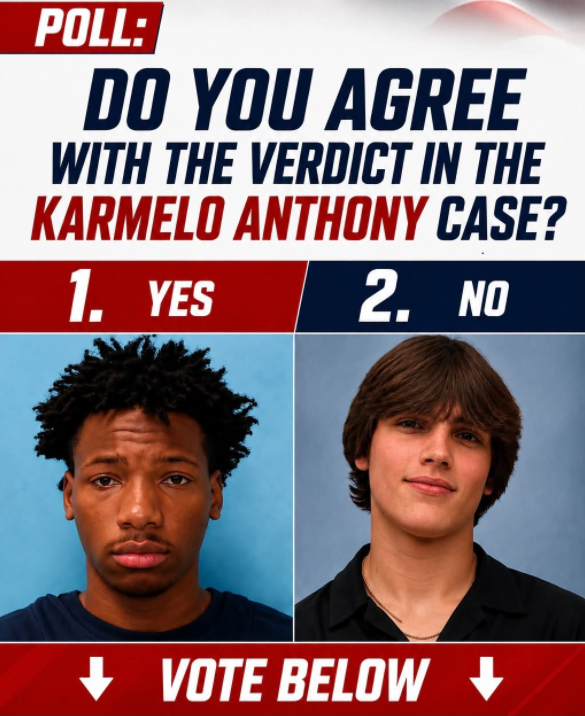
[poll id=”2″]
Questions Raised About Media Accuracy
According to courtroom reports, the final 12-person deliberating jury reportedly included no Black jurors. However, reporting on the full panel of selected jurors and alternates indicated that the broader group included individuals from various racial and ethnic backgrounds.
Critics argue that CBS should have provided additional context or clarification when the statement was made, particularly given the sensitivity surrounding jury selection issues in high-profile criminal trials.
Media analysts note that accuracy and context are especially important when discussing race-related issues because incomplete information can quickly shape public perception.
Jury Selection Process Under Scrutiny
The jury selection process involved hundreds of prospective jurors and extensive questioning by both prosecutors and defense attorneys.
During the selection process, both sides exercised peremptory strikes and challenged potential jurors for a variety of reasons, including concerns about impartiality, prior knowledge of the case, and personal views that could affect their ability to fairly evaluate the evidence.
Defense attorneys raised objections regarding some of the prosecution’s jury strikes, arguing that certain decisions warranted additional review. The court ultimately rejected those challenges and allowed the jury selection process to proceed.
Legal experts note that jury selection disputes are not uncommon in major criminal cases and often become a focus of appellate arguments after convictions.
Broader Debate Over Media Responsibility
The controversy has renewed debate over the role of news organizations in providing context when reporting on emotionally charged legal cases.
Conservatives have frequently criticized major media outlets for failing to challenge claims that fit broader political narratives while aggressively fact-checking competing viewpoints.
Supporters of stronger journalistic standards argue that news organizations should apply the same level of scrutiny to all factual claims regardless of the source.
Critics contend that public confidence in the media depends on accurate reporting, complete context, and consistent standards across politically sensitive stories.
Conviction Remains the Central Outcome
Despite ongoing debate over media coverage and jury selection, the central fact of the case remains unchanged: Anthony was convicted of murder by a Texas jury after prosecutors successfully argued that his actions were not justified as self-defense.
The case has continued to generate national discussion regarding criminal justice, courtroom procedures, media coverage, and public accountability.
As appeals move forward, legal observers expect questions surrounding jury selection, trial procedures, and media reporting to remain part of the broader public conversation.
For many observers, the controversy highlights a larger issue facing modern journalism: maintaining public trust by ensuring that facts are presented accurately, completely, and with appropriate context.
Benjamin Harris is a RapidReports front page contributor and editor,proud father of four.