
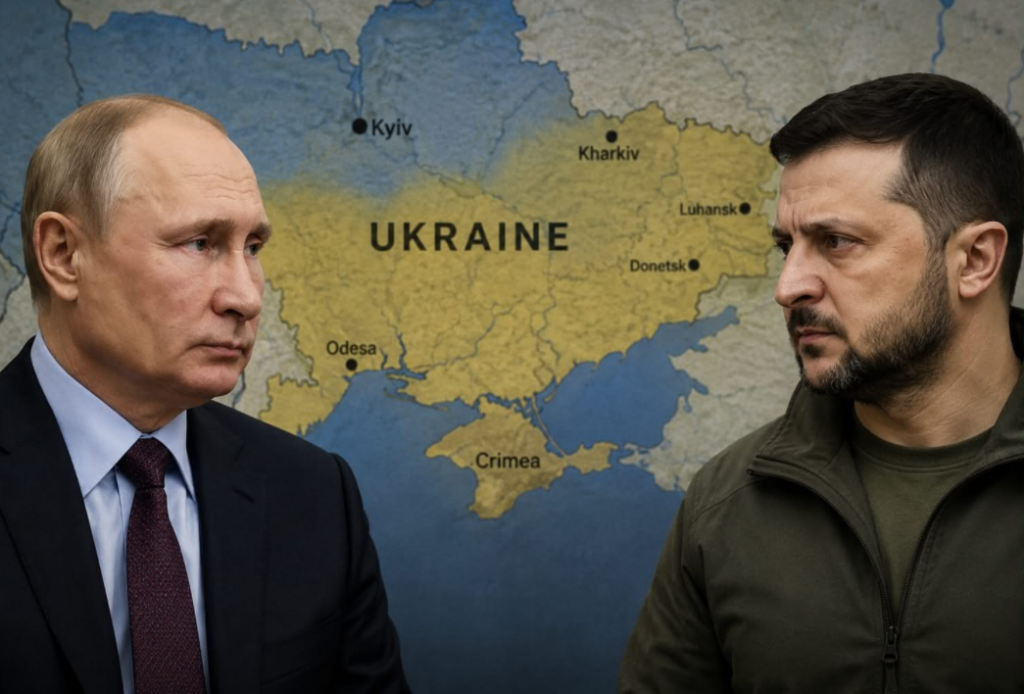
Ukraine Expands Long-Range Strike Campaign as Russian Energy Infrastructure Comes Under Pressure
The conflict between Ukraine and Russia entered a new phase this week as Ukraine launched one of its most significant long-range drone operations to date, targeting strategic infrastructure near Moscow and other key locations across Russia.

[poll id=”4″]
The operation highlights a growing trend in modern warfare: the increasing use of advanced drone technology to reach high-value targets far from traditional front lines. Analysts say the latest strikes demonstrate how rapidly evolving defense technologies are reshaping military strategy and national security calculations.
Strategic Infrastructure Becomes a Key Focus
According to Russian officials, hundreds of drones were detected during the operation, prompting air defense responses across multiple regions. Authorities reported temporary disruptions at several transportation hubs and industrial facilities while emergency teams assessed potential damage.
Particular attention has focused on energy infrastructure near Moscow, including facilities that play an important role in fuel production and distribution. Energy assets have increasingly become strategic targets because of their economic significance and their role in supporting national logistics networks.
Security experts note that attacks on energy infrastructure can have effects that extend beyond immediate physical damage, potentially impacting supply chains, transportation systems, and regional economic activity.
Growing Importance of Drone Technology
Military analysts say the operation underscores the expanding role of long-range drone systems in modern conflicts. Compared to traditional military assets, drones can provide nations with greater operational flexibility while reducing direct risks to personnel.
Recent technological advancements have enabled newer drone platforms to travel greater distances, operate with improved efficiency, and challenge existing air defense systems.
As drone capabilities continue to evolve, governments worldwide are investing heavily in both offensive and defensive technologies designed to address emerging security threats.
Energy Markets Watching Closely
The latest developments are also drawing attention from global energy markets. Investors and industry observers continue to monitor any threats to major energy facilities because disruptions can influence fuel supplies, commodity prices, and broader market stability.
Russia remains one of the world’s major energy producers, making developments involving refineries, transportation networks, and fuel infrastructure particularly significant for international markets.
Market analysts say that even temporary interruptions can contribute to uncertainty, especially during periods of elevated geopolitical tensions.
Economic and Security Implications
Beyond military considerations, the ongoing conflict continues to carry substantial economic consequences for both countries. Governments, businesses, and financial institutions are closely monitoring how infrastructure disruptions could affect trade flows, energy exports, and long-term investment conditions.
The increasing focus on strategic infrastructure reflects a broader shift toward economic pressure as part of modern conflict. Facilities connected to transportation, energy production, and industrial operations are becoming central elements of national security planning.
As a result, policymakers across Europe and beyond are reassessing infrastructure resilience and investing in technologies designed to protect critical assets from emerging threats.
A Conflict Entering a New Stage
Security analysts believe the latest operation demonstrates the growing reach of long-range drone capabilities and the changing nature of modern warfare.
With both sides continuing to invest heavily in advanced technologies, experts warn that future developments may place greater emphasis on infrastructure protection, cyber defense, energy security, and economic resilience.
For global markets, policymakers, and defense planners, the message is increasingly clear: modern conflicts are no longer confined to traditional battlefields. Strategic infrastructure, energy networks, and economic systems are becoming just as important as military objectives in shaping the future of international security.

Benjamin Harris is a RapidReports front page contributor and editor,proud father of four.