Iran Re-Closes Strait of Hormuz, Raising New Questions About Regional Stability and Global Energy Security
Just days after a diplomatic breakthrough between Washington and Tehran, new uncertainty has emerged in the Middle East after Iran announced fresh restrictions on traffic through the Strait of Hormuz, one of the world’s most critical energy and shipping corridors.

[poll id=”5″]
The move has raised concerns among policymakers, energy markets, and international businesses that were hoping recent negotiations would reduce tensions and restore stability across the region.
Analysts warn that developments involving the Strait of Hormuz carry global implications because the waterway serves as a vital route for international commerce, energy exports, and maritime transportation.
Major Trade Route Faces New Uncertainty
Iranian officials indicated that additional conditions must be met before normal commercial operations can fully resume.
The announcement comes after a memorandum of understanding signed earlier this week between the United States and Iran, which was designed to establish a framework for de-escalation, renewed negotiations, and the reopening of critical shipping routes.
However, disagreements surrounding broader regional security issues appear to have complicated implementation of the agreement.
Industry observers note that uncertainty surrounding one of the world’s most important maritime chokepoints can quickly influence shipping decisions, insurance costs, and energy market expectations.
Energy Markets Watching Closely
The Strait of Hormuz remains one of the most strategically important waterways on the planet.
A significant percentage of globally traded oil and natural gas moves through the region, making uninterrupted access a priority for governments, businesses, and consumers worldwide.
Even temporary disruptions can affect transportation costs, commodity prices, and investor sentiment.
Market analysts say traders are closely monitoring developments as they evaluate potential impacts on energy supplies and global economic activity.
Trump Administration Pursues Diplomatic Solution
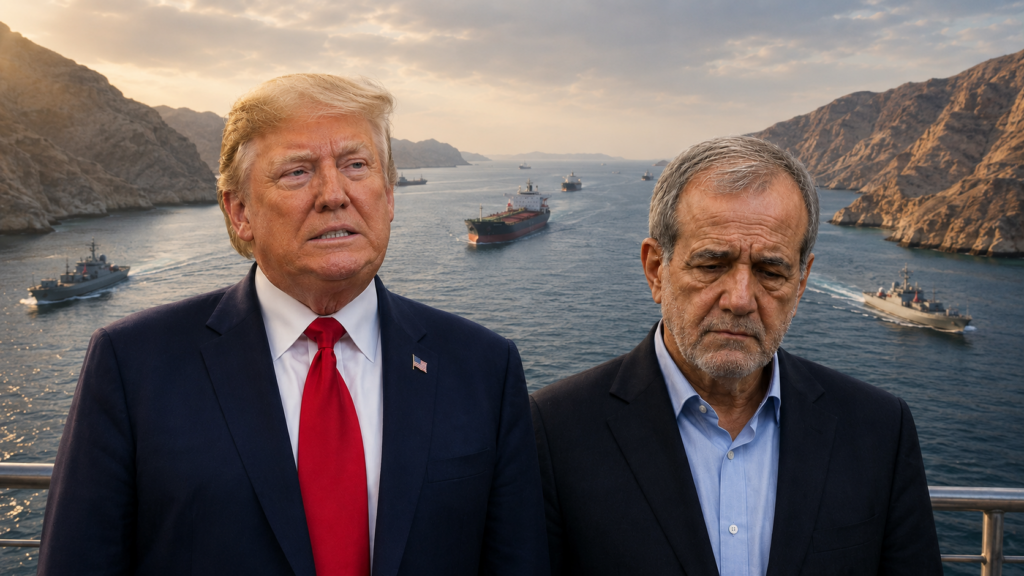
The recent agreement between President Donald Trump and Iranian President Masoud Pezeshkian was widely viewed as an effort to reduce tensions while protecting key economic and security interests.
Supporters of the administration’s approach argue that maintaining open diplomatic channels while preserving American leverage remains the most effective path toward long-term stability.
Officials have emphasized that the United States remains prepared to continue negotiations and pursue solutions that protect global trade, strengthen energy security, and reduce the risk of broader conflict.
The White House has indicated that diplomatic efforts remain ongoing despite the latest complications.
Regional Security Remains a Key Challenge
One of the primary issues affecting implementation of the agreement involves ongoing security concerns throughout the region.
Developments involving Lebanon and other regional flashpoints continue to influence negotiations and complicate efforts to reach a broader understanding among the parties involved.
Foreign policy experts note that regional conflicts often intersect with larger diplomatic initiatives, making progress difficult even when significant agreements are reached.
The latest developments highlight the challenges associated with translating diplomatic commitments into lasting stability on the ground.
New Shipping Requirements Raise Industry Questions
Adding to the uncertainty, Iranian authorities have reportedly introduced new procedures for vessels seeking passage through the Strait of Hormuz.
Shipping companies, logistics firms, and maritime insurers are reviewing the requirements as they assess operational and financial implications.
Industry leaders say predictability and transparency are essential for restoring confidence among commercial operators that depend on efficient access to international trade routes.
Businesses across multiple sectors will be watching closely as implementation details become clearer.
Global Economic Impact Could Be Significant
Beyond the immediate geopolitical implications, the situation underscores the broader connection between international security and economic performance.
Energy markets, financial institutions, manufacturers, and transportation companies all depend on stable trade routes and predictable operating environments.
Any prolonged uncertainty surrounding the Strait of Hormuz could influence supply chains, investment decisions, and commodity markets worldwide.
For that reason, governments and businesses alike continue to view the region as a critical component of global economic stability.
What Comes Next?
Despite the latest setback, diplomatic channels remain open and discussions are expected to continue.
Analysts believe the coming days could prove important in determining whether negotiators can preserve momentum and address the remaining disagreements affecting implementation of the agreement.
For now, global markets remain focused on two key questions: whether commercial traffic can continue moving efficiently through the Strait of Hormuz and whether ongoing diplomatic efforts can deliver a more durable framework for regional stability.
The answers may have lasting consequences for energy prices, international trade, and the future of security in one of the world’s most strategically important regions.

Benjamin Harris is a RapidReports front page contributor and editor,proud father of four.