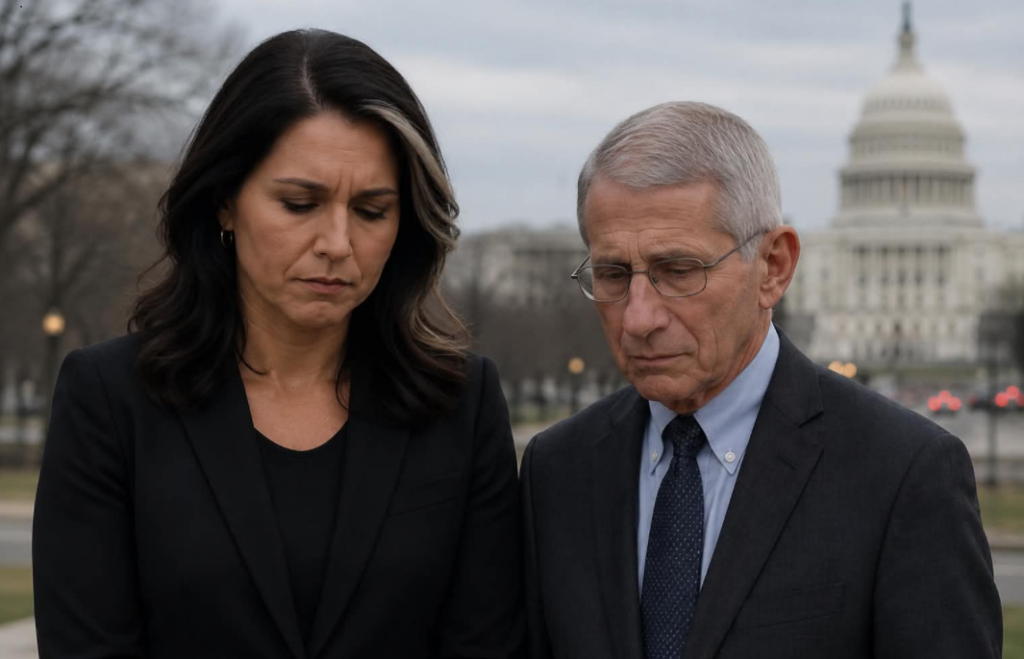
Tulsi Gabbard & Dr. Anthony Fauci / Rapid Reports Image
New Declassified COVID-19 Records Renew Questions Over Origins Debate and Federal Decision-Making
Director of National Intelligence Tulsi Gabbard has declassified hundreds of pages of government records related to the origins of COVID-19, reigniting public and scientific debate over how federal agencies evaluated competing theories about the pandemic’s emergence.
The documents, released Thursday, examine internal discussions within the U.S. government and outside scientific consultations regarding whether COVID-19 originated from natural spillover or a potential laboratory-related incident in Wuhan, China.
[poll id=”4″]
Gabbard said the material underscores the need for greater transparency in how pandemic-related assessments were conducted.
“The COVID-19 pandemic caused tremendous hardship and pain for millions of Americans and people around the world,” Gabbard said. “After years of conflicting narratives, the American people deserve transparency, truth, and accountability.”
Focus on Scientific Debate and Government Coordination
The newly released records highlight extensive discussions among public health officials, scientists, and intelligence agencies during early government efforts to determine the virus’s origin.
A significant portion of the documents centers on the widely cited March 2020 scientific paper “The Proximal Origin of SARS-CoV-2,” which supported the conclusion that a laboratory origin was unlikely.
The paper became one of the most influential early scientific assessments during the pandemic and helped shape public understanding of COVID-19’s emergence.
According to the declassified materials, some researchers involved in that paper privately discussed multiple origin scenarios while publicly supporting a natural-origin interpretation.
Intelligence Review and Expert Consultation
The records indicate that senior public health officials and scientists were consulted during intelligence community reviews conducted under both the Trump and Biden administrations.
Former National Institute of Allergy and Infectious Diseases Director Dr. Anthony Fauci is referenced in connection with communications advising intelligence officials to consult several scientists involved in early origin research, including authors of the March 2020 paper.
The documents also show that Fauci received intelligence briefings during formal reviews of COVID-19’s origins.
Supporters of the release argue that these communications highlight the complexity of the decision-making process during the early stages of the pandemic, when scientific evidence was still emerging and inconclusive.
Diverging Views Within the Intelligence Community
The declassified files also reflect differences of opinion among U.S. intelligence agencies regarding how COVID-19 may have originated.
Some assessments referenced in the documents suggested that conditions for a potential laboratory-related incident existed in Wuhan prior to the global outbreak, while other agencies expressed uncertainty or disagreed with key elements of that analysis.
The records indicate that intelligence evaluations often relied on input from external academic experts in virology and epidemiology, alongside classified intelligence reporting.
Ongoing Debate Over Oversight and Transparency
The release of the documents has renewed discussion in Washington over how pandemic origins were evaluated and communicated to the public.
Critics of the federal response argue that greater transparency is needed to understand how scientific conclusions were formed and how dissenting views were handled during the early stages of the crisis.
Others emphasize that the scientific community continues to examine multiple hypotheses, and that definitive conclusions about the origin of COVID-19 remain unresolved.
Broader Implications for Public Trust and Policy
The newly declassified materials arrive amid continued bipartisan interest in pandemic preparedness, research oversight, and the relationship between government agencies and external scientific advisors.
Lawmakers and analysts say the findings may influence future policy discussions regarding research transparency, biosecurity standards, and coordination between intelligence and public health institutions.
As debate continues, officials stress that further review may be necessary to fully understand the early decision-making processes that shaped the global response to COVID-19.

Benjamin Harris is a RapidReports front page contributor and editor,proud father of four.