Strait of Hormuz Dispute Emerges as Iran Claims Closure While U.S. Reports Stable Oil Flow
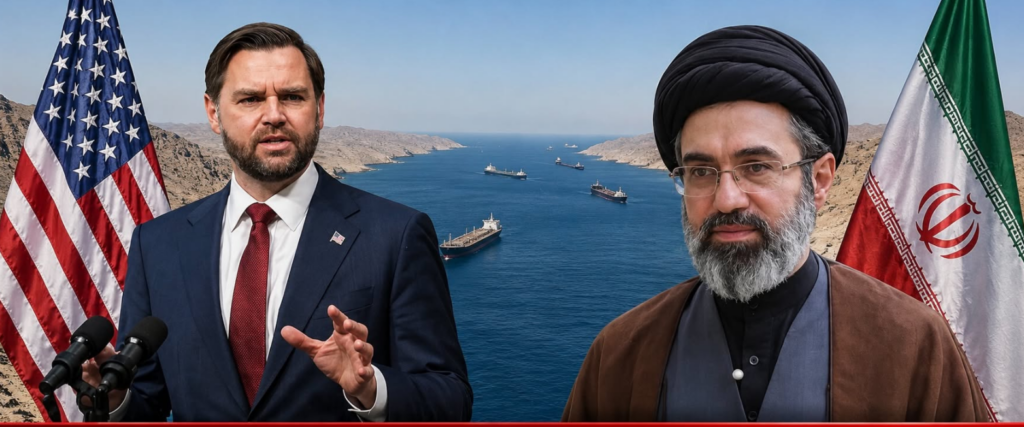
Tensions briefly resurfaced over one of the world’s most critical energy corridors after Iran’s Revolutionary Guard Corps (IRGC) claimed it was restricting access to the Strait of Hormuz, even as U.S. military officials reported continued and stable commercial shipping through the waterway.
U.S. Central Command (CENTCOM) said Saturday that maritime traffic through the strait not only continued but increased, with approximately 55 merchant vessels safely transiting the corridor carrying millions of barrels of oil and other commercial cargo.
[poll id=”4″]
According to CENTCOM, global energy shipments remained uninterrupted, underscoring what officials described as ongoing maritime security operations in the region.
“U.S. forces remain present and vigilant to ensure safe passage and compliance with international maritime agreements,” CENTCOM said, referencing a recently established memorandum of understanding between Washington and Tehran.
Competing Claims Over Strategic Waterway
The conflicting statements came hours after Iran’s IRGC announced restrictions on vessel traffic through the Strait of Hormuz, citing regional security developments and renewed military activity in Lebanon.
The IRGC statement warned that further escalation could lead to additional measures, framing the action as a response to what it described as violations of recent understandings with the United States.
The Strait of Hormuz is one of the most important energy chokepoints in the world, with a significant share of global oil exports passing through the narrow waterway connecting the Persian Gulf to the Arabian Sea.
Any disruption in the region is closely monitored by global markets due to its potential impact on energy prices, shipping costs, and supply chain stability.
U.S. Officials Report Continued Maritime Flow
Despite Iran’s announcement, U.S. officials and shipping data indicated that commercial activity remained largely uninterrupted.
CENTCOM reported that tens of millions of barrels of oil moved through the strait during the period in question, suggesting that maritime operations continued under heightened monitoring conditions rather than full disruption.
Vice President JD Vance stated that U.S. tracking data showed no evidence of a full closure, emphasizing that energy flows remained active and commercial vessels were continuing scheduled routes.
Regional Conflict Adds Pressure to Negotiations
The dispute over maritime access unfolded alongside renewed instability in Lebanon, where reports of continued strikes and cross-border exchanges between Israeli forces and Hezbollah have raised concerns about broader regional escalation.
Israel has stated that its operations are aimed at responding to attacks by Hezbollah, while Lebanese authorities have reported civilian casualties and infrastructure damage in affected areas.
The United States has played a mediating role in recent ceasefire and de-escalation efforts, working alongside regional partners to prevent the conflict from expanding further.
Energy Security and Diplomatic Talks in Focus
The Strait of Hormuz remains a key focus for global energy security policymakers, as even limited disruptions can influence oil markets and international shipping costs.
Under the current U.S.-Iran memorandum of understanding, maritime stability in the region is a central component of ongoing diplomatic efforts aimed at reducing tensions and establishing longer-term agreements on security and trade.
U.S. officials confirmed that technical discussions continue in Switzerland involving American and Iranian representatives, with the goal of advancing implementation details of the broader understanding reached earlier this week.
Outlook
While Iran’s announcement briefly raised concerns about potential disruption, U.S. officials maintain that commercial shipping remains active and that diplomatic channels are still engaged.
Energy markets and global shipping operators continue to monitor developments closely as negotiations proceed and regional tensions remain fluid.

Benjamin Harris is a RapidReports front page contributor and editor,proud father of four.