Iran Signals Willingness to Provide Nuclear Assurances as Trump Administration Pushes for Stronger Security Guarantees
High-stakes negotiations between the United States and Iran are underway in Switzerland as the Trump administration seeks to address concerns over Iran’s nuclear ambitions, regional security, and energy stability in the Middle East.
Iranian President Masoud Pezeshkian has stated that Tehran is willing to provide written assurances that it will not develop a nuclear weapon. However, Iranian officials continue to insist on maintaining the country’s uranium enrichment program, a key issue that has long divided negotiators and international security experts.
The talks come as President Donald Trump’s administration pursues a broader diplomatic framework designed to reduce regional tensions while protecting American interests and strengthening security partnerships in the Middle East.
[poll id=”4″]
Trump Administration Focused on Nuclear Verification
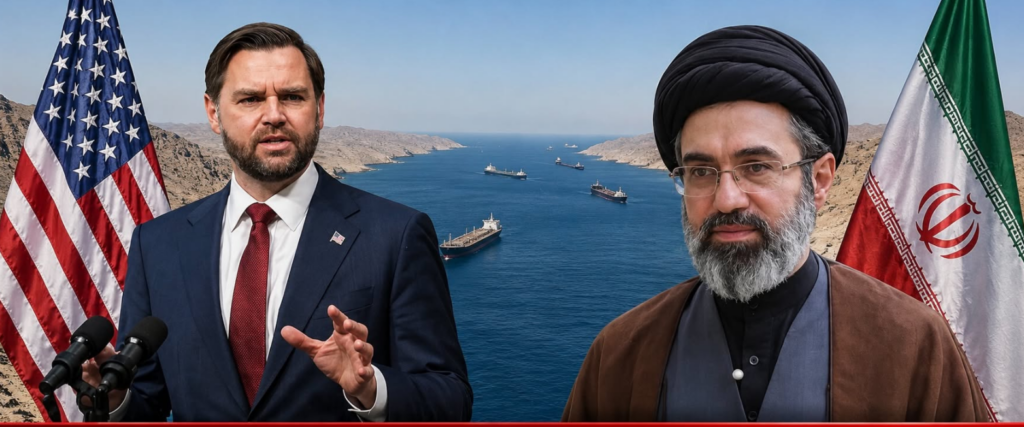
The U.S. delegation, led by Vice President JD Vance and Special Envoy Steve Witkoff, arrived in Switzerland with a focus on ensuring that any future agreement includes meaningful safeguards, verification mechanisms, and accountability measures.
National security analysts have repeatedly emphasized that written commitments alone may not be enough to address concerns surrounding Iran’s nuclear activities. Many experts argue that robust inspections and enforceable compliance standards are essential for any lasting agreement.
Before departing for Switzerland, Vance said the administration hopes to make progress on both nuclear security issues and broader regional stability.
Energy Security Remains a Major Priority
The negotiations are also drawing attention from global energy markets due to concerns surrounding the Strait of Hormuz, one of the world’s most important shipping routes for oil and natural gas exports.
Recent statements from Iranian military officials regarding maritime traffic have heightened concerns among investors, energy producers, and policymakers monitoring potential disruptions to global supply chains.
Energy security remains a top priority for the United States and its allies, particularly as fluctuations in oil prices can directly impact inflation, fuel costs, and economic growth.
Regional Tensions Continue to Complicate Diplomacy
Ongoing violence in Lebanon has emerged as another major issue during the negotiations.
Iranian officials argue that continued military activity in the region could complicate implementation of broader diplomatic understandings, while U.S. officials continue to emphasize the importance of regional stability and the protection of American allies.
The Trump administration has consistently maintained that long-term peace efforts must be accompanied by concrete actions that reduce the risk of future conflict and strengthen security throughout the region.
Verification and Accountability at the Center of Talks
For many policymakers in Washington, the central question remains whether any agreement can be effectively enforced.
Conservative foreign policy experts have long argued that diplomacy must be backed by clear verification standards, economic leverage, and strong deterrence measures to prevent nuclear proliferation and protect U.S. national security interests.
Supporters of the administration’s approach say negotiations should focus not only on promises but on measurable actions that ensure compliance over time.
Markets Watching Closely
Investors, energy companies, and international markets are closely monitoring developments from Switzerland as negotiations continue.
Any progress toward reducing regional instability could help support global energy supplies and ease uncertainty in financial markets. At the same time, unresolved disputes over nuclear oversight and regional conflicts remain significant challenges.
As discussions move forward, the outcome could have major implications for international security, energy prices, and U.S. foreign policy strategy in the years ahead.
Benjamin Harris is a RapidReports front page contributor and editor,proud father of four.