Powerful 7.4 Earthquake Strikes Western Colombia — Death Toll Climbs as Rescue Efforts Intensify
A massive 7.4-magnitude earthquake slammed western Colombia on Monday morning.
The ground shook violently. Buildings collapsed. Terrified residents poured into the streets. Rescue teams raced toward the hardest-hit zones as the death toll began to climb.
The epicenter was near San José del Palmar in the western department of Chocó. That put the quake roughly 173 miles west of Bogotá.
The shaking rolled across a huge stretch of the country. In the capital itself, emergency alarms blared and people evacuated buildings as a precaution. Bogotá largely escaped major destruction.
Closer to the epicenter, the damage was far worse.
At least 18 people were reported dead in Pereira. Additional deaths were confirmed in Manizales. By later Monday morning, authorities put the nationwide toll at 22 or higher. Officials warned the number could keep rising as crews reach collapsed buildings and isolated communities.
In Cali, officials described widespread structural damage and multiple building collapses. Emergency teams worked through the rubble, trying to determine whether people remained trapped underneath.
Chocó authorities also reported injuries and severe damage to buildings across the region.
This is the kind of disaster that tests a nation’s leadership in real time.
Colombia’s new president, Abelardo de la Espriella, took office only on Friday. On Monday he convened an emergency committee to coordinate the national response. The speed of that move matters. When the ground moves, delay costs lives.
Bogotá, which avoided the worst of the destruction, immediately offered help. Mayor Carlos Fernando Galán announced that 100 rescuers stood ready to deploy through the Military Transportation Air Command to whatever cities the national government prioritized.
“Bogotá is ready to help the cities most affected by the earthquake,” Galán posted. He added that the capital had no serious structural damage and that its full capabilities were available to the rest of the country. “We stand in solidarity with the affected cities. We will continue to attend to this emergency and help with whatever is necessary.”
That kind of clear, rapid coordination is what citizens expect when disaster hits.
The quake also rattled neighboring Venezuela. Officials there began inspecting infrastructure in western border states. Venezuela is still recovering from powerful earthquakes that struck in June, so any new shaking carries extra weight.
Táchira Governor Freddy Bernal reported that, as of early assessments, Civil Protection teams had not received word of major damage or deaths in his state. “At this moment, Civil Protection is conducting assessments and receiving reports on infrastructure across the state; there are no serious issues so far, and—most importantly—no casualties to report,” he said. Emergency response agencies were already deployed. He urged residents to stay calm and coordinated.
Back in Colombia, transportation took a hit. Officials temporarily suspended operations at several airports while engineers inspected runways and terminals for damage. Flights grounded. Travel disrupted. The ripple effects spread quickly.
Emergency crews flooded into Pereira, Manizales, Cali, Quibdó and other affected areas. Aftershocks remained a constant concern. Residents stayed outdoors while authorities assessed whether damaged buildings were safe to re-enter.
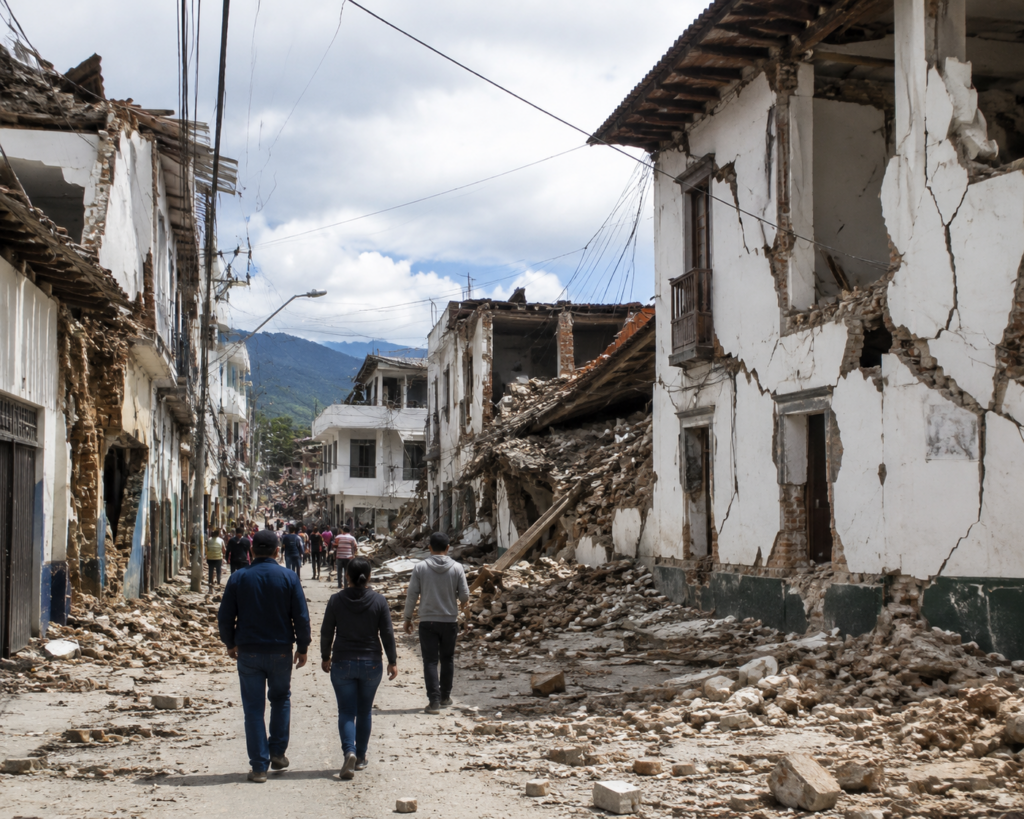
Images from the region told the story: cracked walls, debris-strewn streets, families gathered in open spaces, rescue workers moving carefully through unstable structures.
Monday’s earthquake ranks among Colombia’s strongest in recent years. The country sits in one of the world’s most seismically active zones. When a 7.4 hits, the consequences are never small.
Rescue operations continue. Reports keep arriving from western Colombia. Authorities have been clear: the full scale of the destruction and the final loss of life are still unknown.
This is the reality of living on a restless planet. Strong leadership, fast coordination, and clear communication save lives. The new Colombian government is being tested in its first days. The early response—convening an emergency committee, mobilizing capital resources, and keeping citizens informed—shows an understanding of what the moment demands.
For the families waiting for news of loved ones, every hour counts. For the rescue teams digging through rubble, every aftershock raises the risk. For the nation, this is a reminder that preparedness and decisive action matter more than political talking points when the ground starts moving.
The death toll stands at least at 22. That number may rise. Buildings still need to be searched. Isolated areas still need to be reached. Infrastructure still needs to be checked.
Colombia is responding. Neighboring Venezuela is assessing. The region is watching.
Natural disasters do not care about politics. They test systems, leadership, and the ability to put people first. Right now, the focus is exactly where it should be: on the victims, the missing, the injured, and the crews working to reach them.
The coming hours and days will reveal more about the true human cost. Until then, the priority remains clear—rescue the living, account for the dead, and stabilize the hardest-hit communities.
A 7.4-magnitude quake does not leave room for hesitation. Colombia is moving. The rest of the world should pay attention.

Benjamin Harris is a RapidReports front page contributor and editor,proud father of four.