Senate Delivers Bipartisan Funding Bill to Keep Government Open Through December
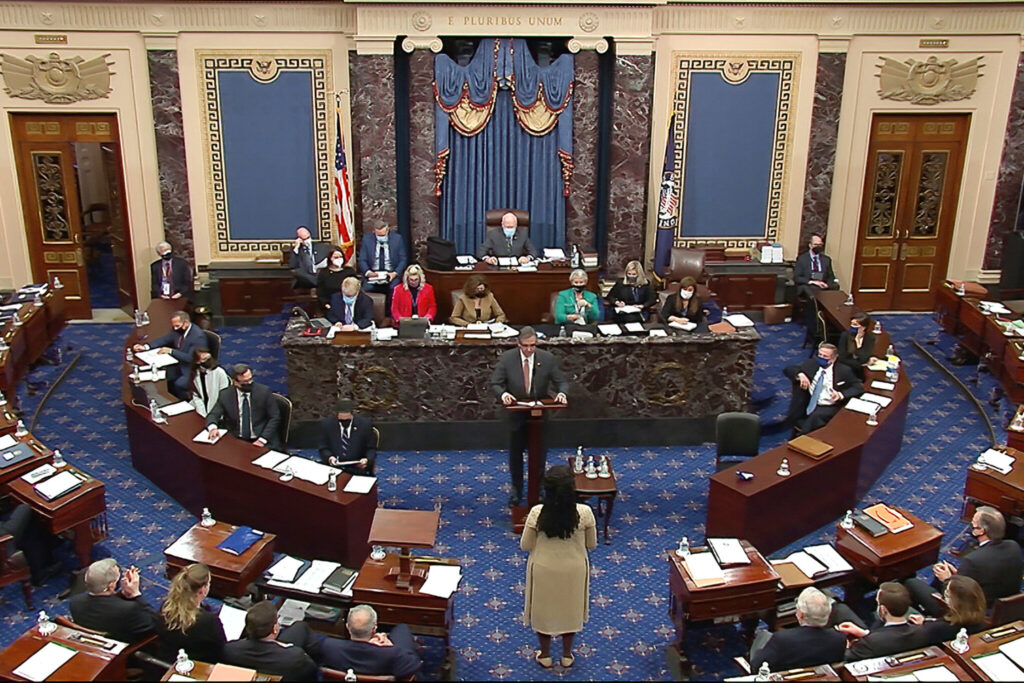
Republicans and Democrats in the Senate found rare common ground late last week, approving legislation that keeps the federal government funded past the midterm elections and avoids a shutdown before the October 1 deadline. The measure passed Saturday by a strong bipartisan vote of 90-6, with Sen. Lindsey Graham of South Carolina voting “present.”
The bill extends current federal funding levels through December 11 and includes several targeted provisions. Senate leaders moved the legislation quickly under a bipartisan agreement reached Saturday morning so lawmakers could finish work before the August recess. The House has already passed its own continuing resolution that funds the government through December 4. The two chambers must now reconcile the differences before the new fiscal year begins.
Keeping the Government Open While Negotiations Continue
Continuing resolutions are temporary measures that maintain existing funding levels when Congress has not completed full-year appropriations bills. This one buys time for lawmakers to negotiate longer-term spending while preventing the disruption of a government shutdown. A shutdown would interrupt federal services, delay pay for many workers, and create uncertainty for millions of Americans who rely on government programs.
The White House issued a Statement of Administration Policy endorsing the Senate version. “Every Member of Congress should support passage of this [continuing resolution] to keep the Government open as discussions on full year appropriations continue,” the statement said. The administration did not release a comparable endorsement of the House measure, which omitted several funding increases and policy items requested by the White House.
Key Provisions and Points of Debate
One significant element of the Senate bill temporarily prevents the Trump administration from implementing a proposal that would give political appointees greater authority over the approval of federal grants. The restriction lasts only for the duration of the continuing resolution and sets up a larger debate when Congress returns to full-year funding discussions in December.
Sen. John Kennedy of Louisiana has said he intends to oppose any long-term limits on the administration’s grant proposal. Senate Appropriations Chair Susan Collins of Maine stated she will “continue to oppose” the plans “because I think they politicize the grants process, and I don’t want that to occur.” Ranking Democrat Patty Murray of Washington has also indicated she is prepared to challenge the administration’s approach.
The Senate also rejected an amendment from Sen. Ted Budd of North Carolina that would have allowed a federal ban on intoxicating hemp products to take effect in November. At the administration’s request, the bill instead delays implementation of that ban.
On immigration enforcement, the legislation specifies that Immigration and Customs Enforcement and U.S. Customs and Border Protection will not receive additional funding under the temporary measure. Congress had already approved approximately $70 billion for those agencies earlier this year. Some House Republicans have expressed concern about this language. Rep. John Rutherford of Florida called it a potential “dealbreaker,” while Rep. Jeff Van Drew of New Jersey said he wanted to know the president’s view before deciding.
House and Senate Differences
The House and Senate versions differ on the length of the extension and on several policy riders. The House bill runs through December 4; the Senate version goes to December 11. Democratic ranking member of the House Appropriations Committee, Rep. Rosa DeLauro of Connecticut, praised the Senate bill for temporarily blocking the grant-policy change and limiting additional immigration-enforcement funding under the stopgap measure. She described it as “a clear improvement over the House Republican continuing resolution” while noting that lawmakers still need to pass full-year funding bills.
These differences mean the two chambers must negotiate a final package that can pass both houses and receive the president’s signature. The White House’s endorsement of the Senate approach gives that version momentum, but House Republicans will have a say in the final shape of the bill.
A Temporary Bridge to Full-Year Funding
Continuing resolutions are not ideal long-term solutions. They freeze funding at existing levels and can delay new priorities or adjustments. Yet they serve an important purpose: they prevent the economic and operational damage of a government shutdown while elected officials work through disagreements.
The current measure keeps agencies operating, protects pay for federal workers, and maintains services that Americans depend on. It also preserves space for later debate over the administration’s grant-approval proposal and other policy questions. Those issues will return when Congress turns to full-year appropriations later in the fall.
Responsible Governance Ahead of the Midterms
The 90-6 Senate vote demonstrates that even in a polarized environment, majorities in both parties can still agree on the basic necessity of keeping the government funded. The bipartisan support, combined with White House backing for the Senate version, increases the chances that a final compromise can be reached before October 1.
For working families, retirees, and businesses that rely on predictable federal operations, avoiding a shutdown is a practical win. The legislation does not resolve every policy dispute, nor does it lock in permanent changes. It simply ensures continuity while lawmakers continue the harder work of writing full-year spending bills.
As the House and Senate reconcile their differences, the focus remains on producing a clean path that keeps the government open and allows the broader appropriations process to move forward without disruption. The bipartisan Senate action last weekend provides a solid foundation for that effort.

Benjamin Harris is a RapidReports front page contributor and editor,proud father of four.