South Korea Fires Warning Shots After North Korean Soldiers Cross Military Demarcation Line
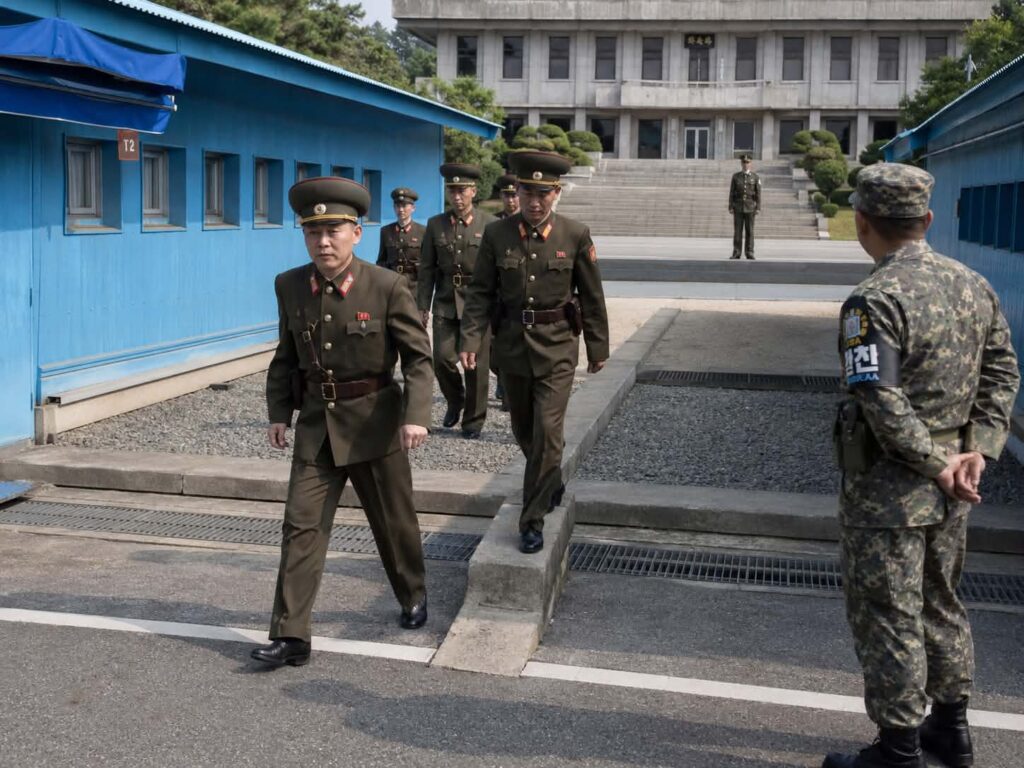
South Korean forces fired warning shots last week after multiple North Korean soldiers crossed the Military Demarcation Line in the eastern section of the Demilitarized Zone, according to South Korea’s Ministry of National Defense.
The North Korean personnel returned to the northern side of the boundary after the warning shots were fired. South Korean authorities said no further unusual activity was observed following the incident.
The episode represents the first reported crossing of the Military Demarcation Line by North Korean military personnel in 2026 and the first reported instance this year in which South Korean troops fired warning shots in response.
North Korean Soldiers Crossed the Military Demarcation Line
The incident took place sometime during the week before reports emerged on August 16.
According to South Korean officials, multiple North Korean soldiers moved across the Military Demarcation Line in the eastern portion of the Demilitarized Zone, commonly known as the DMZ.
The line serves as the military boundary separating North and South Korean forces inside the heavily fortified border area.
A South Korean government source indicated that the North Korean soldiers may have been conducting a routine patrol when they crossed the line.
Authorities did not report evidence that the crossing was followed by a larger military operation.
South Korean Forces Responded With Warning Shots
South Korean troops responded according to established military procedures.
When North Korean personnel approach the Military Demarcation Line, South Korean forces typically issue verbal or broadcast warnings.
If the personnel continue moving across the line, warning shots can be fired to encourage them to immediately withdraw.
That sequence was reportedly followed during the latest incident.
South Korean troops issued warnings and then fired shots after the North Korean soldiers crossed the boundary.
The North Korean personnel subsequently moved back to their side of the line.
No Casualties Were Reported
South Korean authorities did not report casualties resulting from the incident.
There were also no reports of additional exchanges of fire or unusual military movements immediately after the North Korean soldiers withdrew.
The South Korean military said it continues to monitor activity along the border while maintaining a heightened state of readiness.
The ministry emphasized that its forces remain prepared to respond if similar incidents occur.
South Korea Says It Is Closely Monitoring North Korean Activity
In a statement, South Korean authorities said North Korean forces had recently crossed the military demarcation line on the eastern front, prompting South Korean forces to fire warning shots in accordance with established operational procedures.
The military also said it was closely monitoring North Korean movements and maintaining a firm military readiness posture.
The statement did not indicate that the incident had escalated into a broader confrontation.
First Reported Border Violation of 2026
The latest crossing is notable because it is reportedly the first recorded violation of the Military Demarcation Line by North Korean troops this year.
It is also the first reported occasion in 2026 in which South Korean forces fired warning shots in response to North Korean personnel crossing the boundary.
Although crossings can occur accidentally or during military activity near the border, incidents involving armed personnel are closely watched because of the potential for rapid escalation.
The Korean Peninsula remains one of the world’s most heavily militarized regions.
North Korea Reportedly Crossed the Line 17 Times in 2025
The latest incident follows a series of reported crossings during the previous year.
According to the same reporting, North Korean troops crossed the Military Demarcation Line on 17 occasions in 2025.
Many of those incidents reportedly occurred while North Korean forces were working to strengthen military positions and fortifications near the border.
The increased construction activity has added to concerns about the possibility of accidental confrontations between troops operating in close proximity.
Border Fortifications Have Increased Tensions
North Korea has undertaken military construction and other activities near sections of the border.
The developments have taken place against the backdrop of a significant deterioration in relations between North and South Korea.
North Korean leadership declared in 2023 that inter-Korean relations should be viewed as relations between hostile states, reflecting a major shift in the way Pyongyang publicly characterized its relationship with Seoul.
Since then, military activity and political tensions have remained elevated.
Why the Military Demarcation Line Matters
The Military Demarcation Line runs through the center of the Demilitarized Zone and represents the boundary between the military forces of North and South Korea.
Despite its name, the DMZ is among the most heavily guarded areas in the world.
Military personnel on both sides operate near the boundary, making even relatively small movements potentially significant.
A crossing by armed troops can therefore trigger an immediate response designed to prevent the situation from escalating.
Warning Shots Are Part of South Korea’s Rules of Engagement
South Korean forces follow established procedures when North Korean personnel approach or cross the Military Demarcation Line.
The initial response generally involves warnings directed at personnel approaching the boundary.
If the personnel cross the line despite those warnings, South Korean forces can fire warning shots.
The purpose is to signal clearly that the troops have crossed into prohibited territory and should return to their side.
In the latest incident, the North Korean soldiers withdrew after the South Korean military fired warning shots.
No Further Unusual Activity Observed
South Korean authorities said there was no additional unusual activity following the withdrawal of the North Korean troops.
That detail is significant because military encounters along the border can potentially escalate if either side interprets the other’s actions as hostile.
In this case, however, the reported confrontation ended after the North Korean soldiers returned across the line.
There was no reported exchange of direct fire between the two sides.
The Korean War Remains Technically Unresolved
The Demilitarized Zone was established under the 1953 armistice that halted major fighting in the Korean War.
The conflict began in 1950 and continued until the armistice was signed three years later.
However, the armistice did not constitute a formal peace treaty.
As a result, North and South Korea technically remain in a state of war, although large-scale fighting has not resumed since the armistice.
The unresolved status of the conflict remains an important factor in understanding the military significance of incidents along the border.
What Happens Next?
South Korean authorities are continuing to monitor North Korean military activity along the border.
Officials have not indicated that the recent crossing represents a deliberate attempt to initiate a confrontation.
The possibility that the soldiers were conducting a patrol provides one potential explanation for the incident, although South Korean authorities will continue monitoring the situation.
For now, the North Korean troops have returned to their side of the Military Demarcation Line, and no further unusual activity has been reported.
The incident nevertheless underscores the continuing military tensions on the Korean Peninsula and the importance of established procedures designed to prevent potentially dangerous border encounters from escalating.

Benjamin Harris is a RapidReports front page contributor and editor,proud father of four.