Arizona Braces for Dangerous Dust Storm as Strong Winds Raise Concerns About Valley Fever
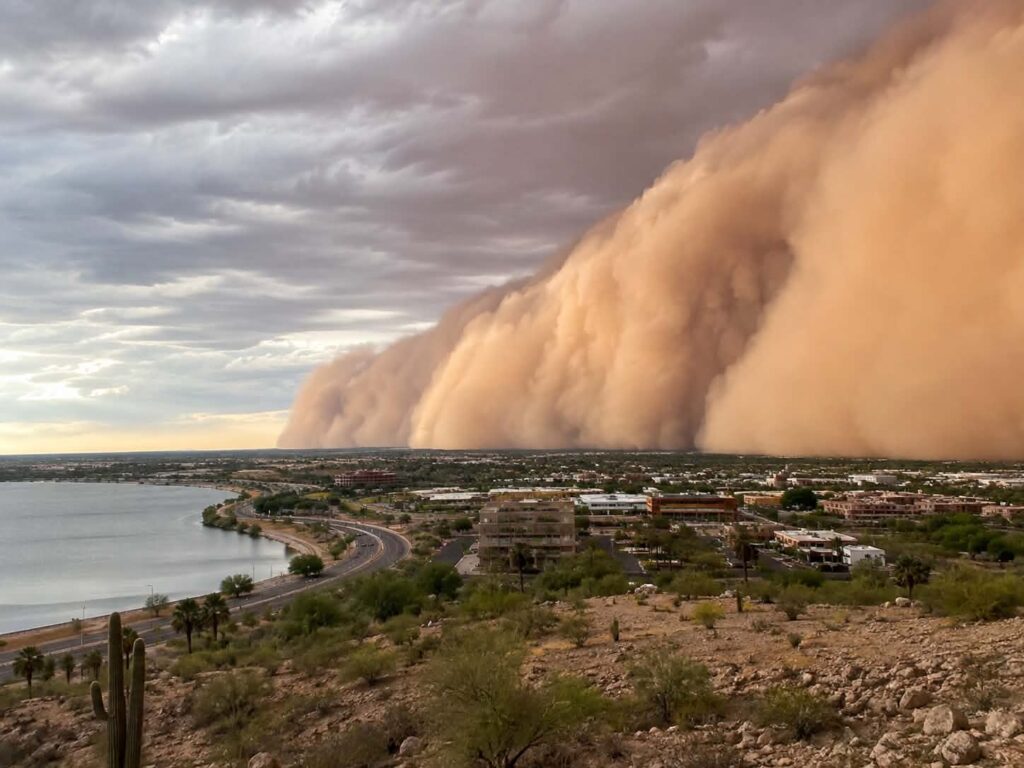
A powerful round of thunderstorms and strong winds is expected to generate areas of blowing dust across parts of central and southern Arizona Wednesday, creating dangerous travel conditions and raising concerns about exposure to airborne dust.
The National Weather Service has warned that strong outflow winds could produce gusts of 45 to 55 mph in parts of southeastern Arizona, with blowing dust potentially reducing visibility and affecting motorists.
The weather threat comes as much of Arizona continues to experience oppressive summer heat, creating an especially challenging combination of extreme temperatures, thunderstorms and rapidly developing dust.
Phoenix and Tucson Areas Face Dust Threat
Communities across central and southern Arizona could experience periods of sharply reduced visibility as thunderstorms push powerful winds across dry desert terrain.
The Phoenix and Tucson metropolitan areas are among the major population centers that can be affected by these conditions.
The National Weather Service has specifically warned that strong storm outflows can generate blowing dust capable of creating hazardous travel conditions.
Haboobs Can Develop Quickly
Arizona’s summer thunderstorms can produce powerful outflow winds that lift loose desert soil into the atmosphere.
When those winds create a large wall of dust, the phenomenon is commonly known as a haboob.
These dust walls can develop rapidly, sometimes giving motorists very little time to react.
Visibility can deteriorate dramatically once a dense dust cloud reaches a roadway.
Why Blowing Dust Is Dangerous
The immediate danger is often reduced visibility.
Drivers caught inside a dense dust cloud can have difficulty seeing other vehicles, lane markings and road hazards.
The combination of strong winds and near-zero visibility can create extremely dangerous driving conditions, particularly on major highways and heavily traveled roads.
The National Weather Service recommends that motorists who encounter blowing dust pull completely off the roadway, put the vehicle in park and turn off their lights rather than continuing to drive.
Dust Can Also Carry Fungal Spores
There is another concern associated with major dust events in the Southwest.
Arizona soil can contain Coccidioides, the fungus responsible for Valley fever.
When soil is disturbed and dust becomes airborne, microscopic fungal spores can potentially be inhaled.
The CDC says people can contract Valley fever by breathing in Coccidioides spores from the environment, particularly in areas where the fungus is common.
Important Distinction: No Specific Fungal Storm Has Been Confirmed
Despite the alarming headlines surrounding the weather event, there is an important distinction.
A dust storm does not automatically mean that a dangerous concentration of fungal spores is present.
There is no indication in the information provided that officials have confirmed that this particular storm contains elevated levels of Coccidioides.
The concern exists because the fungus naturally occurs in parts of Arizona and can become airborne when dust is disturbed.
Valley Fever Is Established in Arizona
Valley fever is not a new disease in the state.
According to the CDC, Arizona accounts for nearly 70% of reported Valley fever cases in the United States, with California accounting for much of the remainder.
The fungus is particularly associated with the dry environments of the Southwest.
That makes significant dust events an important public-health consideration for people living in affected regions.
Most Infections Are Not Severe
For many people who develop Valley fever, the illness is mild or may cause no noticeable symptoms.
When symptoms do occur, they can resemble other respiratory infections.
Common symptoms can include fatigue, fever, cough, headache and muscle or joint aches.
The CDC notes that many people recover without treatment, although some infections can become much more serious.
Severe Valley Fever Can Be Dangerous
In a smaller number of cases, Valley fever can cause serious lung disease or spread beyond the lungs.
Severe infections can require prolonged medical treatment and hospitalization.
The CDC says people with weakened immune systems and certain other health conditions are at greater risk for severe disease.
That is why avoiding heavy dust exposure is particularly important for people who may be more vulnerable to respiratory complications.
Phoenix and Tucson Have Seen Significant Valley Fever Activity
The Phoenix and Tucson metropolitan areas are among the regions where Valley fever is particularly relevant.
CDC data has estimated that Valley fever accounts for roughly 15% to nearly 30% of community-acquired pneumonia in highly endemic areas such as the Phoenix and Tucson metropolitan regions.
That does not mean that 15% to 30% of people exposed to dust will develop Valley fever.
Rather, it illustrates why physicians in these areas consider the disease when evaluating certain respiratory illnesses.
Who Should Be Especially Careful?
People with respiratory conditions may want to take extra precautions during periods of heavy dust.
The same applies to people who are particularly vulnerable to severe respiratory infections.
The CDC recommends avoiding areas with heavy dust when possible and staying indoors during dust storms, with windows closed.
For people who cannot avoid dusty environments, the CDC notes that an N95 respirator can help reduce exposure.
Keep Windows and Doors Closed
During a major dust event, residents should limit the amount of outdoor air and dust entering their homes.
Closing windows and doors can reduce exposure.
Indoor air filtration may also be useful, particularly for people who are sensitive to airborne particles.
The goal is simple: reduce the amount of dust entering the lungs.
Extreme Heat Adds Another Hazard
The dust threat is arriving alongside dangerous heat across Arizona.
The National Weather Service has an ongoing extreme heat warning affecting portions of the Phoenix area, with dangerous temperatures expected to persist.
The combination of heat and dust can make outdoor conditions particularly unpleasant and potentially hazardous.
People who must be outside should take heat precautions while also monitoring changing weather conditions.
Thunderstorms Can Trigger Sudden Wind Bursts
Arizona’s monsoon season can produce thunderstorms capable of generating strong outflow winds even when rainfall at a particular location is limited.
Those winds can travel well beyond the immediate thunderstorm.
As they move across dry desert terrain, they can lift enormous quantities of dust.
The result can be a rapidly developing dust wall that overtakes roads and communities.
Drivers Should Take Dust Warnings Seriously
One of the most important safety messages from forecasters is directed toward motorists.
If a dense dust cloud approaches a roadway, continuing to drive can be extremely dangerous.
The National Weather Service’s guidance is to pull as far off the road as safely possible, place the vehicle in park and turn the lights off.
The agency summarizes the strategy with the phrase “Pull Aside, Stay Alive.”
The Biggest Immediate Threat Is Visibility
Although concerns about Valley fever deserve attention, the immediate danger during a severe dust event is often the dramatic loss of visibility.
A driver can enter a dust cloud and suddenly lose the ability to see traffic ahead.
That can lead to chain-reaction crashes, particularly on highways where vehicles are traveling at high speeds.
Motorists should never assume that a dust cloud will simply pass before they reach it.
Arizona Remains on Alert
Forecasters continue to monitor thunderstorm activity and wind conditions across the state.
The National Weather Service’s latest Arizona forecasts call for additional thunderstorms, with strong winds and blowing dust among the primary concerns.
Conditions can change quickly during monsoon storms, making official weather alerts particularly important.
What Residents Should Do
Residents in areas threatened by blowing dust should consider:
- Staying indoors when dust becomes heavy.
- Closing windows and doors.
- Avoiding unnecessary outdoor exercise.
- Monitoring National Weather Service alerts.
- Taking extra precautions if they have respiratory conditions.
- Avoiding driving through dense dust.
- Pulling completely off the roadway if visibility suddenly collapses.
These steps can reduce exposure to both dangerous dust and the risks associated with severe weather.
A Dangerous Combination for Arizona
Arizona’s latest weather threat demonstrates how several hazards can arrive simultaneously.
Extreme heat can stress the body.
Thunderstorms can produce powerful wind gusts.
Those winds can create enormous dust clouds.
And desert dust can potentially carry environmental particles, including Coccidioides spores in areas where the fungus is present.
For residents, the safest approach is to treat the dust threat seriously without assuming that every dust storm is automatically a fungal outbreak.
Bottom Line
Arizona is facing a potentially dangerous combination of strong thunderstorm winds, blowing dust, reduced visibility and extreme heat.
The National Weather Service has warned that storm outflows could produce wind gusts of roughly 45 to 55 mph and significant blowing dust in parts of the state.
While officials have not confirmed that the approaching dust contains elevated concentrations of Coccidioides, the fungus is naturally present in Arizona soil and can become airborne when dust is disturbed.
The most important message for residents is straightforward: if a wall of dust approaches, get off the road, get indoors when possible and follow official weather guidance.

Benjamin Harris is a RapidReports front page contributor and editor,proud father of four.