Iranian President Calls for End to Conflict with U.S., Criticizes Hardliners Amid Mounting Pressure
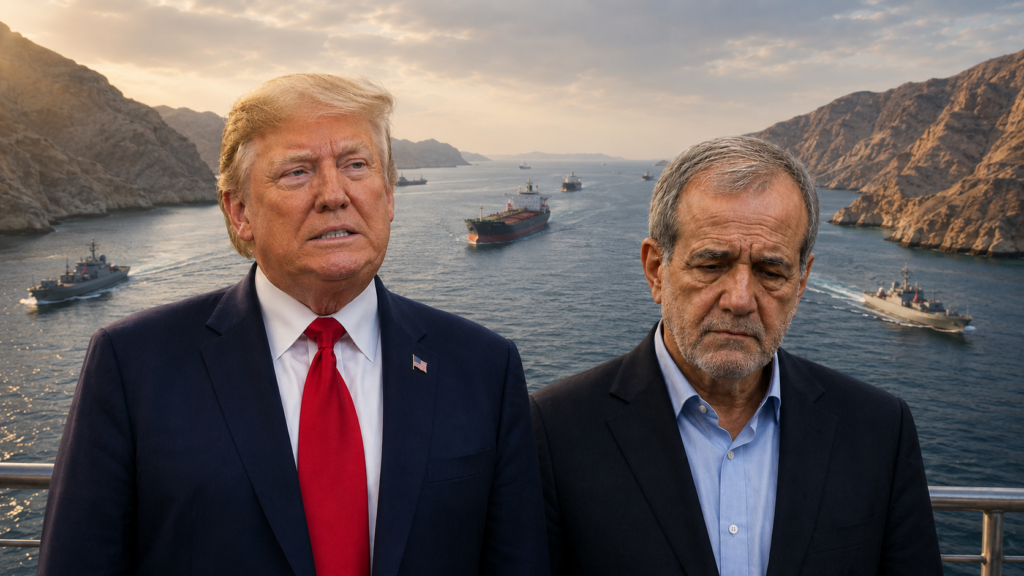
Iranian President Masoud Pezeshkian on Friday called for an end to his country’s conflict with the United States while delivering an unusually direct criticism of hardliners within his own regime. Speaking to the General Assembly of the Islamic Association of the Medical Society of Iran, Pezeshkian argued that Tehran should move to end the confrontation while it still holds what he described as a strong position.
“It is better to end the war today, when we are in power and dignity and the whole world acknowledges our victory and emphasizes that America, contrary to all regulations, attacked our schools, hospitals, and infrastructure, and is hated in the world,” Pezeshkian said, according to a translation of a transcript published by Iranian state media.
The remarks marked a notable shift in tone from some of the more confrontational voices inside Tehran. Powerful factions have continued to advocate resistance despite growing military and economic pressure on the regime.
Pezeshkian then turned his frustration toward critics who, in his view, demand more confrontation without facing the consequences. “In the meantime, some people are sitting outside the circle; because they do not know the state of the government, the state of the parliament, and the state of the commanders, they make comments and analysis, even though they have not experienced any suffering or hardship, and then they talk about the cost,” he said. He added that those critics “do not find a single clause in this agreement that indicates a commitment; all commitments are related to the other party.”
The comments revealed an increasingly public divide inside the Iranian government over how long the regime can sustain the current confrontation. Iran has faced sustained pressure from the United States, including military action, sanctions, and efforts to restrict the regime’s access to oil revenue and foreign trade. The economic damage has become harder for Tehran to ignore.
Pezeshkian acknowledged that ordinary Iranians are bearing the effects of inflation and the broader costs of the conflict. “Criticizing the problems of inflation and issues arising from the war is not consistent with the slogans of some. When we chant slogans, we must also accept their severity,” he said.
The Iranian president’s remarks were striking because they came from within a system where the most consequential national security decisions ultimately rest with Supreme Leader Ayatollah Ali Khamenei and the Islamic Revolutionary Guard Corps. Pezeshkian has generally been viewed as more pragmatic than Iran’s hardest-line political figures, yet his ability to fundamentally redirect Tehran’s foreign policy remains limited.
Still, an open call to end the conflict paired with criticism of hawkish voices inside Iran points to serious internal debate fueled by external pressure. The speech arrives as Tehran confronts worsening economic strain and growing isolation across the region.
For years, Iran relied on sanctions workarounds, oil exports, and relationships with regional allies to blunt the impact of American pressure. Recent actions by neighboring countries and Washington have made some of those escape routes more difficult to maintain. The public airing of these frustrations suggests the pressure campaign is registering at the highest levels of the regime.
Benjamin Harris is a RapidReports front page contributor and editor,proud father of four.