House Passes Data Center Ratepayer Bill 417-3, but Senate Action Hits Roadblock
The House of Representatives has overwhelmingly approved legislation aimed at preventing large data centers from shifting the cost of new electricity infrastructure onto existing utility customers.
The Ratepayer Protection Act, H.R. 9340, passed the House on September 16 by a 417-3 vote, giving the measure unusually broad bipartisan support. The bill was introduced by Republican Rep. Gabe Evans of Colorado and Democratic Rep. Kathy Castor of Florida.
The legislation focuses on a growing issue for utility regulators: who should pay when massive new electricity users, particularly data centers supporting artificial intelligence and cloud computing, require utilities to build additional generation, transmission and other infrastructure.
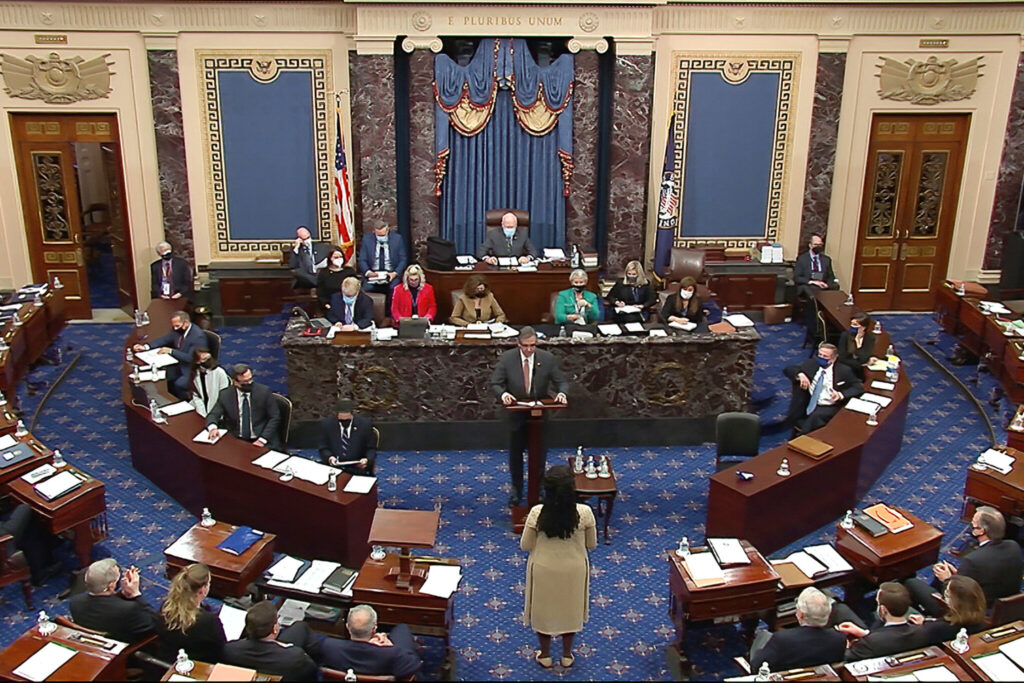
However, the bill’s path became more complicated the following day when Sen. Martin Heinrich, D-N.M., objected to an attempt by Republican Sen. Jon Husted of Ohio to pass the measure through unanimous consent.
As a result, the House-passed bill has not become law.
What the Ratepayer Protection Act Would Do
H.R. 9340 would amend the Public Utility Regulatory Policies Act to establish a federal framework for state regulators dealing with very large new electricity customers.
The legislation focuses on “large-load customers” with electricity demand of 100 megawatts or more at a single site, particularly data centers and other large computing facilities.
Under the bill, states would be encouraged to consider rules requiring those customers to cover the full incremental cost of infrastructure needed to serve their electricity demand.
That could include new generation, transmission and other grid upgrades.
The legislation also contemplates special rates, contracts or other arrangements through which large customers would pay those additional costs over time.
Another provision concerns financial assurances. The goal is to reduce the risk that utilities and existing customers could be left paying for infrastructure if a large data-center project reduces its electricity consumption or eventually leaves the utility system.
The Bill Does Not Impose One Nationwide Rate Structure
Despite the bill’s federal framework, H.R. 9340 would leave substantial authority with individual states.
Rather than establishing one mandatory nationwide electricity-rate formula, the legislation directs state regulators to consider standards addressing the costs created by large-load customers.
States without comparable standards would have to begin a regulatory proceeding to consider the federal framework, while retaining discretion over how those principles are implemented locally.
That distinction has become central to the debate over the legislation.
Supporters argue that state utility systems differ significantly and therefore require flexibility. Critics have argued that simply requiring states to consider the standards may not provide enough protection if regulators ultimately decline to impose stronger cost-allocation rules.
Bipartisan Support in the House
The legislation’s House vote was notable for its breadth.
The measure passed 417-3, with 210 Republicans and 206 Democrats voting yes, along with one independent. Three Democrats voted against it.
The Energy and Commerce Committee had previously approved the legislation 52-0 in July.
That bipartisan support reflects growing congressional attention to the electricity demands associated with the expansion of artificial intelligence infrastructure.
Rep. Evans and Rep. Castor have argued that the companies creating exceptionally large new electricity demand should be responsible for the additional infrastructure costs their projects generate.
House Energy and Commerce Chairman Brett Guthrie similarly said the legislation is intended to ensure that data-center companies, rather than ordinary households and small businesses, bear those incremental costs.
Why Data Centers Are Driving the Debate
Data centers can consume enormous quantities of electricity.
The rapid expansion of artificial intelligence has increased demand for facilities housing servers used for AI training, cloud computing and other data-intensive operations.
When a large facility connects to an existing power system, utilities may need to make investments in generation, transmission or distribution infrastructure.
The central policy question is whether those costs should be assigned primarily to the new customer generating the demand or distributed more broadly among utility customers.
The issue has become increasingly important as utilities plan for higher electricity consumption and regulators consider how to structure rates for large new industrial and computing customers.
Senate Action Hits a Roadblock
The House passage initially appeared to set up a relatively straightforward Senate debate, where Sen. Jon Husted, R-Ohio, had introduced a companion bill, S. 5028.
Husted attempted on September 17 to use unanimous consent to move the House-passed legislation through the Senate without a lengthy debate and vote process.
But Sen. Martin Heinrich, the top Democrat on the Senate Energy and Natural Resources Committee, objected. Under the unanimous-consent procedure, a single senator can prevent the request from proceeding.
Heinrich said he agrees that data centers can increase electricity costs but argued that H.R. 9340 does not impose sufficiently strong requirements.
Heinrich Proposes a Different Approach
Heinrich has introduced the GRID Savings Act, which he says would provide stronger federal requirements for large electricity users.
His proposal would give the Federal Energy Regulatory Commission a greater role in establishing rules for large customers connecting to the electric grid.
According to Heinrich’s office, the legislation would require large electricity users to pay for certain grid upgrades associated with connecting to the system and would require financial commitments from companies seeking new grid connections.
Heinrich also said his approach would address issues beyond electricity costs, including community participation, water consumption, air pollution and the use of clean energy and battery storage.
After objecting to Husted’s request, Heinrich attempted to advance his own legislation through unanimous consent. Republican Sen. Bernie Moreno of Ohio objected to that request as well.
Husted’s Senate Bill Remains Pending
Husted’s companion legislation, S. 5028, was introduced in July and referred to the Senate Energy and Natural Resources Committee.
Its basic purpose mirrors the House measure: establish federal standards for states to consider when determining how large electricity users should pay for the incremental infrastructure needed to serve them.
The failed unanimous-consent attempt does not by itself eliminate the possibility of further Senate consideration. But the disagreement demonstrates that bipartisan support for the general concept does not necessarily mean lawmakers agree on how strong the federal requirements should be.
The Broader AI Infrastructure Question
The debate comes as the United States expands its AI infrastructure while utilities face questions about how quickly electricity demand will grow.
The issue has created an unusual overlap between technology policy, energy regulation and consumer costs.
Lawmakers supporting continued data-center development have generally argued that the United States needs additional computing and electricity infrastructure to compete in artificial intelligence.
At the same time, lawmakers from both parties have raised concerns about whether households and small businesses could ultimately pay some of the costs associated with that expansion.
The Ratepayer Protection Act attempts to address that concern without imposing a federal moratorium on data-center construction.
What Happens Next
The House has completed its action on H.R. 9340, but the Senate has not approved it.
For the measure to become law, the Senate would have to pass the legislation and the president would then have to sign it.
The September 17 procedural dispute means the legislation’s future remains unresolved. Husted and other supporters could continue pursuing the House-passed measure, while Heinrich and other senators may seek changes or a competing framework.
For consumers, the practical issue is whether federal legislation eventually establishes enforceable rules ensuring that the costs of new power infrastructure created by very large data centers are assigned to those customers rather than automatically spread across existing ratepayers.
For the technology industry, the debate could affect how new data-center projects negotiate electricity connections and infrastructure costs with utilities and state regulators.
The House’s 417-3 vote demonstrates broad congressional interest in the issue, but the Senate’s latest action shows that agreement on the problem has not yet produced agreement on the legislative solution.

Benjamin Harris is a RapidReports front page contributor and editor,proud father of four.