Trump and Xi Extend Trade Truce as U.S. and China Reach New Economic Agreements
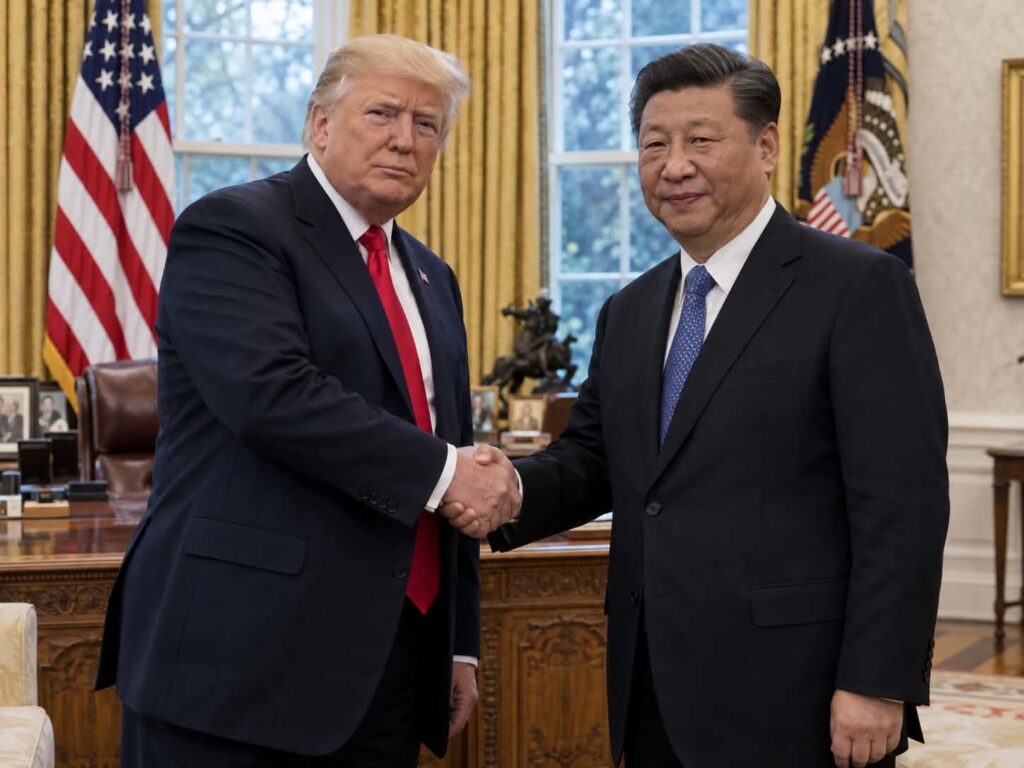
President Donald Trump and Chinese President Xi Jinping have agreed to extend their existing trade truce for two months while reaching a series of new economic arrangements covering tariffs, agricultural products, coal, investment and market access.
The agreements emerged from Xi’s three-day state visit to Washington, which concluded Friday with the two leaders presenting the relationship as more stable even as major disagreements over technology, Taiwan, critical minerals and other issues remain unresolved.
U.S. Trade Representative Jamieson Greer said additional details of the trade arrangements are expected to be released Monday. Reuters reported that the two sides agreed to exempt certain key goods from tariff disputes and extend the existing truce, which had been scheduled to expire Nov. 10.
The White House characterized the visit as producing progress toward a more reciprocal economic relationship, while independent reporting described the summit as producing limited public breakthroughs compared with the breadth of issues facing the two countries.
Trade Truce Extended for Two Months
One of the clearest outcomes was an extension of the current U.S.-China trade truce.
The agreement prevents tariffs from returning immediately to the much higher levels that were imposed during the earlier stages of the trade conflict and gives negotiators additional time to work toward a broader arrangement.
Reuters reported that the truce will be extended by two months beyond its scheduled Nov. 10 expiration.
The extension does not amount to a permanent trade agreement. It instead provides additional time for Washington and Beijing to negotiate outstanding disputes.
Greer said the administration expects to release substantially more information about the negotiations on Monday.
$30 Billion in Goods Targeted for Better Tariff Treatment
The White House said the U.S.-China Board of Trade reached consensus on recommendations for more favorable tariff treatment involving approximately $30 billion of non-sensitive goods in each direction.
For U.S. exports to China, the categories include:
- Agricultural products
- Fish and seafood
- Logs and wood products
- Cosmetics
- Medical devices
For Chinese exports to the United States, the categories include consumer products such as small appliances, toys, holiday decorations and children’s car seats.
The White House described the arrangement as part of an effort to improve market access while maintaining restrictions involving goods considered strategically sensitive.
The precise tariff rates and implementation schedules were not included in the initial White House fact sheet.
China Agrees to Major U.S. Coal Purchases
Another announced element involves U.S. coal exports.
According to the White House, China will import at least 10 million metric tons of U.S. coal in both 2027 and 2028.
The administration connected the agreement to its broader effort to expand U.S. energy exports.
Trump also urged Xi to increase Chinese production of refined petroleum products, saying greater output could help stabilize global energy supplies.
The coal commitment is separate from the broader agricultural and industrial trade discussions.
Investment Board Becomes Operational
The two countries also moved forward with an investment mechanism established during Trump’s May summit with Xi in Beijing.
The U.S.-China Board of Investment is intended to provide a structured channel for discussing investment opportunities and obstacles facing businesses in both countries.
The White House said the board will address commercially meaningful investment issues and potential opportunities.
The creation of the mechanism does not mean Washington and Beijing have resolved their wider disputes over technology controls, national security reviews or foreign investment.
Instead, it gives officials another formal channel for discussing those disagreements.
Agricultural Trade Remains a Major Focus
Agriculture was another significant part of the discussions.
The Board of Trade established a working group specifically focused on agricultural market-access barriers.
Trump has repeatedly highlighted the importance of Chinese purchases for American farmers and ranchers. Following the summit, he said U.S. farmers would benefit from the discussions, although he did not provide detailed figures.
Earlier agreements between the two countries had included commitments involving U.S. agricultural purchases, but implementation has been uneven.
The Associated Press reported before the summit that China appeared unlikely to meet a previously discussed $30 billion annual target for U.S. farm goods, based on the pace of purchases at the time.
That history makes the actual volume and timing of future Chinese purchases an important measure of whether the latest commitments translate into increased trade.
Rare Earths and Critical Minerals Remain Unresolved
Critical minerals were another major issue in the broader negotiations.
The White House said Washington and Beijing continue working on supply-chain problems involving rare earths and other critical minerals, with the goal of restoring shipments to appropriate levels.
China has significant influence over global rare-earth processing and has previously used export controls as leverage during disputes with Washington.
The latest summit did not eliminate the underlying strategic competition over those materials.
Instead, the two governments appear to have kept negotiations open.
Artificial Intelligence Gets Its Own Communication Channel
Trade was not the only economic issue discussed during Xi’s visit.
The United States and China also agreed to establish a bilateral communication channel for artificial-intelligence incidents, according to the White House.
The mechanism is intended to provide a way for the two governments to communicate about AI-related incidents and risks.
The announcement comes as Washington and Beijing compete over advanced computing, semiconductor technology and artificial intelligence while simultaneously trying to prevent technological competition from creating broader security risks.
Taiwan Remains a Major Point of Disagreement
The economic discussions did not resolve the two countries’ political and security differences.
Taiwan remained one of the most sensitive subjects during the summit.
Reuters reported that Xi pressed Trump to adopt Beijing’s preferred language regarding Taiwan independence. Washington has traditionally maintained that it does not support Taiwanese independence while also providing Taiwan with defensive capabilities under U.S. law.
Trump did not publicly announce a major change in U.S. Taiwan policy during the visit.
That leaves one of the most consequential disagreements between Washington and Beijing unresolved.
Iran Was Also Discussed
The leaders also discussed the war involving Iran.
U.S. Ambassador to China David Perdue said Trump reiterated to Xi that direct or indirect Chinese support for Iran was unacceptable and that he received assurances from Beijing.
Chinese officials have separately called for negotiations to resolve the conflict.
The issue adds another layer to the U.S.-China relationship because Beijing has maintained economic and diplomatic ties with Tehran while Washington has sought to pressure Iran.
The Summit Produced Agreements—but Not a Comprehensive Trade Deal
The distinction between a collection of agreements and a comprehensive trade deal is important.
Trump has described the discussions in highly positive terms, while the White House has highlighted numerous areas of cooperation.
But Reuters reported that the summit ended with relatively few major public breakthroughs and that many contentious issues remain unresolved. Details of the trade arrangements are also not expected to be fully released until Monday.
The two governments therefore appear to have chosen incremental agreements and additional negotiating time rather than attempting to settle every dispute at once.
What Happens Next
The next major development is expected Monday, when the U.S. Trade Representative’s office is expected to release additional details about the trade negotiations.
Those details should clarify the exact tariff treatment for the affected goods, how the two-month extension will operate and what obligations each country has accepted.
Trump and Xi are also expected to meet again later this year. Trump said they would meet in China in November during the Asia-Pacific Economic Cooperation forum and again in Miami in December for the G20 summit.
For now, the latest agreement represents a continuation of the effort to stabilize U.S.-China trade rather than a final settlement of the broader economic relationship.
The two countries have extended their tariff truce, established additional trade and investment mechanisms and announced several sector-specific commitments. But major disagreements over technology, Taiwan, critical minerals and the overall structure of bilateral trade remain.
The full economic package is still to come, and the details will determine how extensive the latest agreements actually are.

Benjamin Harris is a RapidReports front page contributor and editor,proud father of four.