
JD Vance Names Four Republican Senators in Hypothetical Fight Over SAVE America Act
Vice President JD Vance has identified four Republican senators he says could join Democrats in a Senate procedural fight over the SAVE America Act, naming Mitch McConnell, John Cornyn, Thom Tillis and Lisa Murkowski during a new interview.
Vance made the comments in an interview with Vince Coglianese released September 29, while discussing the Trump administration’s efforts to advance legislation that would impose additional identification and citizenship-documentation requirements for federal voter registration.
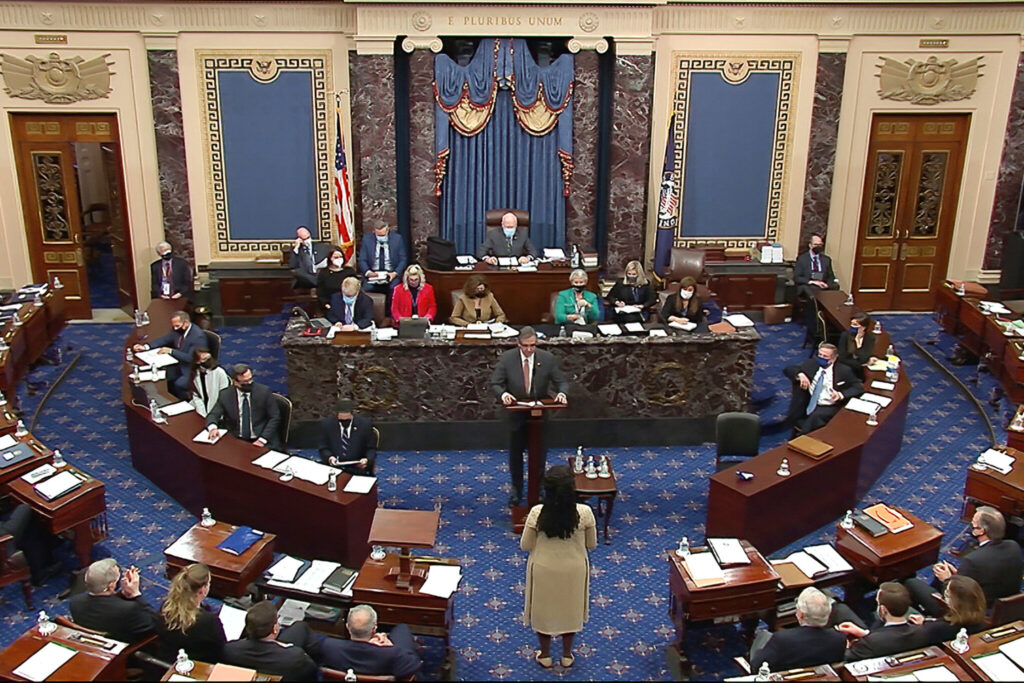
The vice president said he and President Donald Trump have extensively discussed possible ways to overcome Senate procedural obstacles, including a hypothetical scenario in which Vance would preside over the chamber and attempt to remove the Senate parliamentarian.
But Vance also acknowledged that such a move could trigger opposition from Republican senators.
He specifically named McConnell of Kentucky, Cornyn of Texas, Tillis of North Carolina and Murkowski of Alaska as the four Republicans he believed could join Democrats in overruling him.
Vance Describes a Hypothetical Senate Showdown
Vance was asked what the administration could do if the Senate parliamentarian prevented the SAVE America Act from advancing.
He said he could theoretically assume the chair of the Senate and attempt to dismiss the parliamentarian.
According to Vance, however, the move would not necessarily solve the underlying problem.
He described a scenario in which he would overrule the parliamentarian, only for Democrats and several Republicans to challenge the decision.
Vance said that with 47 Democratic senators and four Republicans, the Senate could reach 51 votes to overrule the vice president’s ruling in the scenario he described.
The four Republicans he named were McConnell, Cornyn, Tillis and Murkowski.
The remarks were presented as a hypothetical exercise rather than an announcement that such a Senate confrontation is about to occur.
Vance Says Trump and He Have Discussed the Options
Vance said he and Trump had repeatedly considered possible strategies for getting the legislation through the Senate.
He said one potential approach would involve taking control of the Senate floor, dismissing the parliamentarian and changing the procedural circumstances surrounding the filibuster.
Vance said the administration had considered the idea months earlier but ultimately concluded that the approach would not accomplish its objective because enough Republican senators could oppose the move.
“We have obsessively thought through how to get SAVE America passed,” Vance said during the interview.
The comments provide a window into the administration’s internal discussion of Senate procedure, but they do not establish that Trump or Vance has decided to carry out the hypothetical plan.
The Four Senators Vance Identified
Mitch McConnell
McConnell, a Kentucky Republican, served as Senate majority leader for years and remains one of the chamber’s longest-serving Republicans.
Vance included him among the four senators who, under the hypothetical he described, could vote with Democrats to overrule the vice president.
John Cornyn
Cornyn represents Texas and previously served in Senate Republican leadership.
He was also one of the Republicans Vance specifically named during the interview.
Thom Tillis
Tillis represents North Carolina and has at times taken positions that differ from the Trump administration on major legislative and institutional questions.
Vance included Tillis in his hypothetical group of four Republican senators.
Lisa Murkowski
Murkowski, who represents Alaska, has also periodically broken with Republican leadership on major issues.
She was the fourth Republican senator Vance identified.
Importantly, Vance’s statement was about how he expected the senators might respond in the specific hypothetical procedural scenario he described. It should not be treated as proof that all four senators oppose every provision of the SAVE America Act.
What the SAVE America Act Would Do
The SAVE America Act is legislation focused on voter registration and election procedures.
The Republican-backed proposal would require documentary proof of U.S. citizenship to register to vote in federal elections and require identification for voting.
The legislation also includes provisions concerning mail-in voting, with exceptions described in the bill for circumstances including illness, disability, military service and travel.
Supporters describe the measure as an election-integrity proposal intended to ensure that only eligible citizens participate in federal elections.
Democratic opponents have raised concerns about the documentation requirements and their potential effect on eligible voters who may not have readily available citizenship documents.
Senate Democrats have argued that existing identification documents do not necessarily establish citizenship and that additional documentation requirements could create obstacles for some eligible voters.
The Senate Has Faced a Filibuster Hurdle
The SAVE America Act is not the only election-related legislation to encounter the Senate’s 60-vote cloture threshold.
On August 8, the Senate rejected cloture on a motion to proceed to S. 5271, legislation that would have amended federal election law to require photo identification.
The vote was 52-46, with two senators not voting. Because 60 votes were required for cloture, the legislation did not advance under the procedure being used.
The episode illustrates the broader procedural challenge facing election legislation in the Senate.
A simple Republican majority does not automatically mean that every bill can advance through the chamber under existing Senate rules.
Vance Blames Republican Divisions
Vance framed the obstacle differently from the administration’s usual criticism of Senate Democrats.
Rather than focusing exclusively on Democratic opposition, he argued that several Republican senators could prevent the administration from changing Senate procedure in the manner he described.
He said the issue was not simply the identity of the Senate parliamentarian but whether enough Republicans would support the administration’s procedural approach.
That distinction is important because the parliamentarian generally advises the Senate on how its rules and precedents apply; changing or overruling that advice does not itself eliminate the requirement for senators to support the underlying legislation.
Vance Also Discussed Future Senate Elections
During the interview, Vance said that changing the Senate’s membership could eventually alter the administration’s ability to advance legislation.
He referred to replacing Republican senators he disagrees with as part of the broader political process.
That comment shifts the discussion from current Senate procedure to future elections.
The November 2026 elections will determine the composition of the Senate for the following Congress, but the outcome of those elections has not yet been determined.
The Administration’s Position Remains Clear
Trump and Vance have repeatedly identified the SAVE America Act as an important legislative priority.
Vance’s latest comments demonstrate that the administration has considered unconventional procedural approaches to advancing the measure.
At the same time, the interview does not establish that the White House has ordered Vance to take the Senate chair, remove the parliamentarian or attempt to eliminate the filibuster.
Those were discussed as hypothetical options.
The four senators Vance named also have not, by virtue of being identified in the interview, been established as a formal bloc against the legislation.
What Happens Next
The immediate question is whether the Senate can find a procedural path that allows the SAVE America Act to advance.
That could depend on negotiations among Senate Republicans, Democratic opposition, the administration’s willingness to pursue changes to Senate procedure and the number of senators willing to support the legislation.
For now, the most significant development is Vance’s public description of the administration’s internal thinking.
He said Trump and his team have extensively considered how to overcome the Senate’s procedural barriers, while explicitly identifying McConnell, Cornyn, Tillis and Murkowski as the four Republicans he believes could join Democrats in a hypothetical effort to overrule him.
The SAVE America Act therefore remains caught between a White House that continues to make it a priority and a Senate where the votes and procedural rules required to advance it remain unresolved.

Benjamin Harris is a RapidReports front page contributor and editor,proud father of four.