Hakeem Jeffries Secures Democratic Speaker Nomination Despite Opposition From Seven Incoming Lawmakers
House Democrats have nominated Hakeem Jeffries as their candidate for speaker, giving the New York Democrat an overwhelming victory in an internal leadership vote despite opposition from seven incoming lawmakers. Jeffries received 251 votes out of 262 cast during a closed-door Democratic caucus meeting on Wednesday, November 18, according to reports from Axios and other news organizations.
Although Jeffries ran unopposed, the vote was not unanimous. Seven incoming Democrats publicly identified themselves as members who voted against him, citing disagreements over the direction of the party and the need for stronger commitments on issues important to their constituents.
The result puts Jeffries in position to become the next speaker when the 120th Congress convenes on January 3, 2027. Democrats’ newly secured House majority gives him a significant advantage heading into the full chamber vote, although the speakership is not official until lawmakers elect him on the House floor.
The internal vote also highlights an important challenge for Democratic leadership: balancing the expectations of progressive incoming lawmakers with the broader legislative priorities of a diverse congressional majority.
Jeffries Wins Overwhelming Support in Closed-Door Democratic Vote
Jeffries secured 251 of the 262 votes cast during Wednesday’s closed-door caucus meeting, according to reporting by Axios. The vote was conducted by secret ballot, allowing Democratic lawmakers to express their positions privately.
No other candidate challenged Jeffries for the nomination. His victory therefore confirmed that he continues to have substantial support among House Democrats as the party prepares to assume control of the chamber.
However, the decision to hold a recorded internal vote made it possible to measure the level of opposition within the caucus. Rather than receiving unanimous approval, Jeffries faced 11 votes against him.
Seven incoming Democrats subsequently made their opposition public through a joint statement. The remaining votes against Jeffries were not all publicly attributed to individual lawmakers in the initial reports.
The result nevertheless represents a decisive endorsement of Jeffries by the Democratic caucus. It also gives party leaders an indication of the disagreements they may need to address before the next Congress begins.
Seven Incoming Democrats Break Ranks
Seven incoming Democratic lawmakers said they voted against Jeffries during the leadership nomination process.
The group includes:
- Claire Valdez of New York
- Darializa Avila Chevalier of New York
- Adam Hamawy of New Jersey
- Frederick Haynes III of Texas
- Melat Kiros of Colorado
- Donavan McKinney of Michigan
- Chris Rabb of Pennsylvania
The lawmakers explained their position in a joint statement, arguing that Democratic leadership must do more to reflect the priorities voters expressed during the election.
“There is still work to be done to ensure the direction our party takes … reflects what our constituents are demanding,” the holdouts said.
Their statement indicated that discussions with Jeffries had continued but that they wanted more meaningful commitments on important policy questions.
The group did not present its opposition as support for another candidate. Instead, the lawmakers used the vote to communicate their expectations for the party’s leadership and legislative agenda.
Their decision is significant because incoming members are preparing to enter Congress at a time when Democrats will have the opportunity to shape the House agenda. The seven lawmakers want their priorities to receive meaningful consideration as the party develops its plans.
Progressive Activists Put Pressure on Democratic Lawmakers
The leadership vote followed a period of growing pressure from progressive activists who urged Democrats to reconsider their support for Jeffries.
According to the supplied reporting, activists flooded congressional offices with telephone calls encouraging lawmakers to oppose his nomination. The campaign reflected dissatisfaction among some progressive voters and organizers who want Democratic leadership to take a more aggressive approach to policy issues.
The pressure was particularly visible among incoming lawmakers who had campaigned on progressive priorities and were preparing to enter Washington with expectations from their supporters.
For some activists, the speaker nomination represented an opportunity to demand commitments before the new Congress began. They wanted incoming Democrats to use their votes as leverage in discussions about legislation and party strategy.
The effort did not prevent Jeffries from winning the nomination by a wide margin. However, the public opposition from seven members demonstrated that progressive activists had found lawmakers willing to challenge the party’s leadership during an important organizational vote.
Medicare for All Emerges as a Major Issue
One of the central policy disagreements involves Medicare for All, a proposal that would establish a government-administered health coverage system.
Melat Kiros has pushed for Medicare for All and has called for stronger action on other progressive priorities. Supporters of the proposal argue that expanding public coverage could reduce financial barriers to medical care and provide broader access to health services.
Opponents and critics of the proposal have raised questions about its cost, implementation and potential effects on existing private insurance arrangements.
For progressive lawmakers, however, the issue is part of a broader demand that Democratic leadership demonstrate a willingness to advance policies that received support during their campaigns.
The incoming members want assurances that major proposals will receive serious consideration rather than being sidelined during negotiations over the party’s legislative priorities.
Their opposition to Jeffries therefore reflects a disagreement not only about leadership but also about how much influence progressive policy positions should have in the next Congress.
U.S. Weapons Sales to Israel Also Feature in the Debate
Another issue raised in the supplied reporting is U.S. weapons sales to Israel.
Kiros has supported restrictions on certain American weapons transfers to Israel, placing the issue among the foreign policy questions that have generated debate within the Democratic Party.
The subject has become a point of disagreement among Democrats with different views about U.S. support for Israel, military assistance and the humanitarian consequences of the conflict in the region.
Progressive lawmakers have called for greater scrutiny of weapons transfers and stronger conditions on American military assistance. Other Democrats have emphasized the importance of maintaining U.S. support for Israel and preserving security cooperation.
The seven lawmakers’ broader statement also referenced ending what they described as genocide in Gaza, alongside Medicare for All, immigration enforcement and campaign finance reform.
These positions illustrate the range of policy expectations facing Jeffries as he prepares to lead a Democratic House majority.
Incoming Lawmakers Want More Influence Over the Party’s Agenda
The disagreement surrounding Jeffries’ nomination reflects a broader question about how much influence newly elected lawmakers should have over congressional leadership.
Incoming members often arrive in Washington with campaign promises and expectations from the voters who elected them. They may want leadership to prioritize legislation that reflects the issues they emphasized during their campaigns.
At the same time, party leaders must coordinate members representing districts with different political, economic and ideological characteristics.
Democrats’ new House majority will include lawmakers with a range of policy positions. Some members may prioritize progressive legislation, while others may focus on more moderate proposals or issues affecting competitive districts.
Jeffries will therefore face the task of building agreement among lawmakers who may share a party affiliation but disagree about legislative tactics and policy priorities.
The seven incoming Democrats have indicated that their conversations with him are ongoing. Their decision to vote against his nomination suggests that they want those discussions to produce clearer commitments.
Democrats’ New House Majority Gives Jeffries a Strong Position
The Democratic Party’s gains in the November midterm elections have placed it in a position to take control of the House in January.
That majority gives Jeffries a significant advantage in the upcoming speaker election. According to election reporting, Democrats are expected to hold at least 257 seats, although several races remained uncalled in the immediate aftermath of the election.
The larger majority also means Jeffries can potentially withstand some defections while still securing the votes needed to become speaker.
The speaker is elected by the full House, not simply by members of the Democratic caucus. Under the expected party balance, Jeffries will need support from a majority of members voting for a named candidate, with the precise number depending on attendance and voting arrangements.
The 251 votes he received in the Democratic nomination process demonstrate strong support within his party, but they are not a substitute for the January floor election.
Democratic leaders will continue preparing for the transition while working to maintain unity among incoming members.
January 3 House Vote Will Determine the Next Speaker
The full House is scheduled to vote for speaker on January 3, 2027, when the new Congress convenes.
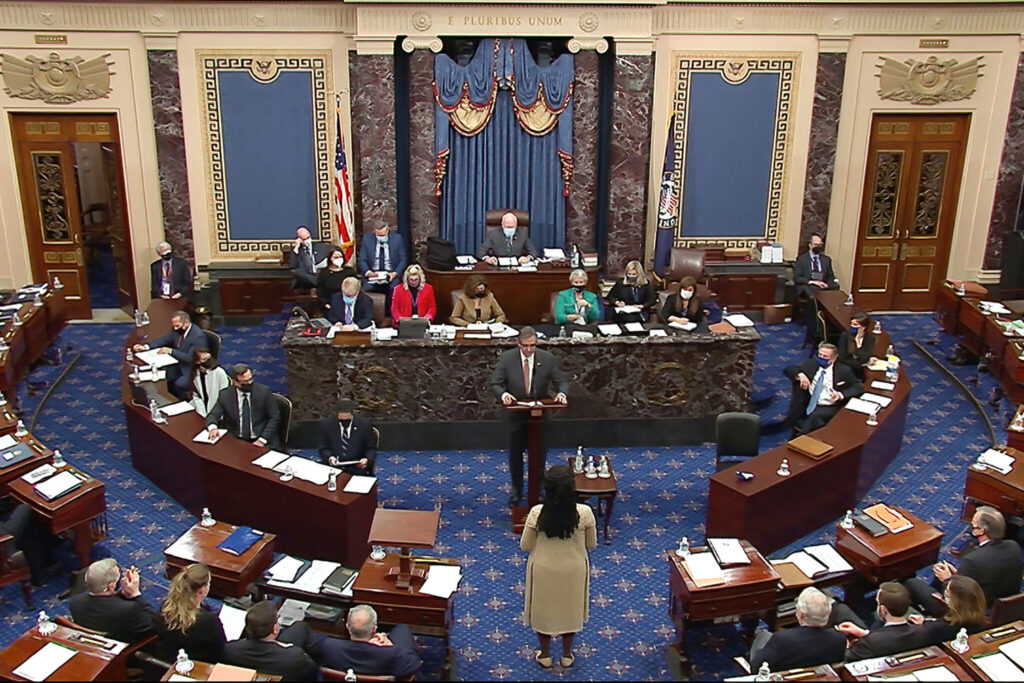
Unlike the private Democratic caucus meeting, the House floor vote will be public. Lawmakers will formally cast their votes as part of the chamber’s opening proceedings.
The distinction is important. Wednesday’s vote selected the Democratic Party’s nominee, while the January vote will determine who actually receives the speakership.
If elected, Jeffries would make history as the first Black speaker of the U.S. House of Representatives.
The position carries substantial authority over the chamber’s legislative schedule, committee processes and floor proceedings. The speaker also plays a central role in representing the House institutionally and negotiating with the Senate and the White House.
Jeffries’ potential elevation would mark a major development in his congressional career, which has included leading House Democrats since 2023.
Jeffries Has Led House Democrats Since 2023
Jeffries became the leader of House Democrats in 2023, succeeding Nancy Pelosi after Democrats lost control of the chamber in the 2022 midterm elections.
During his time as minority leader, he served as the party’s principal voice in the House and helped coordinate its response to Republican legislative priorities.
His leadership position has also placed him at the center of negotiations and disagreements within the Democratic caucus.
The November 2026 midterm results have now changed the political balance of the House, giving Democrats an opportunity to move from the minority into the majority.
That transition would significantly expand Jeffries’ responsibilities if he becomes speaker. Rather than primarily responding to Republican leadership, he would help determine which legislation receives consideration and how Democrats organize the chamber’s business.
His nomination indicates that most Democrats want him to lead that effort.
What the Vote Means for the Democratic Party
The 251-11 result sends two messages about the party’s position heading into the next Congress.
First, Jeffries has overwhelming support among the Democrats who participated in the internal nomination vote. No challenger emerged, and the opposition did not come close to preventing him from winning the nomination.
Second, the public statement from seven incoming lawmakers shows that some Democrats want stronger policy commitments before fully supporting the leadership’s direction.
These two developments are not necessarily contradictory. A party can support a leader while still containing disagreements over policy priorities, legislative strategy and the role of its progressive wing.
The challenge for Jeffries will be to maintain the support of the broader caucus while addressing the concerns raised by members who want a more ambitious agenda.
The incoming lawmakers may continue pressing for commitments on health care, immigration enforcement, campaign finance and U.S. policy toward Israel and Gaza.
How those discussions develop could influence the early legislative priorities of the new Democratic majority.
What Happens Next?
With the Democratic nomination secured, attention now turns to the January 3 House speaker election.
Jeffries will need to maintain support among Democrats while preparing for the formal vote before the full chamber. Party leaders will also be organizing their leadership structure, committee assignments and legislative priorities ahead of the new session.
The seven lawmakers who opposed him have indicated that discussions are continuing. Their future support and the extent to which their policy demands are addressed will be closely watched as the transition progresses.
The speaker election will ultimately determine whether Jeffries takes the gavel from Republican leadership and becomes the first Black speaker in American history.
For now, his nomination represents a major step toward that outcome, while the dissenting votes provide an early indication of the internal debates that could shape the next Congress.
Conclusion
Hakeem Jeffries has won the Democratic nomination for House speaker with 251 votes in a closed-door caucus election, demonstrating strong support as Democrats prepare to take control of the chamber.
However, seven incoming lawmakers broke ranks and voted against him, arguing that Democratic leadership must do more to reflect the priorities of their constituents. Their concerns include Medicare for All, immigration enforcement, campaign finance reform and U.S. policy toward Israel and Gaza.
The nomination does not officially make Jeffries speaker. That decision will come when the full House votes on January 3, 2027.
If elected, Jeffries would become the first Black speaker in U.S. history. His leadership will also be tested by the need to balance the demands of progressive members with the broader priorities of the Democratic majority.

Benjamin Harris is a RapidReports front page contributor and editor,proud father of four.