More Than 800,000 U.S. Utility Customers Without Power on Thanksgiving as Severe Storms Disrupt Holiday
More than 800,000 homes and businesses across the United States were without electricity on Thanksgiving Day, November 26, as powerful storms brought damaging winds, heavy rainfall, flooding and winter weather to multiple regions.
The severe weather disrupted holiday plans, affected transportation networks and left communities dealing with outages on one of the busiest family travel days of the year. The East Coast experienced particularly difficult conditions, with strong winds and coastal flooding affecting communities from the Carolinas through the Mid-Atlantic and into the Northeast.
At the same time, heavy, wet snow created additional problems in parts of the Midwest, including Missouri and Illinois, where snow and falling trees contributed to electricity disruptions.
The national outage total continued changing throughout Thursday as weather conditions developed and utilities assessed damage. Reports earlier in the morning showed hundreds of thousands of customers without electricity, with the number climbing as the storms moved across the country.
The scale of the disruption raised concerns for households preparing Thanksgiving meals, travelers trying to reach family gatherings and residents who depend on electricity for heating, medical equipment and other essential needs.
Thanksgiving storms leave hundreds of thousands without electricity
The combination of strong winds, rain and snow created widespread challenges for electricity providers.
According to outage figures reported by PowerOutage.us and cited by national news organizations, more than 800,000 homes and businesses experienced power interruptions during the holiday.
The distinction between customers and people is important. Outage-tracking services generally count utility accounts rather than individual residents. A single account may represent a household containing several people or a business serving employees and customers.
The actual number of people affected is therefore likely higher than the number of reported customer accounts, but it cannot be calculated precisely from the outage totals alone.
Virginia, Maryland, Missouri and North Carolina were among the hardest-hit states during the storm. New Jersey and other parts of the Northeast also experienced growing disruptions as the coastal system strengthened.
The outages were not caused by a single event. Different weather conditions affected separate parts of the country, with strong coastal winds and heavy rain creating problems along the East Coast while wet snow affected sections of the Midwest.
Utility crews faced difficult conditions as they worked to identify damaged equipment, remove fallen trees and restore service where it was safe to do so.
Virginia and Maryland face significant storm-related outages
Virginia experienced some of the most substantial power disruptions as strong winds moved through the state.
The combination of rain-soaked ground and powerful gusts increased the risk of trees falling onto electrical lines. When soil becomes saturated, trees can become less stable, making it easier for strong winds to uproot them or break large branches.
Dominion Energy customers were among those affected. The utility and state officials had warned residents ahead of the storm that outages were possible and that crews would be working to respond to damage.
Maryland also experienced a substantial increase in reported outages as the storm moved through the region.
The combination of high winds, heavy rainfall and coastal conditions created risks for power infrastructure and transportation. Some communities faced localized flooding while utility crews worked to assess electrical damage.
The situation remained fluid throughout Thanksgiving Day, with outage totals changing as new incidents were reported and restoration work progressed.
Residents were encouraged to monitor information from their electricity providers rather than assume that an estimated restoration time would apply to every neighborhood.
Missouri and Illinois deal with heavy, wet snow
While the East Coast faced a powerful coastal storm, parts of the Midwest experienced a separate weather threat involving snow and difficult travel conditions.
Missouri was among the states reporting substantial outages. Heavy, wet snow accumulated in parts of the state, including the St. Louis region, placing additional weight on trees and power lines.
Wet snow can be particularly damaging because it is heavier than light, powdery snow. When it accumulates on branches and electrical infrastructure, the added weight can cause limbs to break and lines to come down.
The St. Louis region experienced significant snowfall before conditions changed, contributing to difficult road conditions and power disruptions.
Illinois also reported outages, particularly in areas affected by the same winter weather system.
For residents preparing Thanksgiving meals, the timing created an additional problem. Some households faced the prospect of losing electricity while cooking, refrigerating food or hosting family members.
The weather also complicated efforts by utility crews to reach damaged infrastructure, particularly where roads were covered by snow or blocked by fallen branches.
Strong winds and coastal flooding threaten East Coast communities
The storm’s impact extended beyond electricity outages.
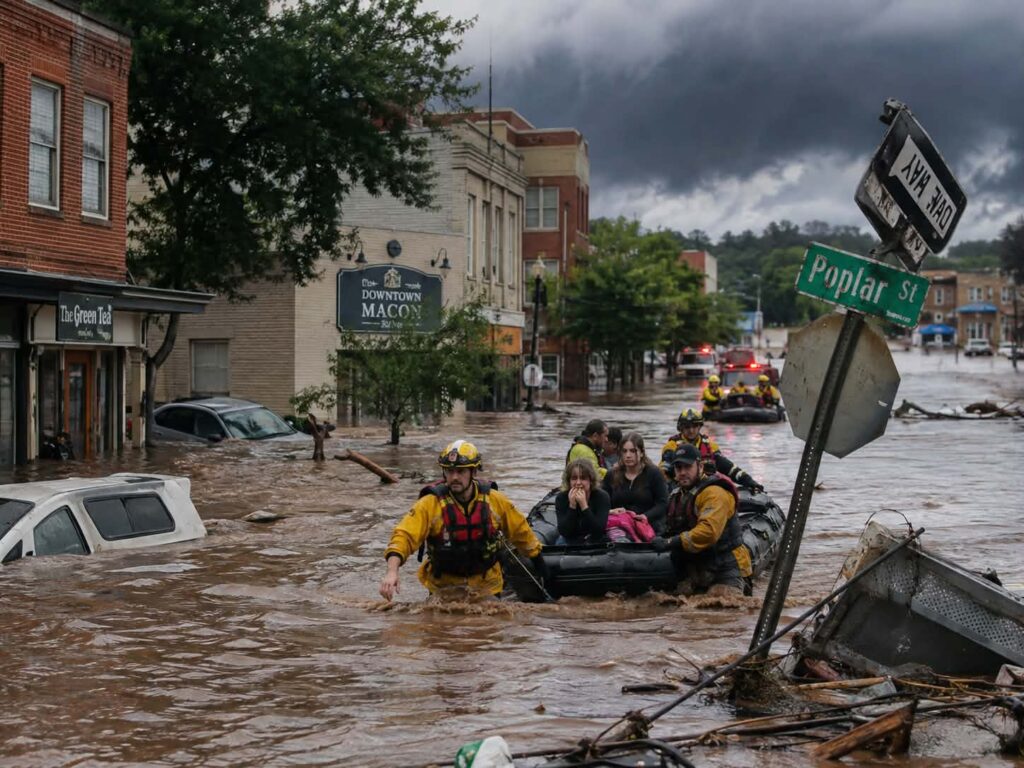
Heavy rainfall and powerful onshore winds contributed to coastal flooding along sections of the Eastern Seaboard. Communities in North Carolina, Virginia, New Jersey and other coastal areas experienced difficult conditions as water levels rose and wind-driven waves affected roads and waterfront properties.
High winds also increased the danger of falling trees, damaged structures and debris being carried into roadways.
Officials urged residents to avoid flooded roads and stay away from areas where water covered streets or bridges. Driving through floodwater can be dangerous because the depth and strength of moving water are difficult to judge.
Some roads and bridges were closed as authorities responded to flooding and unsafe wind conditions.
The weather also affected communities along the Outer Banks in North Carolina, where ocean water moved across sections of the highway system. Transportation officials warned motorists not to attempt to drive through flooded areas.
Coastal flooding can develop quickly when strong winds push water toward shore, particularly when heavy rainfall and high tides occur at the same time.
Thanksgiving travel disrupted by storms and flight delays
The severe weather created additional challenges for Americans traveling during the Thanksgiving holiday.
Airports across the country experienced delays and cancellations as storms affected flight operations. Strong winds, thunderstorms, heavy rain and winter weather can all interfere with aircraft departures and arrivals.
The disruptions were especially concerning because Thanksgiving is one of the busiest travel periods of the year.
Passengers were advised to check directly with airlines for updated departure information and to allow additional time when traveling to airports.
Road travel also became more difficult in areas affected by flooding, snow and high winds. Some routes experienced closures, while drivers faced hazardous conditions caused by standing water, reduced visibility and debris.
Rail and other transportation services were also affected by severe weather in parts of the Northeast.
The combination of electricity outages and travel disruptions meant that some families faced multiple obstacles while attempting to reach holiday gatherings.
Macy’s Thanksgiving Day Parade postponed because of dangerous winds
The weather was severe enough to affect one of the country’s most recognizable Thanksgiving traditions.
New York City’s Macy’s Thanksgiving Day Parade was postponed until Saturday, November 28, because of concerns about strong winds and the safety of the event.
The decision was particularly notable because it marked the first postponement in the parade’s 100-year history.
The parade features large character balloons, floats, marching bands and performances along a route through Manhattan. High winds can make large balloons difficult to control and create risks for spectators, performers and event staff.
Organizers made the decision after consulting with city officials and considering the weather forecast.
The postponement demonstrated how seriously authorities were treating the conditions, particularly as strong wind gusts were expected across the New York metropolitan area.
For spectators and families who had planned to attend, the change meant adjusting holiday schedules and waiting another day to see the event.
West Coast communities also face coastal flooding
Although the strongest Thanksgiving power disruptions were concentrated in parts of the East and Midwest, the West Coast was also dealing with dangerous weather conditions.
Unusually high tides, strong waves and coastal flooding affected sections of California and other Pacific coastal communities.
In Pacifica, California, powerful waves damaged a section of the pier, illustrating the strength of the coastal conditions.
Officials also issued warnings in vulnerable coastal areas where waves and rising water threatened beachfront properties and public infrastructure.
The weather demonstrated that Thanksgiving disruptions were not limited to one storm system or one part of the country. Different weather patterns were affecting communities across the United States at the same time.
Why strong winds can cause widespread power outages
Power outages during major storms often result from damage to the distribution network that carries electricity from substations to homes and businesses.
Trees and branches falling onto power lines are among the most common causes of storm-related interruptions. Strong winds can also damage utility poles, electrical equipment and connections.
In coastal areas, flooding can create additional risks for electrical infrastructure, while lightning and severe thunderstorms can damage equipment or trigger protective shutdowns.
Snow and ice can place extra weight on trees and overhead lines. Wet snow is particularly problematic because it can accumulate rapidly and become heavy.
When several types of weather occur simultaneously, restoration work becomes more complicated.
Utility companies must first identify the location and extent of damage. Crews then need to determine which repairs can be completed safely and which areas require additional equipment or specialized work.
Restoration often prioritizes critical infrastructure, including hospitals, emergency services and facilities that support large numbers of customers. Crews may then work through damaged circuits and individual neighborhoods.
A large outage does not necessarily mean every affected customer will remain without power for the same amount of time. Restoration schedules depend on the type of damage, the number of available crews and whether additional severe weather prevents safe repairs.
What households should do during a prolonged power outage
Residents affected by the Thanksgiving outages were encouraged to follow safety guidance from local emergency officials and utility providers.
People should avoid approaching downed power lines, even if the wires appear inactive. A fallen line can remain energized and create a potentially fatal electrical hazard.
Anyone who sees a downed line should keep a safe distance and report it to the electricity provider or emergency services.
Households using generators should operate them outdoors, away from windows, doors and ventilation openings. Generators must never be operated inside homes, garages or enclosed spaces because they can produce dangerous carbon monoxide.
Food safety is another concern during an extended outage.
The U.S. Department of Agriculture advises keeping refrigerator and freezer doors closed as much as possible. A closed refrigerator generally keeps food at a safe temperature for approximately four hours. A full freezer can maintain its temperature for about 48 hours if unopened, while a half-full freezer can generally do so for around 24 hours.
People should use a food thermometer when possible and avoid tasting food to determine whether it is safe.
Residents who rely on electricity for medical equipment should follow their emergency plans and contact healthcare providers or local emergency services if their equipment loses power.
Those living in areas vulnerable to flooding should avoid driving through water-covered roads and follow evacuation instructions issued by local authorities.
When will electricity be restored?
There was no single nationwide restoration time for the Thanksgiving outages.
Each electricity provider must assess the damage within its own service territory before offering reliable estimates. Some customers may regain power relatively quickly after a minor equipment problem, while others may experience longer disruptions if trees, poles or major electrical components require replacement.
The number of customers without power can also change throughout the day. New outages may occur as winds strengthen, while successful repairs reduce the total.
Residents should use their utility’s official outage map or customer service channels for the latest information about their specific address.
It is also important to remember that restoration estimates can change if crews discover additional damage or weather conditions prevent repair work.
Thanksgiving holiday becomes a test for emergency services and utility crews
The widespread outages underscored how severe weather can affect daily life even during a holiday when many businesses and public services operate on reduced schedules.
Electricity is essential for heating, cooking, refrigeration, communications and medical equipment. When service is interrupted across multiple states, the effects can extend well beyond the immediate inconvenience of a dark home.
Emergency responders, transportation agencies and electricity providers must coordinate their work while dealing with changing weather conditions and potentially dangerous infrastructure damage.
For many families, the immediate concern was whether they could safely prepare meals, keep food refrigerated and remain warm while waiting for electricity to return.
The storm also highlighted the importance of emergency planning before major weather events. Keeping flashlights, charged power banks, essential medication, drinking water and basic supplies available can help households manage an unexpected outage.
As the Thanksgiving weather system continued to affect different regions, officials urged residents to prioritize safety and follow local warnings.
The immediate outlook depended on how quickly the storms moved away, whether additional wind damage occurred and how much time utility crews needed to complete repairs.
For hundreds of thousands of homes and businesses, the holiday was interrupted by a loss of electricity. For the crews working through the storm, the priority remained restoring service safely while protecting residents from further weather-related hazards.

Benjamin Harris is a RapidReports front page contributor and editor,proud father of four.