Fauci Diary Reveals Private Conversation With Chris Wallace During COVID Pandemic
A previously unpublished entry in Dr. Anthony Fauci’s pandemic-era journal has drawn attention to a private telephone conversation with former Fox News anchor Chris Wallace, in which Fauci wrote that the veteran journalist expressed sympathy for the criticism Fauci was receiving from conservative commentators.
The passage, dated October 25, 2021, became public in July 2026 when Republican Sen. Rand Paul of Kentucky released more than 1,100 pages of Fauci’s personal pandemic-era notes as part of his investigation into the federal government’s handling of COVID-19.
In the entry, Fauci described a telephone conversation with Wallace, who was then hosting Fox News Sunday. According to Fauci’s account, Wallace had contacted him for medical advice about an upcoming trip to Oxford, England, where he planned to lecture at the Oxford Union.
Fauci wrote that he discussed the medical risks and benefits of the trip with Wallace. He then described the conversation as particularly friendly, saying Wallace had expressed understanding of the criticism Fauci was facing from the political right.
“In the course of the conversation he empathized greatly with me about the attacks that I’m under by the far right and he fully understands what is going on,” Fauci wrote.
The entry has attracted attention because Wallace was working for Fox News at a time when the network featured frequent criticism of Fauci and the Biden administration’s pandemic policies.
However, the passage represents Fauci’s description of the conversation. It does not independently establish Wallace’s broader political views or demonstrate that he supported every position Fauci took during the pandemic.
What Fauci Wrote About His Conversation With Chris Wallace
The diary entry provides a glimpse into a private interaction between two prominent media and public-health figures during a period of intense political disagreement over COVID-19.
Fauci wrote that Wallace called to ask for medical advice about traveling to Oxford to deliver a lecture at the Oxford Union.
The former director of the National Institute of Allergy and Infectious Diseases said he went through the potential benefits and risks of making the trip.
The entry then shifted to the political atmosphere surrounding Fauci.
According to his notes, Wallace expressed sympathy for the attacks Fauci said he was experiencing from the political right. Fauci described the journalist as understanding the situation and the criticism directed at him.
The passage does not include a direct statement from Wallace, nor does it provide a transcript or recording of the telephone call.
As a result, the account should be understood as Fauci’s contemporaneous written recollection rather than an independently verified description of everything Wallace said.
Nevertheless, the entry has attracted attention because of the contrast between Wallace’s position at Fox News and Fauci’s description of a supportive private conversation.
Wallace later left Fox News and joined CNN, where he continued working as a prominent political interviewer.
Rand Paul Released More Than 1,100 Pages of Fauci’s Notes
The Wallace passage was one part of a much larger collection of documents released by Sen. Rand Paul in July 2026.
Paul, a Republican from Kentucky who chairs the Senate Committee on Homeland Security and Governmental Affairs, has spent years investigating the federal response to COVID-19, including questions about public-health communications, research funding and the origins of the coronavirus.
The collection contained approximately 1,141 pages of Fauci’s day-by-day pandemic-era notes, covering a period from December 2019 through December 2022.
The entries included descriptions of conversations with government officials, scientists, journalists and other public figures. They also recorded Fauci’s reactions to political developments, media coverage, public-health decisions and the growing controversy surrounding the origins of COVID-19.
Paul argued that the documents raised questions about whether Fauci’s private assessments differed from statements he made publicly.
The senator highlighted passages involving the early scientific debate over the virus, discussions about research funding, pandemic restrictions and Fauci’s interactions with influential media figures.
The release became a central element of the committee’s investigation and helped set the stage for Fauci’s July 29 appearance before the Senate.
Fauci Documented His Growing Public Profile
Another recurring theme in the notes was Fauci’s awareness of the attention he was receiving as one of the most recognizable public-health officials in the United States.
During the early months of the pandemic, Fauci became a regular presence in televised briefings, news interviews and national political discussions.
His comments about masks, social distancing, vaccines and other public-health measures frequently attracted extensive coverage.
In an April 7, 2020, entry, Fauci wrote that the press was continuing to focus heavily on him, noting that multiple stories involved him directly or indirectly.
Weeks later, he described his growing recognition in unusually emphatic terms.
Fauci wrote that his “national and international fame is explosive and really unimaginable,” adding that he did not consider the description an exaggeration.
The entries also recorded invitations and interactions associated with his rising public profile, including an invitation to appear on ABC’s Dancing with the Stars.
Those passages became a focus of criticism from Republican lawmakers, who argued that the former health official was unusually conscious of his public image while the country was experiencing widespread illness, deaths and economic disruption.
Supporters of Fauci have argued that his public visibility was a consequence of his responsibilities during a national emergency and that frequent media appearances were part of communicating public-health information.
The diary entries document Fauci’s own reflections, but they do not independently establish that personal publicity influenced his scientific recommendations or government decisions.
Private Comments About President Donald Trump
The released notes also included Fauci’s private assessments of President Donald Trump during the pandemic.
Fauci recorded disagreements with the president over public-health messaging, testing and the interpretation of rising COVID-19 cases.
Some entries used sharply critical language to describe Trump’s remarks and behavior.
Among the terms reported from the diaries were “rambling,” “crazy,” “desperate” and “a true embarrassment.”
The entries reflect the personal frustration Fauci recorded as the relationship between the two men deteriorated.
Fauci had served as a leading medical adviser during Trump’s administration and remained a prominent public-health official after Joe Biden became president.
The relationship became increasingly contentious as Trump and other Republicans criticized restrictions, public-health guidance and the federal response.
The diary entries provide additional detail about Fauci’s private reactions, although they should not be treated as a complete record of the administration’s internal discussions or the reasoning behind every pandemic policy.
COVID-19 Origins Became a Central Issue in the Senate Investigation
The diaries also revived questions about what Fauci and other scientists believed during the earliest weeks of the pandemic.
The origins of SARS-CoV-2, the virus responsible for COVID-19, remain a subject of scientific and political debate.
Two broad explanations have received significant attention: natural transmission from animals to humans and an accidental laboratory-associated release.
The first known outbreak was identified in Wuhan, China, in late 2019. Scientists have examined evidence involving the Huanan Seafood Wholesale Market, early patient records, animal samples and research activities in the region.
Some Republican lawmakers have argued that Fauci privately considered a laboratory-related origin more seriously than he acknowledged publicly.
They have pointed to early diary entries describing conversations with scientists about unusual features of the virus and whether some characteristics could have resulted from deliberate genetic manipulation.
However, the existence of early scientific discussions about a possible laboratory origin does not establish that the virus was engineered or released from a laboratory.
FactCheck.org, examining the claims surrounding the diary release, said Paul had misrepresented a January 2020 entry concerning the Wuhan market. The fact-check noted that Fauci’s private comments did not demonstrate that he knew the virus had not originated through natural transmission.
The origin of COVID-19 has not been conclusively established. Evidence and intelligence assessments have continued to be debated, and uncertainty about the origin is not proof of either theory.
Fauci’s Senate Appearance Took Place in July
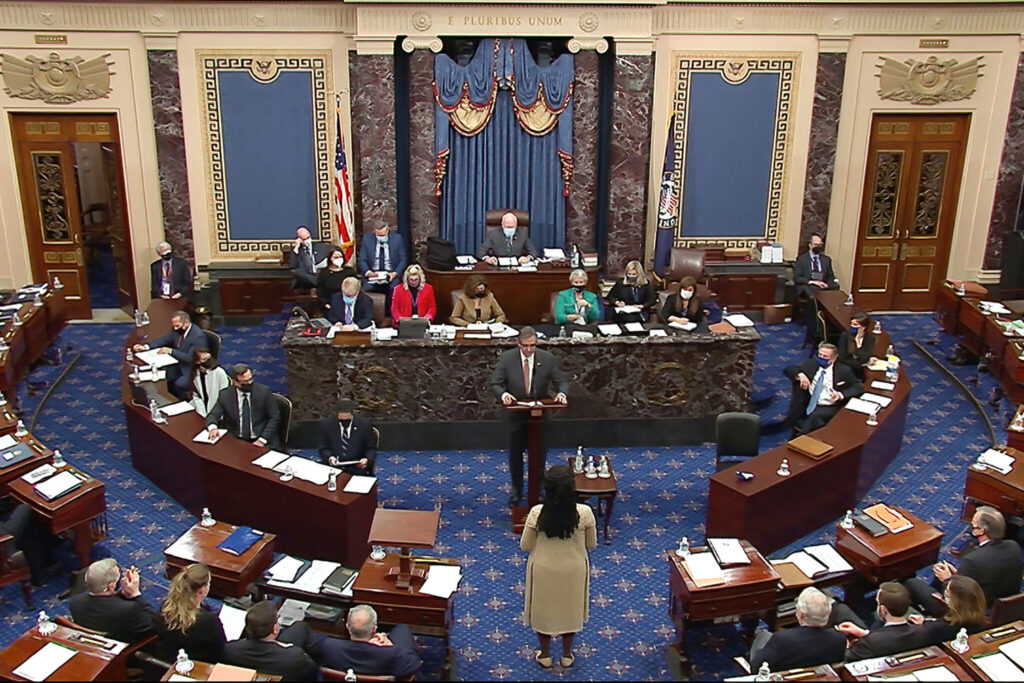
The diary release was followed by a Senate hearing on July 29, 2026, before the Committee on Homeland Security and Governmental Affairs.
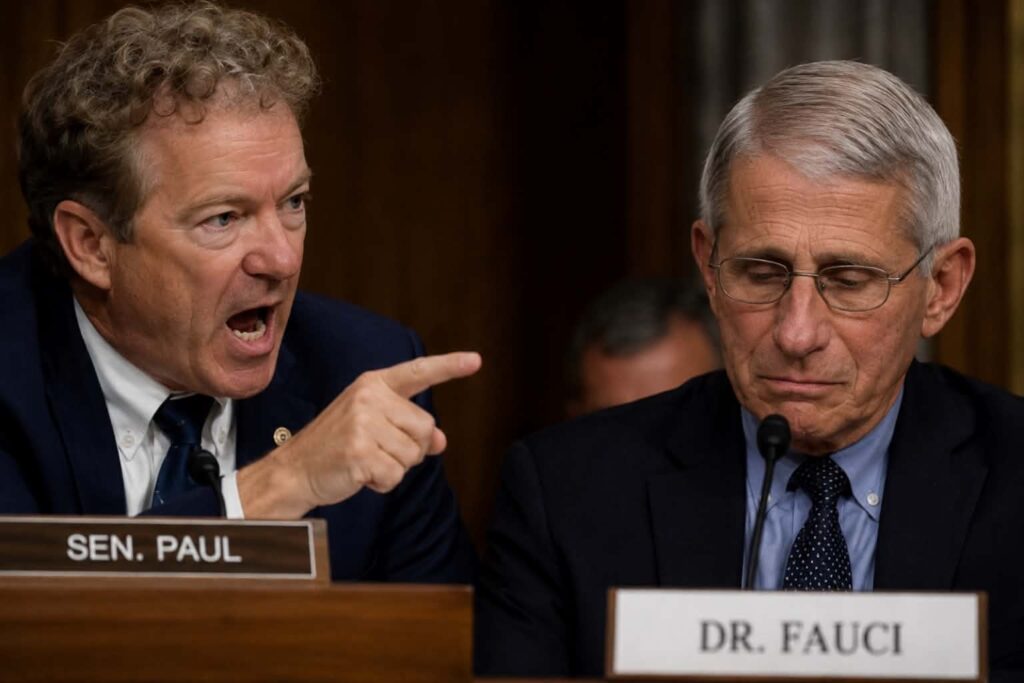
The hearing was chaired by Paul, who questioned Fauci about his pandemic-era decisions, the virus’s origins, research funding and the contents of the released notes.
Fauci did not answer the committee’s substantive questions.
Instead, he repeatedly invoked the Fifth Amendment, which protects individuals from being compelled to provide testimony that could be self-incriminating.
According to reporting on the hearing, Fauci invoked the constitutional protection 111 times.
He said he was acting on the advice of his attorneys and referred to what he described as Paul’s persistent focus on him.
The hearing became contentious, with Paul pressing Fauci on the diary entries and other pandemic-related records.
Republican lawmakers argued that the refusal to answer questions prevented the committee from obtaining information about decisions made during the pandemic.
Fauci’s invocation of the Fifth Amendment was not itself a finding of wrongdoing. The constitutional protection allows a witness to decline to answer questions when the answers could potentially expose the witness to criminal liability.
The hearing therefore did not produce a full public explanation from Fauci on the issues raised by Paul.
Why the Wallace Entry Has Attracted Political Attention
The private conversation with Wallace has become a separate point of discussion because it involves a journalist who was working at Fox News while the network was covering fierce disputes over Fauci’s role in the pandemic.
Conservative critics have long questioned Fauci’s public-health recommendations and his relationship with news organizations that frequently interviewed him.
The diary passage has been used by some critics to argue that Wallace privately sympathized with Fauci despite the criticism Fauci was receiving from the political right.
But the entry does not establish that Wallace agreed with Fauci on pandemic policy, the origins of COVID-19 or the broader political disputes surrounding the federal response.
A journalist can express sympathy for a person facing criticism without endorsing that person’s positions. The available passage also does not provide Wallace’s own account of the conversation.
The distinction matters because the diary is a personal record written by one participant, not a jointly documented account.
A Wider Debate Over Pandemic Accountability
The release of Fauci’s notes has become part of a wider political and scientific debate about accountability for the federal COVID-19 response.
Republican lawmakers have focused on several areas, including research funding, the relationship between government scientists and outside researchers, public statements about the virus’s origins, school closures and changing public-health guidance.
They argue that the documents warrant further scrutiny of decisions made by senior health officials.
Fauci and his defenders have rejected accusations that he deliberately misled the public. They have also argued that decisions were made during an unprecedented public-health emergency, when scientists had to work with incomplete information and revise recommendations as evidence changed.
The diary entries offer additional information about Fauci’s private thoughts and interactions, but they do not resolve every dispute about the pandemic.
The scientific question of how the virus first entered the human population remains separate from the political question of whether federal officials communicated accurately and made appropriate policy decisions.
Likewise, the entry about Wallace documents Fauci’s recollection of a private conversation but does not establish a broader relationship of political coordination between the journalist and the former government official.
As lawmakers continue examining pandemic-era records, the distinction between documented facts, personal recollections, political interpretations and unresolved scientific questions remains essential.

Benjamin Harris is a RapidReports front page contributor and editor,proud father of four.