Byron Donalds Wins GOP Nomination for Florida Governor, Setting Up November Showdown With David Jolly
Florida Republicans have chosen their candidate for governor, with Rep. Byron Donalds emerging victorious Tuesday night from a crowded Republican primary.
Donalds captured roughly 49% of the vote in the 11-candidate field, comfortably defeating Lt. Gov. Jay Collins, who finished second with approximately 25%.
The result sets up a November general-election matchup between Donalds and former Republican congressman David Jolly, who won the Democratic nomination.
The race now presents Florida voters with two candidates whose political backgrounds and visions for the state are sharply different.
Donalds Secures Republican Nomination
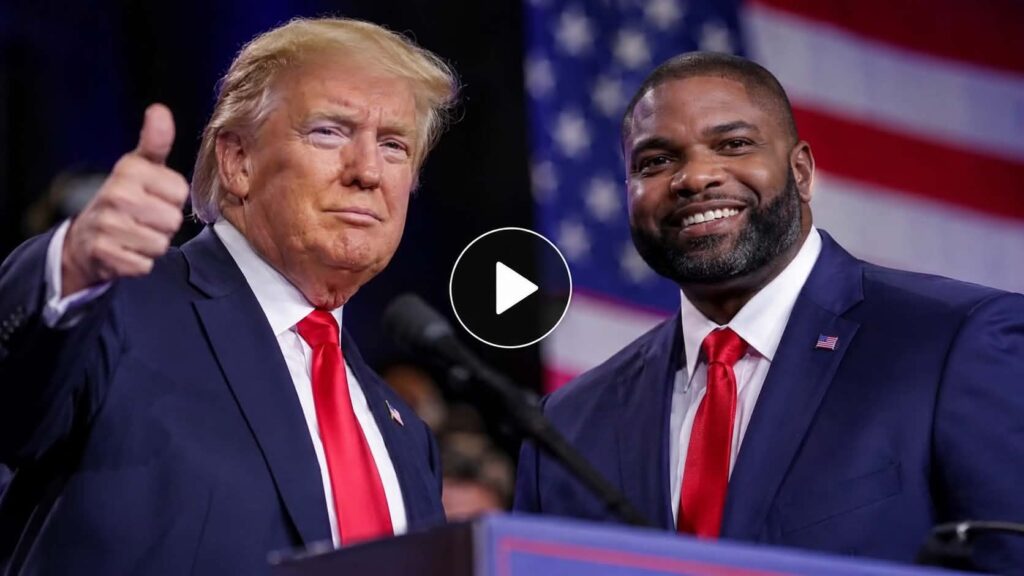
Donalds entered the Republican primary with a major advantage: an early endorsement from President Donald Trump.
Trump endorsed Donalds five days before the congressman officially announced his candidacy in February 2025.
That endorsement became one of the defining features of the Republican primary and demonstrated Trump’s preference for Donalds long before Republican voters went to the polls.
The primary results suggest that the president’s support translated into substantial backing among Republican voters.
Donalds’ approximately 49% share of the vote gave him a commanding victory despite the large field of candidates.
Jay Collins Finishes a Distant Second
Lt. Gov. Jay Collins finished the Republican primary in second place with approximately 25% of the vote.
Although Collins had substantial name recognition as Florida’s lieutenant governor, he was unable to overcome Donalds’ support.
The roughly 24-point gap between the two candidates demonstrated the strength of Donalds’ campaign and the impact of his political coalition.
With the Republican nomination now settled, Donalds can turn his attention toward the November general election.
David Jolly Wins Democratic Nomination
On the Democratic side, former congressman David Jolly secured his party’s nomination.
Jolly’s political history makes the race particularly unusual.
He represented Florida’s 13th Congressional District as a Republican from 2014 through 2017 before breaking with the Republican Party and eventually becoming a Democrat.
His opposition to Trump has since become a central part of his political identity.
That history could give Jolly an unusual ability to speak to voters who once supported Republicans but have become dissatisfied with the direction of the GOP.
A Former Republican Now Running as a Democrat
Jolly’s political transformation will almost certainly become a major theme of the general election.
Republicans can be expected to emphasize that he previously represented Congress as a Republican before leaving the party.
Democrats, meanwhile, can point to his break with Trump and argue that his political evolution reflects concerns shared by voters who have become uncomfortable with the modern Republican Party.
Jolly’s challenge will be convincing enough Florida voters that his political realignment represents an advantage rather than a liability.
Florida Has Become Increasingly Republican
The historical numbers present a formidable challenge for Jolly.
Florida has not elected a Democratic governor since Lawton Chiles defeated Jeb Bush in 1994.
The state also has not elected a Democrat to statewide office since 2018.
Florida’s presidential voting pattern has moved even further toward Republicans in recent election cycles.
The state last awarded its electoral votes to a Democratic presidential nominee when Barack Obama won Florida in 2012.
Since then, Republicans have strengthened their position across much of the state.
Republican Registration Advantage Has Grown
The Republican Party’s advantage in voter registration has also expanded.
Florida’s political landscape has changed significantly over the past decade, with Republicans gaining ground among voters who once made the state one of the nation’s most competitive political battlegrounds.
The shift accelerated during the Biden administration and has remained a defining feature of Florida politics.
That creates a difficult starting point for any Democratic candidate seeking the governor’s mansion.
Donalds Offers Republicans a Different Kind of Candidate
Donalds also brings a different political profile to the Florida governor’s race than several recent Republican candidates.
He is Black, comes from a working-class background and has become closely associated with the MAGA movement.
His national profile has grown through congressional speeches, television appearances and frequent participation in political debates.
Those communication skills could become especially valuable during a statewide campaign.
A Strong National Profile
Unlike many first-time statewide candidates, Donalds enters the race with significant national recognition.
His years in Congress have given him experience communicating directly with conservative voters across the country.
That visibility could help the Republican nominee generate national media attention while also strengthening his campaign’s fundraising and organizational capabilities.
The governor’s race is therefore likely to attract attention well beyond Florida.
Trump’s Endorsement Remains a Major Asset
Trump’s early endorsement gave Donalds an important advantage during the Republican primary.
The president remains highly influential among Florida Republicans, and Trump’s support can provide a candidate with access to a large political network.
Donalds’ close alignment with Trump also means the general election is likely to feature national political themes alongside state-level issues.
That could benefit Republicans in a state where Trump’s political brand remains particularly strong.
What David Jolly Needs to Do
Jolly faces a difficult electoral map, but his campaign has a potential strategy.
He can attempt to appeal to independent voters, moderate Republicans and suburban voters who are uncomfortable with Trump’s politics.
His history as a former Republican could help him make that argument.
Rather than presenting himself as a traditional Democratic candidate, Jolly could argue that his candidacy represents an alternative for voters who want a change without necessarily embracing the entire Democratic establishment.
Trump Fatigue Could Be Part of Jolly’s Strategy
The Democratic campaign is likely to test whether there is sufficient fatigue with Trump and the MAGA movement to overcome Florida’s Republican advantage.
That strategy would require Jolly to perform particularly well among suburban and independent voters.
It would also require him to convince voters that the governor’s race should be viewed independently from Florida’s broader Republican political identity.
That is a difficult task in a state where Republicans have dominated statewide elections for years.
The General Election Will Be Closely Watched
The Donalds-Jolly matchup offers a stark contrast in political background and ideology.
Donalds is a Trump-aligned Republican with strong ties to the national conservative movement.
Jolly is a former Republican who became a Democrat and has built a political profile around opposition to Trump.
The contest could therefore become a referendum not only on Florida’s future but also on the broader direction of the Republican Party and the strength of Trump’s influence.
Florida Remains a Challenging State for Democrats
Democrats have spent years trying to reverse their losses in Florida.
The state’s large and diverse electorate once made it one of the country’s premier battlegrounds.
But Republicans have steadily expanded their advantage.
That transformation means Democrats now face a much more difficult path to statewide victory than they did a decade ago.
Jolly will therefore need to outperform recent Democratic candidates across multiple demographic and geographic groups.
Donalds Enters November With Major Advantages
Donalds begins the general election campaign with several significant advantages.
He has the Republican nomination, Trump’s endorsement, substantial national name recognition and a party organization that has dominated Florida politics for decades.
Florida’s voter-registration trends also favor Republicans.
The state’s recent electoral history provides another important advantage for the GOP nominee.
None of those factors guarantees victory, but together they establish Donalds as the early favorite.
Why the Race Still Matters
Even if Republicans begin the campaign as clear favorites, the election could provide important clues about Florida’s political future.
A strong Democratic performance could suggest that suburban and independent voters are becoming more competitive.
A decisive Donalds victory, meanwhile, would reinforce the argument that Florida has moved firmly into the Republican column.
The margin could ultimately matter almost as much as the winner.
November Matchup Is Now Set
With both primaries decided, Florida voters now have a clear choice.
Byron Donalds will campaign as the Republican nominee with strong support from Trump and the state’s powerful GOP organization.
David Jolly will attempt to persuade Democrats, independents and disaffected Republicans that he can break the Republican Party’s long hold on the governor’s mansion.
The historical odds remain heavily tilted toward the GOP.
But statewide campaigns can change quickly once voters begin paying attention.
For now, however, Donalds enters November with the political momentum, party infrastructure and electoral environment that make him the clear favorite to become Florida’s next governor.

Benjamin Harris is a RapidReports front page contributor and editor,proud father of four.