Ontario Premier Doug Ford Threatens Power Exports to U.S. as Trade Dispute Escalates
Ontario Raises the Stakes in Growing Trade Tensions
Ontario Premier Doug Ford is warning that the province could take action against the United States by restricting electricity exports as tensions between Canada and the Trump administration intensify.
Ford made the comments after the United States imposed a 50% tariff on approximately $20 billion worth of Canadian goods following the breakdown of recent trade discussions.
At a news conference Monday, Ford said Ontario supplies electricity to approximately 1.5 million homes and businesses and indicated that the province could consider using energy exports as leverage.
“Everything’s on the table,” Ford said, signaling that Ontario is prepared to consider additional measures if the trade dispute continues.
Electricity Exports Become a Key Point of the Dispute
Ontario has longstanding electricity connections with several U.S. states, including Michigan, New York and Minnesota.
That cross-border energy relationship could become increasingly important if the trade conflict continues to escalate.
Ford also warned that Ontario could consider restricting American access to the province’s critical minerals, adding another economic dimension to the dispute.
The comments come as Canadian officials prepare their own response to the latest U.S. tariffs.
Trump Responds to Ford’s Warning
President Donald Trump responded sharply to Ford’s comments, criticizing the Ontario premier and Canada’s leadership in a post on Truth Social.
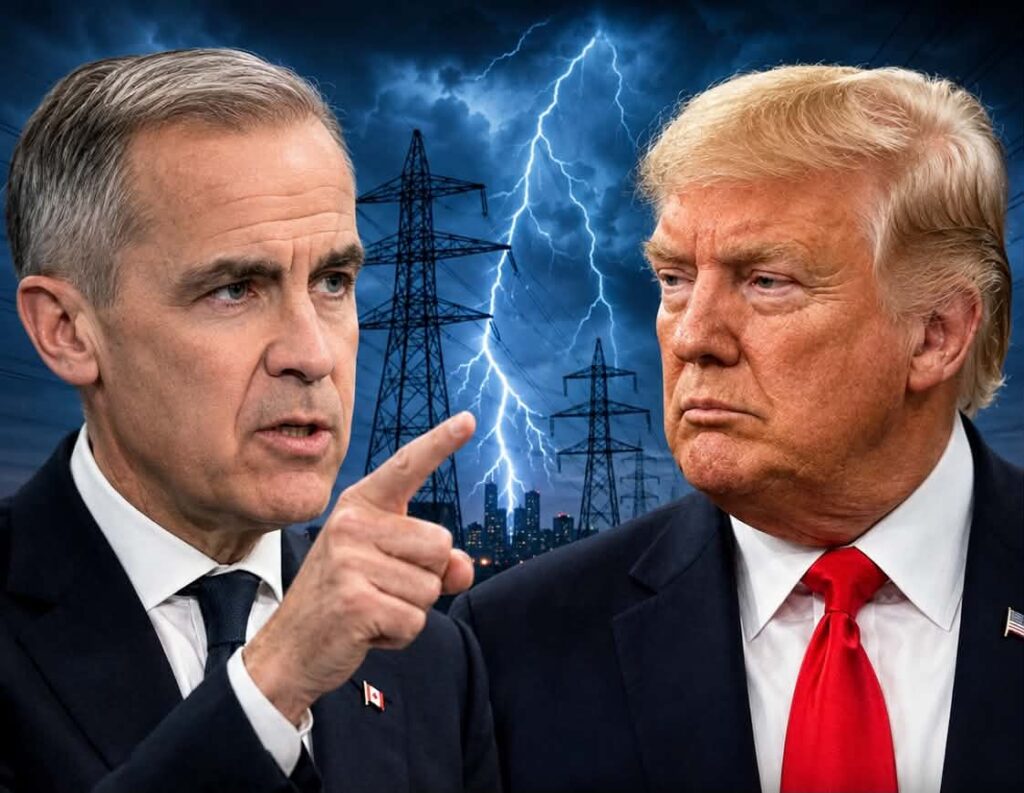
Trump blamed what he described as poor leadership by Prime Minister Mark Carney and Ford for the worsening trade situation.
The exchange marks another escalation in the increasingly tense relationship between Canadian and U.S. officials.
Ford Has Made Similar Warnings Before
This is not the first time Ford has raised the possibility of restricting Ontario’s electricity exports during a trade dispute.
He issued a similar warning during an earlier round of tensions before meeting with U.S. Commerce Secretary Howard Lutnick.
Following those discussions, the two sides managed to reduce tensions through bilateral talks.
Whether the latest dispute follows a similar path remains to be seen.
Canadian Officials Urge Caution
Canadian Conservative Party leader Pierre Poilievre has called for a measured response as the trade conflict develops.
Poilievre said Parliament should be reconvened so Canadians can receive more information about the collapse of trade talks, the potential impact of tariffs on households and businesses, and measures being considered to protect Canadian jobs.
What Could Happen Next?
The dispute puts several major economic issues on the table, including tariffs, electricity exports, critical minerals and cross-border employment.
For businesses and consumers on both sides of the border, the next round of negotiations could have significant economic consequences.
The situation remains fluid, with Canadian and U.S. officials facing pressure to protect domestic interests while avoiding further disruption to one of North America’s most important trading relationships.

Benjamin Harris is a RapidReports front page contributor and editor,proud father of four.