DOJ Announces More Than 800 Defendants Charged in Major International Fraud Crackdown
The U.S. Department of Justice has announced that federal prosecutors have taken action against more than 800 defendants in over 400 fraud-related cases since March 2026, as the Trump administration expands efforts to investigate international scam networks targeting American consumers.
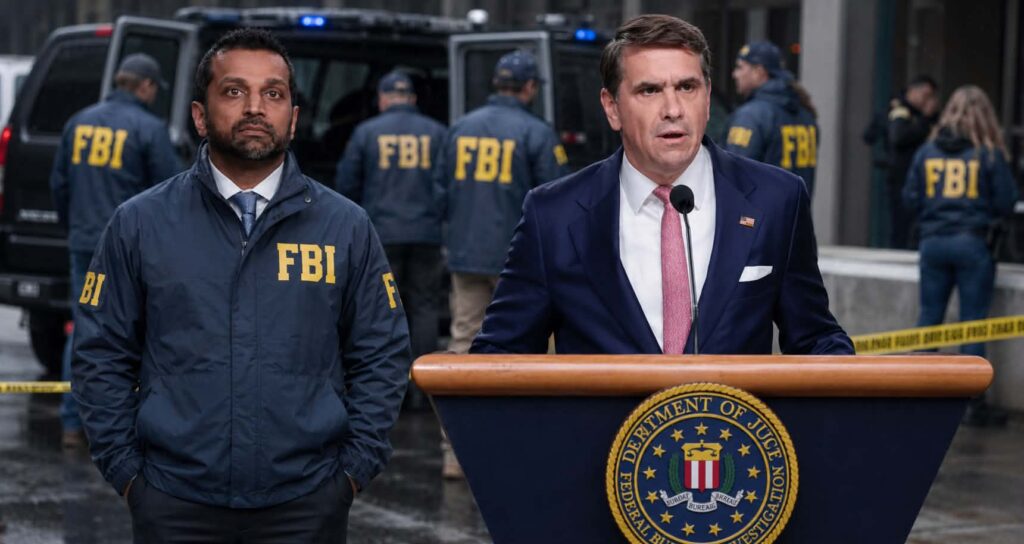
Attorney General Todd Blanche and FBI Director Kash Patel announced the enforcement results on November 24, describing the initiative as the largest coordinated Justice Department crackdown on scam operations in the agency’s history.
The campaign has involved federal prosecutors in more than 85 judicial districts, cooperation with law enforcement agencies in more than 10 countries, and investigations into criminal organizations accused of using online platforms, fraudulent investment opportunities, impersonation schemes and trafficking operations to steal money from victims.
The Justice Department said the cases have produced new criminal charges, extraditions, guilty pleas, convictions and prison sentences. Officials also reported that international operations have disrupted scam compounds, seized electronic devices, restrained financial assets and helped free thousands of people allegedly forced to participate in fraudulent operations.
The announcement comes as new research estimates that Americans lost approximately $68 billion to scams during 2025. Federal officials say the enforcement campaign is designed not only to prosecute individual suspects but also to disrupt the financial and technological infrastructure supporting organized fraud.
More than 800 defendants targeted in federal enforcement campaign
According to the Justice Department, prosecutors have taken action in more than 400 cases involving over 800 defendants since President Donald Trump signed Executive Order 14390 on March 6, 2026.
The cases span more than 85 federal districts and include investigations involving domestic offenders, international criminal organizations and individuals accused of helping overseas fraud operations target people in the United States.
The enforcement actions include several different stages of criminal proceedings. Some individuals have been newly charged, others have been extradited to the United States, and additional defendants have pleaded guilty or received criminal sentences.
The department reported that 30 defendants had been extradited to face scam-related charges in American courts during the enforcement period.
The Justice Department’s Criminal Division coordinated the initiative, bringing together prosecutors and specialists in financial crime, computer investigations, money laundering, international cooperation and other areas of federal enforcement.
Federal agencies involved include the FBI, Homeland Security Investigations, the U.S. Secret Service, the State Department, the Federal Trade Commission, the Securities and Exchange Commission, the Federal Communications Commission, the Internal Revenue Service and the U.S. Postal Inspection Service.
The scale of the effort reflects the growing recognition among investigators that many online fraud schemes operate across national borders. Criminal organizations can recruit victims through social media, move money through cryptocurrency platforms and financial accounts, and coordinate operations from locations outside the reach of ordinary local investigations.
Blanche says prosecutors are targeting entire criminal networks
Attorney General Todd Blanche said the administration intends to pursue the organizations behind fraudulent schemes rather than focus exclusively on individuals who communicate directly with victims.
Blanche described the enforcement effort as an attempt to disrupt criminal networks that use sophisticated methods to steal money from Americans.
The Justice Department said its approach involves investigating how fraud operations recruit participants, obtain personal information, communicate with victims, transfer stolen funds and conceal the proceeds.
This broader strategy is significant because online scams frequently involve multiple participants. One group may create fraudulent investment websites, another may contact potential victims, while separate individuals or organizations handle payments and transfer money through financial accounts or digital assets.
Investigators therefore seek to identify the people and businesses supporting the entire operation, including organizers, recruiters, technology operators, financial intermediaries and individuals who knowingly help move illicit proceeds.
Prosecutors must still establish the responsibility of each defendant through the applicable criminal process. Being named in an investigation or charged in an indictment does not establish guilt.
Operation Blackout targets international scam compounds
One of the most prominent components of the campaign is Operation Blackout, an FBI initiative focused on identifying and dismantling international scam centers.
FBI Director Kash Patel said the operation has involved cooperation with law enforcement and government partners in several regions of the world.
According to the FBI’s November 24 announcement, Operation Blackout has helped disrupt and dismantle more than 29 scam compounds operating across Asia, Africa and the Middle East. Patel described the operations as extending across four continents.
The FBI also reported that investigators had seized more than 14,000 digital devices and restrained nearly $17 billion in illicit funds.
The distinction between restrained and permanently forfeited funds is important. Financial restraint can prevent suspected proceeds from being transferred or withdrawn while an investigation or legal proceeding continues. It does not necessarily mean that all the money has been permanently confiscated or returned to victims.
The operation has also resulted in more than 50 federal charges against scam actors, according to the Justice Department’s detailed breakdown. FBI assistance helped foreign partners arrest or detain more than 320 additional suspected perpetrators overseas.
The figures illustrate the international dimension of the investigations. American authorities have increasingly worked with foreign governments to locate suspected operators, preserve evidence, seize equipment and pursue extraditions.
Scam compounds and allegations of forced labor
Investigators have also focused on facilities where workers are allegedly trafficked and forced to participate in online fraud.
Some scam compounds operate as heavily controlled facilities in which people are recruited under false promises of legitimate employment. Once inside, victims may have their passports or other identification documents confiscated and face threats, intimidation or physical restrictions if they attempt to leave.
According to law enforcement accounts, people held in these facilities can be forced to contact potential victims through social media, messaging applications and online dating platforms.
They may be instructed to develop relationships with strangers, establish trust and eventually introduce fraudulent investment opportunities, particularly involving cryptocurrency.
These schemes are sometimes known as relationship-based investment scams or “pig butchering” fraud. Criminals attempt to persuade victims to transfer money into platforms that appear to show investment profits but are controlled by the scammers.
The FBI said international cooperation associated with Operation Blackout helped liberate and repatriate more than 2,200 trafficked workers who had been forced to operate inside scam compounds.
The figure represents people assisted through international enforcement efforts, not the number of American fraud victims.
The distinction matters because the same criminal operation can harm people in multiple countries. Americans may lose savings to fraudulent investment schemes while workers overseas are simultaneously subjected to trafficking and forced labor.
Operation Level Up focuses on preventing financial losses
Alongside the international investigations, the FBI and other federal agencies have continued Operation Level Up, an initiative designed to identify people being targeted by cryptocurrency investment scams.
The program began in January 2024 with support from the FBI and the U.S. Secret Service. Its central purpose is to identify victims early enough to warn them before they transfer additional money to fraudulent investment platforms.
Many cryptocurrency investment scams follow a similar pattern. Criminals contact individuals through social media, messaging applications or dating platforms and gradually develop a relationship with them.
After establishing trust, the fraudsters introduce an investment opportunity that appears profitable. Victims are encouraged to deposit money into an online platform that displays fabricated account balances and investment returns.
The scammers may then persuade victims to make increasingly large transfers. When victims attempt to withdraw their supposed profits, they are told to pay additional fees, taxes or verification charges. In reality, the displayed profits are fictitious.
The FBI says Operation Level Up uses investigative information to identify individuals who may be participating in these schemes and contact them before additional losses occur.
In its November 24 announcement, FBI Director Kash Patel said the initiative had directly warned more than 11,000 Americans and helped prevent more than $690 million in potential victim losses.
The Justice Department’s detailed breakdown separately reported that Operation Level Up had prevented more than $143 million in losses since March 6, warned thousands of Americans and frozen more than $350 million in assets through the FBI’s Recovery Asset Team.
Those figures are presented differently in the department’s announcement and should not be treated as interchangeable. The public statement does not fully reconcile the broader $690 million figure with the more narrowly described $143 million total.
Patel also said that approximately 77% of the people identified through the initiative did not initially realize they were being targeted by scammers.
The figure highlights a major challenge facing investigators: sophisticated fraud operations can appear legitimate even to people who are familiar with online banking, digital payments and investment products.
Gallup estimates Americans lost $68 billion to scams in 2025
The Justice Department’s announcement comes amid growing concern about the financial impact of fraud across the United States.
Research published by Gallup in partnership with the Stop Scams Alliance estimated that Americans lost approximately $68 billion to scams in 2025.
The research was based on a nationally representative survey of 5,173 U.S. adults conducted between January 8 and February 18, 2026.
Gallup found that approximately 6% of American adults said they had personally been scammed during 2025. Another 4% said they had not personally been victimized but that another member of their household had experienced a scam.
Combined, the findings indicate that 10% of U.S. adults experienced a scam either directly or through someone in their household during the year.
The report estimated that the average loss among reported scams was $5,578, although individual experiences varied significantly. More than half of reported victims said they lost $500 or less, while some reported losses exceeding $10,000.
The research also documented consequences beyond the immediate financial damage.
Nearly three-quarters of scam victims reported a negative effect on their mental health or overall well-being. Some victims experienced financial hardship, anxiety and reduced confidence in online transactions.
The findings illustrate why investigators and consumer protection organizations increasingly view fraud as both a financial crime and a broader public safety concern.
Federal investigators identify a wide range of fraud schemes
The Justice Department’s announcement included examples of investigations involving different types of fraud.
One case involved prison inmates in Georgia who allegedly used contraband mobile phones to conduct jury-duty impersonation scams.
According to prosecutors, suspects contacted people and falsely claimed they had failed to appear for jury service. Victims were then threatened with arrest unless they paid a supposed fine.
The department said 14 individuals were charged in three indictments in federal and state courts in connection with the schemes. Another 17 defendants were charged in state court in a related investigation involving the alleged smuggling of unauthorized mobile phones into Georgia prisons.
Authorities also seized websites used in connection with the jury-duty impersonation operations.
The case illustrates how criminals can exploit fear of law enforcement and the court system. Government agencies do not ordinarily demand immediate payment through cryptocurrency, gift cards or unusual money-transfer methods to resolve a supposed jury-duty violation.
Another investigation involved a Mexican list broker accused of selling names and contact information belonging to elderly Americans to scammers. Prosecutors said the information was distributed to individuals who used it to target potential victims.
The Justice Department also described a sweepstakes fraud investigation involving defendants accused of targeting older Americans with deceptive claims that they had won prizes and needed to pay fees to collect their supposed winnings.
Other cases involved inheritance fraud, fraudulent cryptocurrency investment centers and schemes targeting members of the U.S. military.
Each case has its own allegations and procedural status. The department’s announcement does not mean that every person identified in the investigations has been convicted.
International cooperation leads to arrests and asset seizures
The crackdown has involved law enforcement cooperation across several countries, reflecting the difficulty of investigating criminal operations that cross borders.
U.S. prosecutors and investigators have worked with foreign authorities to conduct raids, identify suspects, preserve digital evidence and pursue extraditions.
The Justice Department said American officials assisted law enforcement agencies in more than 10 countries with operations involving foreign scam call centers and compounds.
The State Department has also funded law enforcement advisers who train and support foreign investigators and prosecutors working on cases involving American victims.
In Southeast Asia, the department reported that cooperation with regional authorities helped facilitate the freezing of more than $1 billion in stolen cryptocurrency and the takedown of more than 1.4 million fraudulent websites and accounts.
Investigators also analyzed thousands of electronic devices and hard drives as part of efforts to identify criminal networks and establish connections between suspects and fraudulent platforms.
The international approach is important because criminals can operate from one country, target victims in another and transfer the proceeds through financial institutions or cryptocurrency services in several additional jurisdictions.
No single agency can address every part of that process. Investigations often require cooperation among financial regulators, police departments, prosecutors, technology companies and international authorities.
Homeland Security Investigations reports arrests and convictions
Homeland Security Investigations, a division of Immigration and Customs Enforcement, has also contributed to the federal anti-fraud campaign.
According to the Justice Department, HSI offices nationwide carried out more than 300 arrests since March 6 and worked with federal prosecutors on indictments involving more than 100 defendants.
The department also reported approximately 80 convictions and guilty pleas connected to the agency’s financial fraud investigations during the period.
HSI said its investigations resulted in the seizure, restraint, freezing or recovery of more than $120 million in suspected illicit proceeds.
The assets included money held in bank accounts and cryptocurrency wallets, as well as cash, precious metals, vehicles and real estate.
Authorities said the agency works with prosecutors, financial institutions and international partners to trace suspected criminal proceeds and pursue the return of funds to victims when legally authorized.
Recovering money can be difficult, particularly when criminals have moved funds through multiple accounts, converted them into cryptocurrency or transferred them to jurisdictions where investigators face additional legal and practical obstacles.
Secret Service investigates financial fraud and business email compromise
The U.S. Secret Service has also reported significant activity during the enforcement period.
The agency said investigators restrained more than $200 million in illicit funds, disrupted 1,780 domains operated by scammers and recovered more than $119 million while investigating more than 1,540 business email compromise incidents.
Business email compromise schemes involve criminals impersonating legitimate businesses, employees or executives to persuade victims to transfer money to fraudulent accounts.
In some cases, criminals gain access to an organization’s email system and monitor communications before sending convincing messages that appear to come from a trusted person.
A fraudulent message may instruct an employee to change payment details, transfer money to a different bank account or complete an urgent financial transaction.
These schemes can affect companies, nonprofit organizations, government contractors and individuals. The financial consequences can be substantial because the requests often involve legitimate business transactions that have been secretly redirected.
The Secret Service said its investigations also included a cryptocurrency investment conspiracy operated from scam centers in Cambodia that allegedly targeted at least 174 American victims.
FTC and SEC expand efforts against deceptive schemes
Other federal agencies have pursued separate enforcement actions as part of the government-wide response.
The Federal Trade Commission reported filing 16 actions during the enforcement period involving alleged deceptive earnings claims, unfair payment practices, technology-support scams, debt-relief schemes, unauthorized billing and other consumer protection issues.
The agency also worked to identify websites and social media pages impersonating government officials or legitimate businesses.
The Securities and Exchange Commission reported enforcement actions against 39 entities since March 2026 involving alleged false filings designed to create the appearance of legitimate investment advisers.
The SEC also described cases involving online investment platforms and investment clubs accused of using fraudulent claims to attract retail investors.
Some of the investigations involved so-called investment-confidence schemes in which criminals establish trust with potential victims before persuading them to transfer money into platforms that misrepresent their regulatory status or investment performance.
The SEC has urged investors to verify the background of financial professionals and to be cautious about investment offers promoted through social media and messaging applications.
FCC targets illegal robocalls and prison cellphone scams
The Federal Communications Commission has taken additional steps to address fraudulent calls and communications.
The agency reported blocking or stopping approximately 296 million illegal robocalls through enforcement and network reforms during the period described in the Justice Department announcement.
The FCC also said it had blocked more than 1,400 providers associated with unlawful call traffic.
On November 19, the commission approved a rule allowing federal and state prisons and jails to use jamming technology to block calls from illegal contraband cellphones.
The measure is intended to reduce the use of unauthorized phones by incarcerated individuals, including people allegedly involved in scams targeting the public.
The policy follows investigations showing that contraband phones can be used to contact victims, coordinate criminal activity and impersonate government officials or financial institutions.
The effectiveness and implementation of the rule will depend on how correctional facilities deploy the technology and comply with applicable requirements.
Why the crackdown matters to American consumers
The Justice Department’s announcement highlights the range of fraud threats facing consumers.
Criminals no longer need to meet victims in person or operate from a physical location inside the United States. They can use fake websites, social media accounts, messaging applications, fraudulent investment dashboards and impersonation calls to reach people across the country.
Older adults are frequently targeted by inheritance, sweepstakes and government-impersonation schemes. Other operations target people looking for employment, individuals seeking investment opportunities and businesses that regularly transfer money electronically.
Cryptocurrency fraud has become a particularly challenging area because digital assets can be transferred rapidly across borders, while fraudulent platforms can be designed to look like legitimate financial services.
Authorities say prevention remains essential because recovering money after it has been transferred can be difficult.
Consumers should be cautious when strangers offer investment opportunities through messaging applications, promise unusually high returns or pressure them to transfer funds quickly.
They should also independently verify requests for money from people claiming to represent government agencies, banks, courts or law enforcement organizations.
A legitimate government agency will not demand immediate payment through gift cards or cryptocurrency to avoid an arrest. People who receive suspicious communications should contact the relevant institution using independently verified contact information rather than relying on telephone numbers or links provided by the person making the demand.
What happens next in the federal anti-scam campaign?
The Justice Department said the enforcement campaign will continue, with prosecutors and investigators working to identify additional suspects and disrupt international fraud operations.
The November 24 announcement represents a cumulative account of enforcement activity since March 6, not a declaration that every investigation has been completed.
Some cases are still at the charging or extradition stage, while others have resulted in guilty pleas, convictions or sentences. Additional proceedings may take months or years, particularly when evidence and suspects are located in multiple countries.
The department also plans to continue public education efforts designed to help consumers recognize fraud before they lose money.
The overall strategy combines criminal prosecution, international cooperation, financial investigations, digital evidence collection and consumer warnings.
The results reported by the administration include more than 800 defendants facing criminal action, over 400 cases, more than 29 disrupted scam compounds, over 2,200 trafficked workers assisted and thousands of electronic devices seized.
Those figures demonstrate the scale of the government effort, while the ultimate impact will depend on whether investigators can secure convictions, disrupt the organizations behind the schemes and prevent further losses to consumers.
For American households, the announcement is also a reminder that online fraud can take many forms. Recognizing suspicious investment offers, impersonation attempts and requests for urgent payments remains an important part of protecting personal finances.

Benjamin Harris is a RapidReports front page contributor and editor,proud father of four.