FAA Grounds Flights at Major Northeast Airports After Air Traffic Control Outage
Thousands of flights were disrupted across the Northeast Monday after a communications failure at a key Federal Aviation Administration air-traffic-control facility forced temporary ground stops at several major airports.
The disruption affected airports serving New York, New Jersey and Philadelphia, with the outage occurring during a particularly busy period as world leaders traveled to New York for the United Nations General Assembly.
The FAA later restored the affected communications systems and lifted the ground stops, but a substantial backlog of delayed and canceled flights remained into the evening.
Which Airports Were Affected?
The disruption reached several of the country’s busiest airports.
Ground stops were imposed at various points at:
- Newark Liberty International Airport
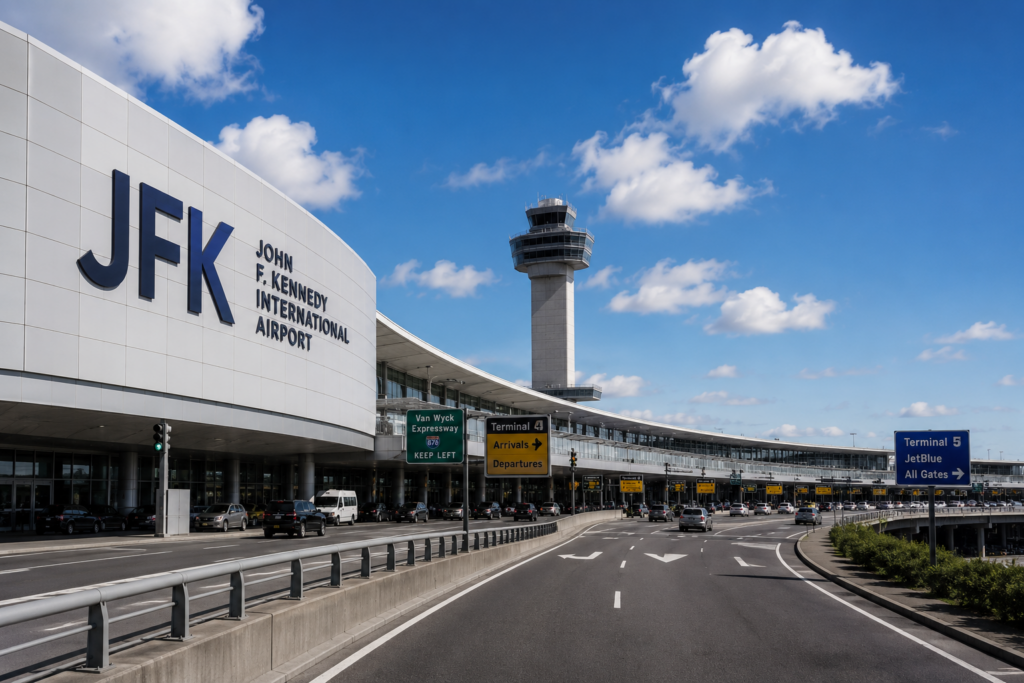
- John F. Kennedy International Airport
- LaGuardia Airport
- Philadelphia International Airport
- Teterboro Airport
- Westchester County Airport
Boston Logan Airport was also affected by the broader disruption to Northeast air traffic.
The exact restrictions changed throughout the day as FAA officials worked to restore communications and manage the resulting backlog.
What Caused the FAA Outage?
The initial problem involved a failure of a telecommunications circuit serving the FAA’s Philadelphia Terminal Radar Approach Control facility, commonly known as Philadelphia TRACON.
When controllers attempted to switch to the backup system, officials discovered that a fiber-optic line had also been damaged.
Transportation Secretary Sean Duffy said the backup fiber line had been accidentally severed by a construction crew in New Jersey. The combination of the failed primary circuit and damaged backup connection left the facility with serious communications problems.
Because air-traffic controllers rely on communications systems to coordinate aircraft safely, the FAA temporarily restricted incoming traffic rather than allowing normal operations to continue without the necessary communications capability.
Flights Gradually Resume
The ground stops did not remain in place indefinitely.
Philadelphia and LaGuardia resumed operations during the afternoon, while restrictions affecting other airports were subsequently lifted as communications were restored.
By Monday evening, Duffy said the telecommunications lines had been repaired and normal operations across the Northeast were resuming.
However, restoring normal operations did not immediately eliminate the delays. Aircraft and crews were out of position after hours of disruptions, meaning travelers could continue to experience cancellations, missed connections and lengthy waits even after the FAA lifted the restrictions.
Thousands of Flights Disrupted
The outage produced a ripple effect well beyond the airports directly affected by the FAA ground stops.
Reuters reported that approximately 7,000 flights were delayed or canceled during the day, including more than 1,400 at the major New York-area airports.
The Northeast is one of the country’s most heavily traveled aviation corridors, so restrictions at Newark, JFK, LaGuardia and Philadelphia can quickly affect flights elsewhere in the national network.
Passengers whose flights were not departing from the affected airports could therefore still encounter delays because aircraft or crews were arriving late from other cities.
The Timing Added to the Disruption
The outage occurred as New York was hosting the annual high-level portion of the United Nations General Assembly.
The event brought numerous heads of state, government officials and diplomatic delegations into the New York region, adding to the volume of aviation activity around the city’s airports.
The disruption therefore occurred at a particularly busy time for the region’s airspace, although officials did not indicate that the United Nations gathering caused the technical failure.
FAA Infrastructure Faces Renewed Attention
Monday’s outage has also renewed questions about the reliability of the nation’s aging air-traffic-control infrastructure.
The FAA has been undertaking modernization efforts, but the incident demonstrated how the failure of a relatively small number of communications links can have consequences across a large portion of the aviation network.
Transportation officials have pointed to the need for additional investment in the system. Congress has already provided funding for modernization, while the administration has sought additional resources for upgrades.
The Philadelphia facility has also experienced significant disruptions in the past, making redundancy and modernization of its communications infrastructure an ongoing concern.
Travelers Should Still Expect Delays
Although the FAA reported that normal operations were returning Monday evening, travelers could continue to experience delays as airlines worked through the accumulated backlog.
Passengers with flights involving Newark, JFK, LaGuardia, Philadelphia or other affected airports should check directly with their airline for the latest departure information rather than relying solely on the original scheduled time.
The FAA disruption itself was temporary, but its effects were expected to continue as airlines repositioned aircraft and crews and worked to clear the remaining backlog.
What Happened Monday
The sequence of events was broadly:
- A telecommunications circuit serving Philadelphia TRACON failed.
- FAA personnel attempted to use a backup system.
- A backup fiber connection was found to have been severed during construction in New Jersey.
- The FAA imposed ground stops and other traffic restrictions.
- Major airports across the Northeast experienced delays and cancellations.
- Technicians repaired the affected communications connections.
- Ground stops were lifted and normal operations began resuming.
- Airlines continued working through the resulting backlog.
The incident did not represent a nationwide shutdown of the U.S. aviation system. It was a regional air-traffic-control communications failure that produced widespread consequences because of the importance of the Northeast air corridor.

Benjamin Harris is a RapidReports front page contributor and editor,proud father of four.