Former Jackson Mayor Chokwe Antar Lumumba Sentenced to 37 Months in Federal Bribery Case
Former Jackson, Mississippi, Mayor Chokwe Antar Lumumba has been sentenced to 37 months in federal prison for his role in a bribery conspiracy involving an undercover FBI operation and a proposed downtown hotel development.
U.S. District Judge Daniel P. Jordan III imposed the sentence on November 20, 2026, after Lumumba pleaded guilty to one count of conspiracy to commit bribery. The 37-month term was at the bottom of the federal sentencing guideline range of 37 to 46 months.
In addition to the prison sentence, Lumumba must forfeit $50,000 in property and serve one year of supervised release after completing his prison term. He was ordered to report to federal prison on January 4, 2027.
The sentencing marks a major development in a federal corruption investigation that has resulted in prison terms for several former Jackson-area officials. The investigation centered on allegations that public officials accepted money and other benefits in exchange for using their government positions to advance a proposed hotel project near the city’s downtown convention center.
Lumumba, who served two terms as mayor, admitted participating in the conspiracy earlier this year. His guilty plea followed a 2024 federal indictment that initially included multiple allegations against him.
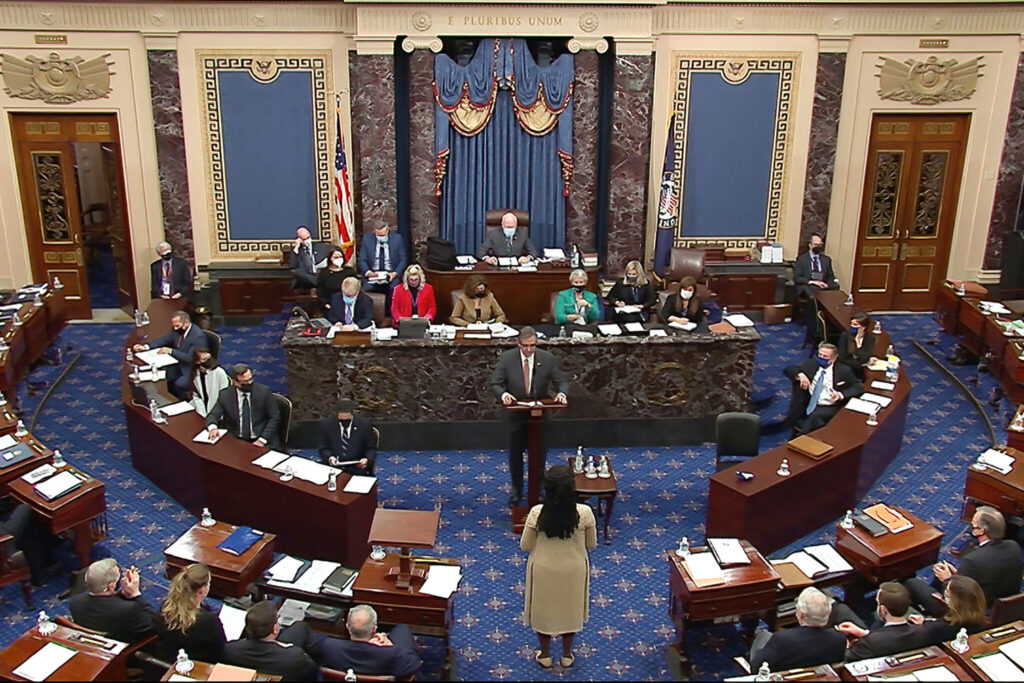
Lumumba addresses the court before sentencing
During the November 20 hearing, Lumumba spoke about the personal and public consequences of his criminal conduct. He expressed regret over disappointing his family and the community he had previously represented.
“My failures have become unbearable,” Lumumba told the court.
He also described the importance of family and community throughout his life, explaining that those values had influenced his decision to become involved in public service.
“My entire life has been built on the value of family and community, and viewing the community as family,” he said.
“We moved to Mississippi for the very purpose of fighting for community. To know I have disappointed both my immediate family, and my extended family is what I’m most disappointed in.”
Lumumba’s remarks came as family members and supporters accompanied him to the federal courthouse in Jackson. Many supporters wore white and gathered outside the building before and after the hearing.
His attorney had sought a sentence that would allow for a more favorable placement and asked the judge to recommend a minimum-security federal facility. The defense also requested consideration for participation in a residential drug treatment program.
The judge said eligibility for that program would be assessed after Lumumba entered federal custody.
The court ultimately imposed the 37-month sentence, the lowest term within the guideline range calculated for the case.
How the FBI undercover operation exposed the bribery scheme
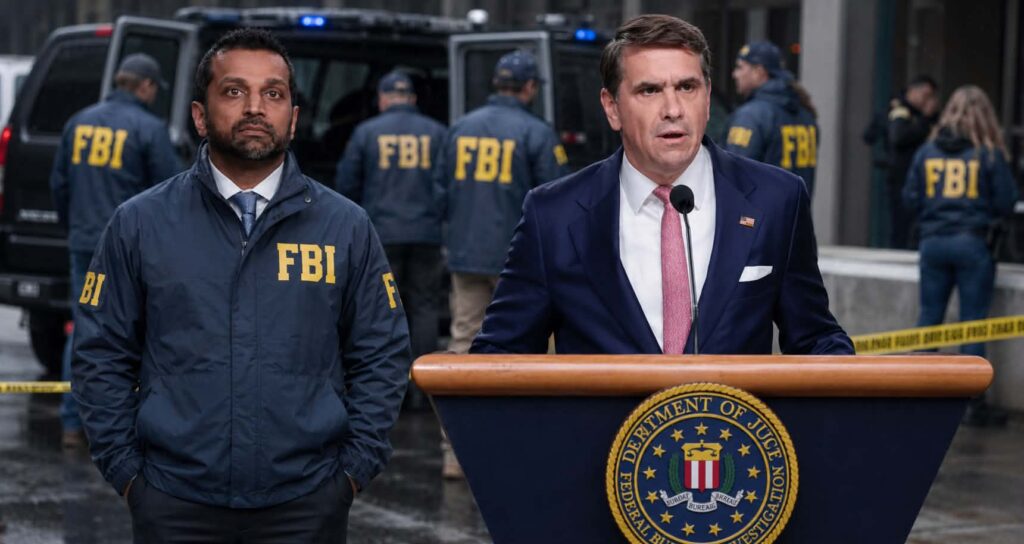
The federal investigation began with an undercover operation in which FBI agents posed as real estate developers interested in building a hotel near Jackson’s downtown convention center.
The proposed development created an opportunity for investigators to examine whether local officials would accept payments in exchange for helping the project move through city government.
According to federal prosecutors, the undercover agents offered money and other benefits to officials who could influence the development process. Investigators focused on the role of several political figures who allegedly agreed to use their public positions to assist the supposed developers.
Lumumba admitted accepting $50,000 connected to the arrangement. The money was disguised as campaign contributions, according to the prosecution’s account.
In exchange, he agreed to take official action that would benefit the proposed development. One part of the arrangement involved shortening a deadline associated with a request for qualifications, a process used by government agencies to solicit information from potential developers or contractors.
The shortened deadline was intended to affect how the proposed hotel project moved through the city’s approval process.
Court records and reporting on the case described five $10,000 checks connected to the $50,000 payment.
The case demonstrated how investigators used a fictitious development proposal to approach public officials and document discussions about payments, political influence and government decisions.
Lumumba ultimately admitted his participation in the conspiracy by pleading guilty to a federal charge. His conviction was therefore based on his guilty plea rather than a jury verdict after trial.
Other Jackson officials also received prison sentences
The investigation extended beyond the former mayor and resulted in criminal cases involving other prominent figures in local government.
Former Hinds County District Attorney Jody Owens and former Jackson City Council President Aaron Banks also pleaded guilty to conspiracy charges connected to the undercover operation.
Owens was sentenced on November 5, 2026, to 41 months in federal prison. Judge Jordan also ordered him to pay a $100,000 fine.
Banks received a 45-month prison sentence, along with a $15,000 fine, according to local reporting.
The sentences placed all three former officials behind bars for more than three years, although their individual punishments differed because of the circumstances considered by the court.
During Owens’ sentencing, Jordan described him as the “ringleader” of the bribery scheme. Prosecutors had alleged that Owens played a central role in connecting the undercover developers with officials who could influence the proposed project.
Owens’ position as Hinds County district attorney gave him a prominent role in local law enforcement, while Banks held a leadership position on the Jackson City Council.
Former Council Vice President Angelique Lee and businessman Sherik “Marve” Smith also pleaded guilty to federal bribery-related charges. Their cases formed part of the broader investigation, although their individual sentencing outcomes were separate from Lumumba’s hearing.
The investigation therefore involved several levels of local political and business influence. It also raised questions about the safeguards intended to prevent public officials from using government authority for personal or political financial benefit.
What the proposed hotel project had to do with the case
The development at the center of the investigation was a proposed hotel near Jackson’s downtown convention center.
A hotel project in that location could have economic and tourism implications for the city, particularly because convention facilities depend on nearby accommodations, restaurants and other visitor services.
The undercover agents presented themselves as developers seeking to advance such a project. Prosecutors said the officials involved were offered payments in exchange for assistance with government procedures and decisions.
Lumumba’s admitted role involved accepting the $50,000 payment and agreeing to shorten the request-for-qualifications deadline.
That action was important because government development projects typically involve formal procedures intended to establish how interested companies can submit qualifications or proposals. Changes to deadlines can affect which companies have time to participate and how a public project moves forward.
The federal case focused not simply on whether the hotel would ultimately be built, but on whether public officials agreed to use their positions in exchange for payments.
The guilty pleas and resulting sentences brought criminal consequences for several participants in the scheme. They also placed renewed attention on the role of transparency and competitive procedures in municipal development decisions.
Lumumba’s political career and 2025 election defeat
Lumumba first became mayor of Jackson after winning the 2017 election. He went on to serve two terms as the leader of Mississippi’s capital city.
He became associated with progressive political ideas and attracted attention beyond Mississippi for his comments about the potential direction of the city. At one point, he spoke about making Jackson “the most radical city on the planet.”
His administration also operated during a period of serious challenges for the city, including a prolonged water infrastructure crisis that brought national attention to Jackson.
The city’s water problems involved aging infrastructure, treatment and distribution difficulties, and concerns about the reliability of basic public services. The crisis placed pressure on city leadership and highlighted longstanding infrastructure needs.
Lumumba’s political future became increasingly complicated after federal authorities indicted him in 2024.
The corruption case became a major issue during the campaign for another term as mayor. Lumumba ultimately lost his reelection bid in 2025, ending his time in office after two terms.
His guilty plea in July 2026 further changed his public and professional standing. The former mayor had initially maintained his innocence after the indictment, but later admitted participating in the conspiracy.
The criminal case and its consequences represent a significant reversal for a politician who had built his public profile around community organizing, progressive reform and local government leadership.
Mississippi Supreme Court permanently disbars Lumumba
The consequences of Lumumba’s felony conviction extended beyond his prison sentence and political career.
In October 2026, the Mississippi Supreme Court permanently disbarred him after accepting his irrevocable resignation from the Mississippi Bar.
The court’s action followed Lumumba’s guilty plea in federal court. He had offered to surrender his law license, and the state Supreme Court accepted the resignation with prejudice, permanently barring him from seeking reinstatement to practice law in Mississippi.
The Mississippi Bar confirmed that the court accepted the resignation and entered an order of disbarment on October 15.
The decision means Lumumba can no longer practice law in the state. It represents a separate professional consequence from the federal criminal sentence.
The case illustrates how a felony conviction can affect a public figure in several areas at once, including political office, professional licensing and personal freedom.
What the 37-month sentence means
Lumumba’s 37-month prison term falls at the bottom of the federal guideline range reported in the case. The sentence reflects the court’s determination after considering the presentencing materials and arguments from the prosecution and defense.
The $50,000 forfeiture is a separate financial penalty from the prison term. It requires the forfeiture of property valued at that amount and should not be confused with an additional $50,000 criminal fine.
After completing his prison sentence, Lumumba will be subject to one year of supervised release. That period generally involves court-imposed conditions and supervision, although the precise requirements depend on the judgment.
His January 4, 2027, reporting date means he is not required to begin serving the prison term immediately after the sentencing hearing.
The sentences imposed on Lumumba, Owens and Banks represent substantial prison terms for former public officials whose cases arose from the same undercover investigation. Other defendants who pleaded guilty remain subject to their own court proceedings and sentencing decisions.
A major federal corruption case in Mississippi’s capital
The Jackson bribery investigation has become one of the most consequential public-corruption cases involving Mississippi’s capital city in recent years.
The case reached into municipal government and county law enforcement, involving individuals who had held influential positions in local politics.
For residents, the convictions and guilty pleas have raised questions about public trust, government accountability and the integrity of decisions involving major development projects.
The proposed hotel was the setting for the undercover operation, but the central issue in the criminal case was the conduct of officials who agreed to accept benefits in exchange for using their positions.
Lumumba acknowledged the personal consequences during his sentencing hearing, expressing disappointment over the effect of his actions on his family and community.
His prison term, the forfeiture order and his permanent disbarment mark the legal and professional consequences of the case. The investigation has also resulted in prison sentences for other former Jackson officials, with additional proceedings involving other defendants.
For a former mayor who once presented himself as an advocate for radical change in Jackson, the sentencing represents a dramatic conclusion to his time in public office and a significant chapter in the city’s ongoing debate over political accountability.

Benjamin Harris is a RapidReports front page contributor and editor,proud father of four.