Oregon Governor Race Remains Closely Divided as Christine Drazan and Tina Kotek Head Toward Rematch
Oregon’s long Democratic hold on the governor’s office is facing another closely watched test as Republican state Sen. Christine Drazan and Democratic Gov. Tina Kotek prepare for a rematch of their 2022 contest.
A June poll commissioned by Drazan’s campaign showed the Republican with a narrow 48% to 44% advantage over Kotek among registered voters. Because the survey’s margin of error was plus or minus 4 percentage points, however, the result did not establish a statistically clear lead.
A subsequent September survey also found the race within the margin of error. DHM Research’s poll of 600 likely voters, conducted Sept. 3-9, put Drazan at 45% and Kotek at 43%, with the difference again falling inside the poll’s stated ±4-point margin of error.
The two surveys provide evidence of a competitive contest, but neither can by itself determine how the November election will unfold.
June Poll Put Drazan Four Points Ahead
The first widely reported survey of the 2026 rematch was conducted by Public Opinion Strategies for Drazan’s campaign between June 22 and June 24.
Among 600 registered Oregon voters, 48% said they would support Drazan while 44% backed Kotek. Six percent were undecided, according to results released by the campaign, with the remaining respondents either declining to answer or supporting another candidate.
The survey’s ±4-point margin of error is important. A four-point difference between the candidates is not large enough to establish that one candidate was ahead statistically.
The campaign-sponsored nature of the survey is another consideration. Public Opinion Strategies has Republican ties, and the campaign released topline findings rather than a complete public questionnaire and methodology. Independent polling is therefore useful for determining whether the June result reflects a broader pattern.
September Survey Shows Another Narrow Difference
The next publicly reported poll continued to show a close contest.
DHM Research surveyed 600 likely voters from Sept. 3 through Sept. 9. Drazan received 45% support compared with 43% for Kotek, with the survey carrying a ±4-point margin of error.
Unlike the June survey, the September poll was conducted among likely voters rather than registered voters and was funded by Grow Oregon, an advocacy nonprofit backed by business groups supportive of Drazan, according to OPB.
The two surveys therefore should not be treated as directly interchangeable. They used different pollsters, sponsors and voter screens.
Still, both produced results in which the candidates were separated by only a few percentage points.
Oregon’s Republican Governor History Adds Context
The stakes are particularly notable because Oregon has not elected a Republican governor since 1982.
Republican Victor Atiyeh won reelection that year. Democrats have controlled the governorship since Atiyeh left office, beginning with the January 1987 inauguration of Gov. Neil Goldschmidt.
The 2026 contest is also a rematch of a particularly competitive recent election.
In 2022, Kotek received 917,074 votes to Drazan’s 850,347, while independent Betsy Johnson received 168,431. The official results translated to roughly 47% for Kotek, 43.5% for Drazan and 8.6% for Johnson.
Johnson’s independent campaign gave voters another major option in that election. She is not running against Kotek and Drazan in the same role this year, changing the composition of the general-election field.
Campaigns Are Framing the Race Differently
Drazan has emphasized state-level issues including housing costs, homelessness, public safety, education and the cost of living.
Her campaign has sought to make the election a debate over the performance of state government and whether Oregon needs a change in direction.
Kotek and Democrats, meanwhile, have sought to connect Drazan with the national Republican Party and President Donald Trump, bringing federal issues into a contest that Drazan has generally sought to frame around Oregon-specific concerns.
That contrast reflects a broader strategic question for both campaigns: whether voters will primarily evaluate the incumbent governor’s record and conditions in Oregon or view the contest through the lens of national political issues.
The Governor’s Approval Ratings Could Shape the Contest
The June Public Opinion Strategies survey found substantial dissatisfaction with the direction of the state.
According to the published results, 59% of respondents said Oregon was on the wrong track, while 38% said it was moving in the right direction. Kotek’s job approval stood at 38%, compared with 57% who disapproved.
Those numbers are relevant to the political environment but should not be interpreted as a prediction of the election. Approval ratings measure views of an incumbent at a particular point in time, while a ballot test measures stated preferences between candidates.
Fundraising and Campaign Organization Will Matter
Drazan’s campaign has also used the polling results as part of its fundraising message, seeking to demonstrate to donors that the Republican nominee can compete statewide.
Financial resources are particularly important in a statewide campaign because both candidates must communicate with voters across Oregon’s urban, suburban and rural regions.
But fundraising totals and polling numbers measure different things. Money can finance advertising, field operations and voter outreach, while a poll provides only a snapshot of voter preferences at the time interviews were conducted.
Oregon’s Mail-Ballot System Compresses the Final Campaign
The timing of the election is another important factor.
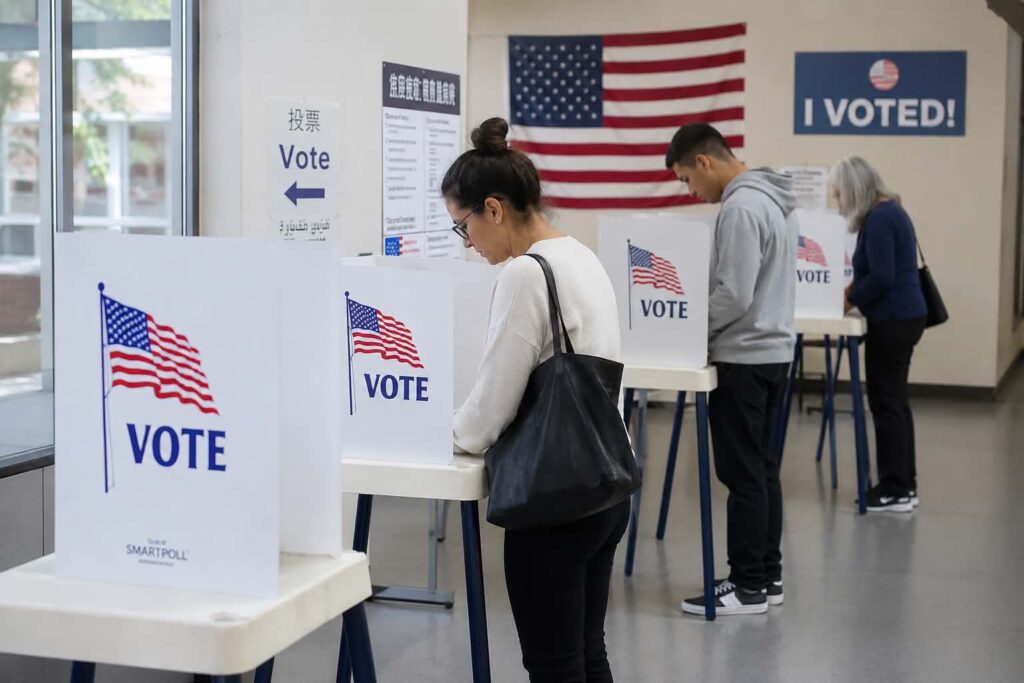
Oregon conducts elections primarily through a vote-by-mail system, and the state’s general election is scheduled for Nov. 3, 2026. Ballots are mailed to registered voters ahead of Election Day.
That means campaigns must reach many voters before the final days of the traditional election calendar. Late debates, advertising and other developments can still matter, but some voters may have already returned their ballots.
Independent Polling Will Provide Additional Context
The most significant limitation of the June Drazan poll is that it was commissioned by one of the candidates’ campaigns. The September DHM survey provides another data point, but it also had an organizational sponsor with an interest in the race.
Additional independent surveys could help clarify whether the narrow margins seen in these polls represent a persistent feature of the contest.
For now, the available public polling shows a race in which Drazan and Kotek have been separated by only a few percentage points, with both results falling within their respective margins of error. The numbers demonstrate a competitive political environment but do not establish an election outcome.
Oregon voters will ultimately decide the governor’s race on Nov. 3, with the campaigns continuing to compete over the state’s record, policy priorities and the broader political direction of Oregon.

Benjamin Harris is a RapidReports front page contributor and editor,proud father of four.