Iran Offers to Reopen Strait of Hormuz Within Seven Days if U.S. Eases Military Pressure
Iran has reportedly offered to reopen the strategically important Strait of Hormuz within seven days if the United States eases military pressure and lifts its blockade of Iranian ports, according to a senior Iranian official cited by Reuters and Japan’s Kyodo News.
The proposal comes as Iranian President Masoud Pezeshkian travels to New York for the United Nations General Assembly, creating a potential diplomatic channel between Tehran and Washington after months of military confrontation.
According to Reuters, the Iranian proposal was delivered to the United States through intermediaries on September 16. The official said Iran’s delegation at the UN has authority to revive negotiations and discuss a framework for ending hostilities.
However, the situation remains fluid. Iran’s semi-official Fars News Agency subsequently disputed the Reuters and Kyodo reports, saying Iranian sources had described them as inaccurate. That means the reported seven-day reopening proposal should not be treated as a finalized Iranian government agreement.
What Iran Is Reportedly Offering
The senior official told Reuters that Iran could reopen the Strait of Hormuz within seven days if Washington takes steps to reduce military pressure and lifts its blockade of Iranian ports.
The official also said the United States would first need to formally signal that it wants to pursue a diplomatic solution and establish a timeline for negotiations.
Iran’s delegation in New York would then be able to work through mediators on the details of a possible agreement, according to the official.
The reported proposal therefore links the reopening of the waterway to broader negotiations rather than presenting the seven-day timeline as an unconditional commitment.
Why the Strait of Hormuz Matters
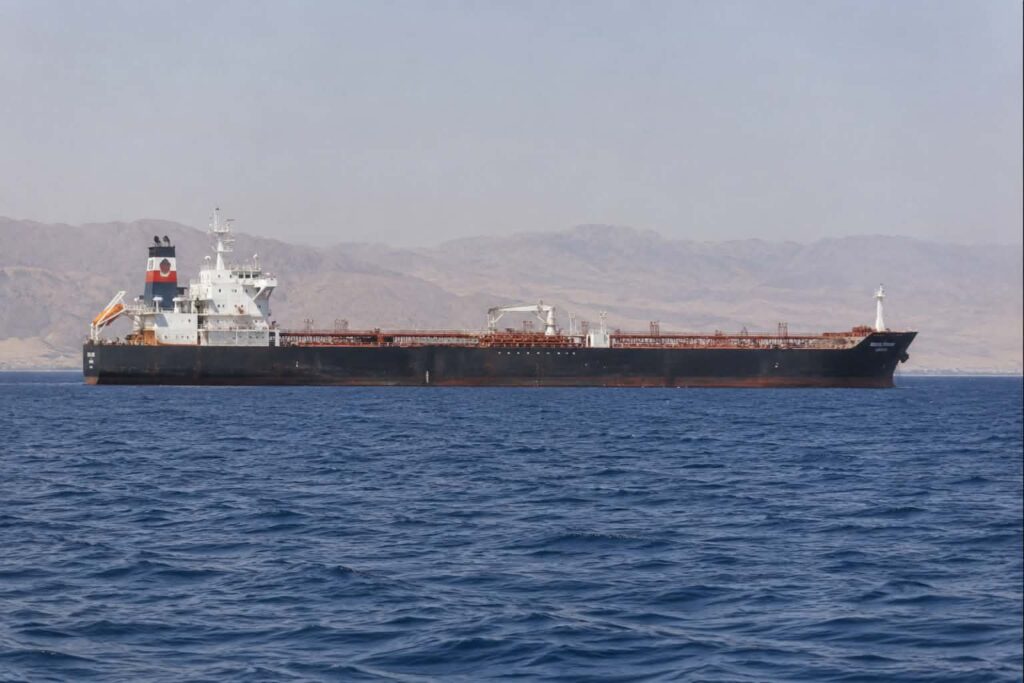
The Strait of Hormuz is one of the world’s most important energy shipping routes.
Before the current conflict, roughly one-fifth of global oil and gas shipments moved through the waterway, according to Reuters. Traffic has fallen sharply during the conflict, although some vessels continue to move through the strait.
The reduction in shipping has contributed to volatility in global energy markets. At the same time, Saudi Arabia has been working to restore alternative export routes, including restarting its East-West oil pipeline and preparing to resume shipments from the Red Sea port of Yanbu.
Diplomacy Moves to the United Nations
The reported offer comes as world leaders gather in New York for the UN General Assembly.
Pezeshkian left Tehran for New York on Tuesday. The Iranian official told Reuters that the Iranian delegation has full authority to pursue renewed diplomacy with Washington.
A direct meeting between Pezeshkian and President Donald Trump was not expected under the latest Iranian account, with mediators instead positioned to carry messages between the two sides.
The United States has also signaled that diplomatic contacts remain possible. Secretary of State Marco Rubio said Washington was open to discussions if they could lead toward a broader resolution.
Trump Takes a Hard Line
The reported Iranian proposal emerged alongside sharply different public rhetoric from Washington.
Trump said at the UN General Assembly that he faced a major decision over whether to reach an agreement with Iran or take further military action. Reuters reported that he also called for international economic isolation of Iran.
At the same time, Trump said U.S. officials had held what he described as a productive meeting with mediators involved in discussions with Iran.
The contrasting messages illustrate the uncertainty surrounding the diplomatic effort: negotiations remain possible, while the United States continues to maintain pressure on Tehran.
Iran’s Military Has Also Issued Warnings
The reported diplomatic proposal follows warnings from Iran’s military leadership that further U.S. military operations could trigger retaliation.
Reuters reported that Iran’s military central command said Sunday it had been informed that the United States could resume military operations with support from regional countries.
Iran warned that any escalation could result in retaliation.
That military messaging and the reported diplomatic proposal are occurring simultaneously, making it difficult to determine whether the latest contacts will lead to a formal agreement.
Tehran’s Denial Adds Another Layer of Uncertainty
The most important development for readers is that the reported proposal has not been publicly confirmed as a finalized Iranian policy.
Fars News Agency, a semi-official Iranian outlet, later reported that Iranian sources rejected the Reuters and Kyodo accounts as inaccurate and untrue.
As a result, the seven-day timeline should currently be described as a reported proposal attributed to a senior Iranian official, rather than a confirmed agreement between Iran and the United States.
There has also been no announcement of a signed U.S.-Iran agreement that guarantees the reopening of the waterway.
What Happens Next
The immediate focus is likely to remain on diplomatic contacts surrounding the UN General Assembly and whether Washington and Tehran can agree on initial steps toward negotiations.
If the Reuters account accurately reflects the position of the Iranian official, Tehran is linking reopening the Strait of Hormuz to a reduction in U.S. military pressure and the lifting of the blockade on Iranian ports.
But the subsequent denial from Fars means the precise status of that proposal remains unclear.
For global energy markets, the distinction matters. A confirmed reopening of the strait could reduce concerns about shipping disruptions, while continued uncertainty would leave oil flows and tanker traffic vulnerable to further changes in the conflict.
For now, the reported seven-day offer represents a potentially significant diplomatic development—but not a confirmed reopening agreement.

Benjamin Harris is a RapidReports front page contributor and editor,proud father of four.