Jelly Roll Targets Trump for Third Straight Night on “Jimmy Kimmel Live!” — and the Jokes Get Even Sharper
Jelly Roll has turned his week behind the desk of “Jimmy Kimmel Live!” into an unexpected political comedy storyline.
For three consecutive nights, the country music star has made Donald Trump a recurring target of his late-night monologues, surprising viewers who may have expected the Grammy-winning singer to keep politics out of his guest-hosting stint.
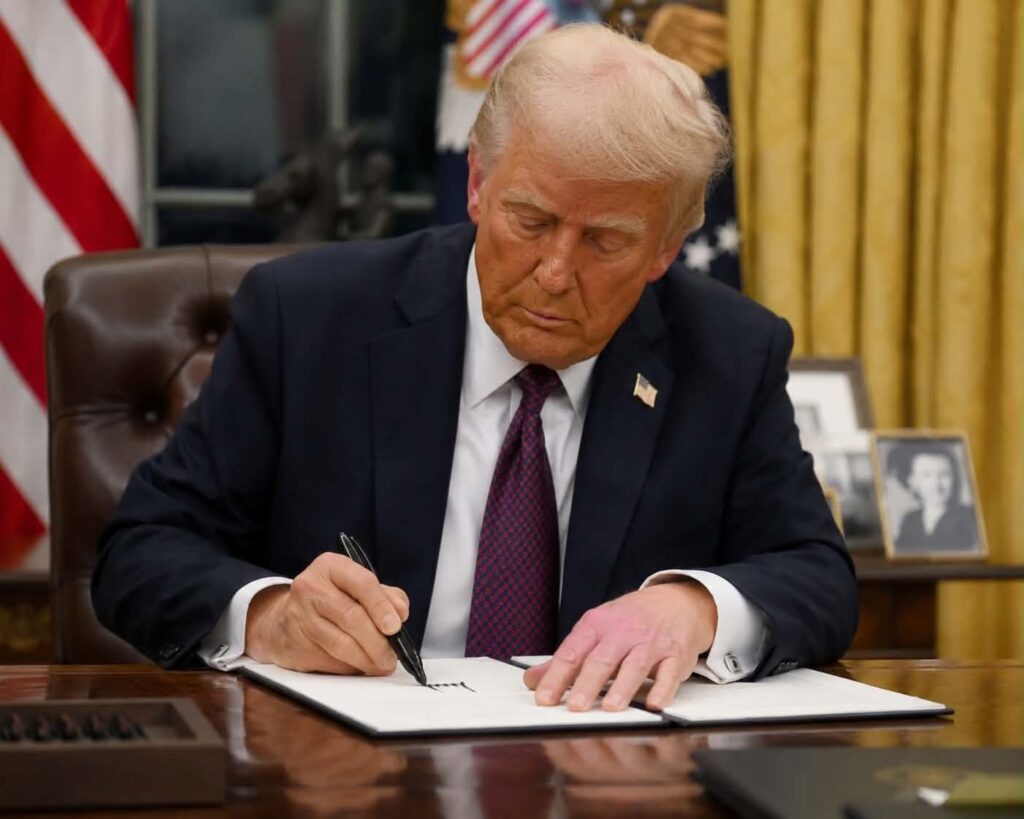
Instead, Jelly Roll repeatedly returned to the president, joking about everything from Trump’s appearance and public image to his political record and recent public appearances.
By the third night, the jokes had become one of the defining talking points of Jelly Roll’s time as guest host.
And the reaction has been just as intense.
Jelly Roll’s Trump Jokes Keep Coming Back
Jelly Roll began his guest-hosting run on Monday, August 24, with jokes about Trump’s appearance at the Freedom 250 Grand Prix in Washington, D.C.
He mocked the president’s flag-waving during the event before moving into jokes about Trump’s reported weight.
The singer’s comments immediately attracted attention because of his own well-publicized weight-loss transformation.
Jelly Roll has lost hundreds of pounds during his personal health journey, making Trump’s reported weight gain an especially obvious target for his comedy.
He joked that he had effectively lost “an entire Donald Trump” through his own weight loss.
The line quickly circulated online and became one of the most talked-about moments from the broadcast.
The Country Star Wasn’t Finished
What might have been a one-night joke turned into a recurring theme.
On subsequent nights, Jelly Roll returned to Trump-related material.
He continued making jokes about the president’s appearance and physical fitness while also addressing political controversies and the reaction to his earlier comments.
According to reporting from Taste of Country, Jelly Roll spent roughly 10 minutes across the first three nights making jokes about Trump.
That was enough to create an unusual situation for the country singer.
Jelly Roll had previously presented himself as someone who did not want to be identified with either major political party.
Now, he was spending multiple nights on national television joking about one of the country’s most polarizing political figures.
Why Jelly Roll’s Trump Jokes Surprised So Many People
Part of the reaction came from Jelly Roll’s existing image.
The singer has cultivated a reputation that crosses traditional political and cultural boundaries.
His personal story includes addiction, incarceration, recovery and an eventual transformation into a successful country music artist.
He has frequently spoken about wanting to represent people who feel forgotten by mainstream society.
That background has made him difficult to place neatly into a political category.
Some viewers assumed he was sympathetic to Trump.
Others assumed that his appearance on “Jimmy Kimmel Live!” meant he was moving toward the political left.
Jelly Roll has pushed back against both assumptions.
Jelly Roll Says He Isn’t Simply a Republican or Democrat
During his final night as guest host, Jelly Roll directly addressed the political controversy surrounding his week.
He joked that before his appearance on the show, many people thought he was MAGA.
After his Trump jokes, he said, people suddenly viewed him as a liberal.
His larger point was that neither label accurately described him.
Jelly Roll said he leans left on some issues but considers himself generally somewhere in the middle.
He also described himself through other parts of his identity, including being a Christian, country singer, farmer and bow hunter.
“I Was Just Telling It Like It Is”
One of the biggest questions surrounding the controversy was whether Jelly Roll’s Trump jokes were simply written for him by the show’s comedy team.
Jelly Roll addressed that directly.
He insisted that nobody was forcing him to make the jokes.
The singer said he was simply speaking his mind and doing what he believed was appropriate for the platform.
That clarification came after some conservative commentators accused him of changing his political identity or becoming part of Hollywood’s anti-Trump culture.
Jelly Roll rejected that interpretation.
He argued that appearing on Jimmy Kimmel’s program does not mean he automatically adopts every political position associated with the host.
And, similarly, shaking Trump’s hand or attending a Trump-related event does not mean he supports everything the administration does.
The Trump Handshake Became Part of the Story
Jelly Roll’s relationship with Trump had already attracted attention before his “Jimmy Kimmel Live!” appearance.
The singer had been photographed greeting Trump in 2024, something that contributed to assumptions about his political views.
Jelly Roll later explained that the interaction was connected to his respect for his late father, a Marine Corps veteran.
He has argued that showing respect to an individual, particularly in a specific personal or ceremonial setting, should not automatically be interpreted as an endorsement of everything that person believes.
That distinction became important after his late-night jokes went viral.
“Just Because I Watched a Fight…”
During his final monologue, Jelly Roll returned to the subject.
He explained that enjoying a UFC event held at the White House did not mean he supported every policy of the Trump administration.
He compared that situation with his role on “Jimmy Kimmel Live!”
Just because he was hosting Kimmel’s program, he argued, didn’t mean he automatically shared every political position associated with Jimmy Kimmel.
The message was straightforward: Jelly Roll does not want to be defined by a political team.
The Backlash Was Immediate
Jelly Roll’s comments did not land quietly.
Some Trump supporters criticized the singer for what they viewed as an unnecessary attack on the president.
Others threatened to boycott his music.
Conservative media outlets also picked up on the jokes, with some commentators focusing particularly on the weight-related humor.
Fox News reported extensively on Jelly Roll’s comments about Trump’s weight and fitness, while other outlets highlighted the surprise among viewers who had previously assumed Jelly Roll was sympathetic to Trump.
But Jelly Roll did not appear interested in backing away simply because the jokes generated criticism.
Instead, he defended the idea that presidents should be able to withstand political humor.
Jelly Roll Turns the Controversy Into Another Joke
One reason the controversy became even larger is that Jelly Roll used the backlash itself as comedy material.
Rather than ignoring the criticism, he brought it into his monologue.
He joked about how quickly the public had gone from assuming he was MAGA to assuming he was a liberal.
The singer seemed amused by the fact that people wanted to place him into a political category after only a few jokes.
For Jelly Roll, the controversy became an extension of the larger point he was trying to make.
He can criticize Trump without becoming a Democratic activist.
He can shake Trump’s hand without becoming a Republican.
And he can appear on Jimmy Kimmel’s show without automatically adopting Kimmel’s politics.
The Third Night Took the Story Even Further
By the third consecutive night, the Trump material had become a recurring feature rather than an isolated joke.
The singer continued to make political observations and used Trump’s public image as material for comedy.
The repeated focus was particularly notable because Jelly Roll had not built his career around political commentary.
His music has generally focused on personal experiences, recovery, relationships, struggle and redemption.
Suddenly, he was using one of the biggest entertainment platforms on television to talk about the president.
That contrast helped make the appearances more newsworthy.
Jelly Roll’s Political Awakening Came Earlier This Year
The late-night controversy also connects to something Jelly Roll said after the 2026 Grammy Awards.
Earlier this year, the singer won three Grammy Awards.
When asked political questions around the ceremony, he was hesitant to take a strong public position.
He later said he regretted not using his platform more effectively.
Jelly Roll explained that he had been worried that anything he said would immediately be interpreted as a partisan statement.
That hesitation became something he later reflected on publicly.
He said he had spent much of his career trying not to belong to a political party.
But he also came to believe that staying silent could itself become a political statement.
Why His Past Matters to His Political Views
Jelly Roll has pointed to his own past when explaining why he feels strongly about certain issues.
Before becoming a successful recording artist, he struggled with addiction and spent time in prison.
His history has shaped much of his music and his public message.
He has spoken about recovering addicts, formerly incarcerated people trying to rebuild their lives, single parents and people who feel ignored or forgotten.
During his final “Jimmy Kimmel Live!” monologue, he said he wanted those people to know that he represented them.
That message was broader than either political party.
“Human Dignity” Became His Bigger Message
After several nights of jokes about Trump, Jelly Roll eventually shifted into a more serious discussion.
He argued that compassion and human dignity should not belong exclusively to one political party.
His point was that people should be able to disagree politically while still recognizing one another’s humanity.
That message represented a significant shift from the previous nights’ comedy.
The Trump jokes had attracted the headlines.
But Jelly Roll’s broader argument was about something else entirely: refusing to allow political labels to define an entire person.
From Political Jokes to a Personal Statement
Jelly Roll ultimately described the week as an opportunity to say things he had been thinking about for months.
He acknowledged that he had once been reluctant to speak publicly about politics because he feared being misunderstood.
But now that he is eligible to vote, he said he intends to participate in elections.
His message was not that he had suddenly joined one political party.
Instead, he argued that he wanted to use his platform to speak for people who may not feel represented.
Why the Country Music Audience Is Paying Attention
Jelly Roll’s comments are especially interesting because country music has historically had a complicated relationship with politics.
The genre contains artists with conservative, liberal and independent political views.
But performers often face pressure from fans who expect them to align with the political culture they associate with country music.
Jelly Roll’s enormous crossover audience makes the situation even more complicated.
His fans don’t all share the same political beliefs.
That means any political statement has the potential to divide the audience that helped make him successful.
His decision to keep making jokes despite the backlash therefore represents something of a gamble.
The Real Story May Be Bigger Than Trump
It would be easy to reduce Jelly Roll’s week to a simple headline:
Country singer attacks Trump on late-night television.
But his comments suggest something more complicated.
Jelly Roll isn’t presenting himself as a political strategist.
He’s presenting himself as a person who has spent years trying to figure out what he believes.
His jokes about Trump are certainly political.
But his larger message is that political disagreement shouldn’t erase personal identity.
He doesn’t want to be told who he is because of one handshake.
He doesn’t want to be told who he is because he watched a UFC event.
And he doesn’t want to be told who he is because he made jokes about the president.
Fans Are Now Watching to See What Happens Next
The biggest question may be whether Jelly Roll’s comments remain a temporary late-night controversy or become a more permanent part of his public identity.
Will he continue speaking about politics?
Will he address the criticism in his music?
Will conservative fans continue supporting him?
Will liberal audiences embrace him?
Or will he simply return to talking about the subjects that originally made him famous?
For now, Jelly Roll appears determined to maintain his independence.
He has made it clear that he isn’t interested in being forced into a political box.
Jelly Roll’s Week on “Jimmy Kimmel Live!” Was Unexpected
Jelly Roll came onto “Jimmy Kimmel Live!” as a country music star filling in for a late-night host.
He ended up becoming part of a much larger political conversation.
For three consecutive nights, Donald Trump became a recurring target.
The jokes ranged from relatively light political humor to much sharper commentary about Trump’s appearance and fitness.
The reaction was immediate.
Fans argued.
Political commentators weighed in.
Some threatened boycotts.
Others applauded Jelly Roll for saying what they believed many celebrities were afraid to say.
And Jelly Roll himself appeared to be enjoying the chaos.
The Final Message Wasn’t Really About a Party
Despite all the controversy, Jelly Roll’s final message was less about Republicans versus Democrats than it was about refusing to let politics erase compassion.
His position appears to be that he can criticize a president without declaring allegiance to the opposing party.
He can respect a political figure without endorsing that person’s policies.
And he can make jokes about Trump while still considering himself politically independent.
That may be the most interesting part of this entire story.
The Trump jokes generated the headlines.
But Jelly Roll’s explanation revealed something much more personal.
He isn’t trying to become a political celebrity.
He’s trying to figure out how to use his voice without allowing someone else to decide what that voice means.
And after three straight nights of Trump jokes on national television, one thing is clear:
Jelly Roll isn’t planning to let other people choose his political identity for him.
Benjamin Harris is a RapidReports front page contributor and editor,proud father of four.