The National Security Agency’s highly classified internal communications network experienced an outage Tuesday, November 17, adding another major technology disruption to a week of problems affecting U.S. air travel, banking and workplace services.
The network, known as NSA Net, is used by agency employees to exchange classified information. CNN reported that six people familiar with the situation confirmed the disruption, while officials worked to determine its scope.
There was no immediate evidence that the outage resulted from a cyberattack, according to sources familiar with the matter. The agency also adjusted employee arrival schedules as it addressed the technical problem.
It was not initially clear how long the network had been unavailable or whether the disruption affected the NSA’s foreign intelligence collection and cybersecurity activities.
Later reporting by Fox News indicated that critical communications capabilities remained intact and that the agency had backup facilities available. However, the full operational impact had not been publicly established.
NSA Staggers Employee Arrivals During Network Disruption
NSA Net is an internal system that allows personnel to communicate and share classified information within the intelligence agency.
The outage prompted the NSA to stagger employee arrival times while officials assessed the situation. The measure was intended to manage the flow of personnel and avoid large numbers of employees attempting to access affected systems simultaneously.
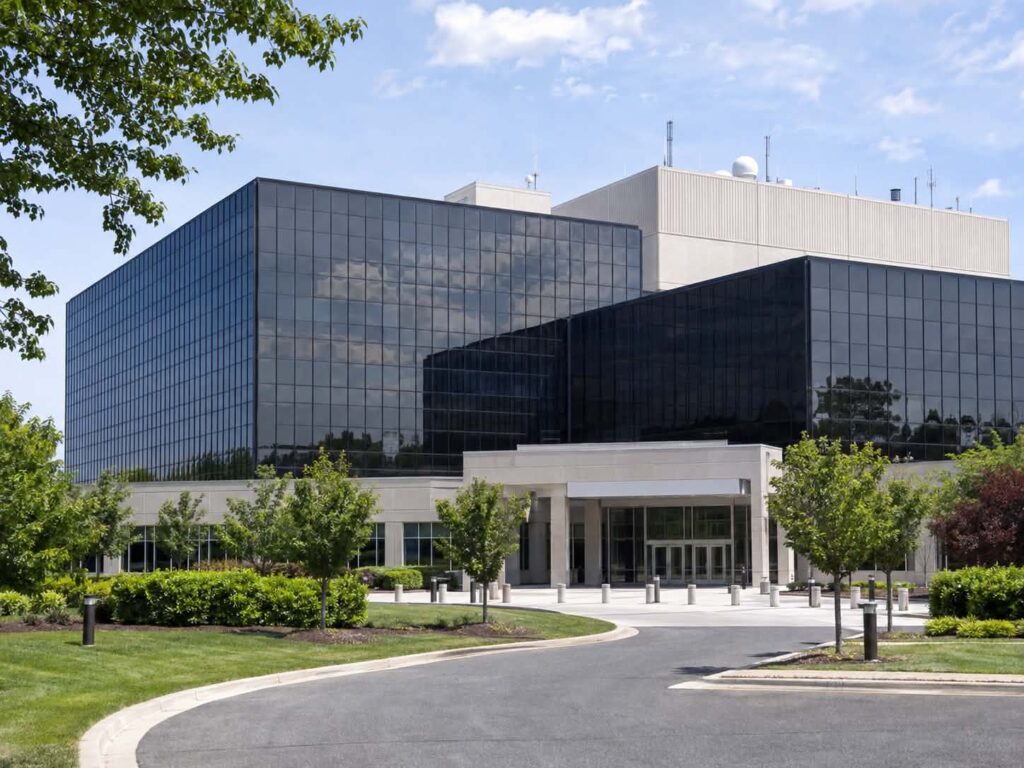
The agency is headquartered at Fort Meade, Maryland, and employs personnel responsible for intelligence analysis, signals intelligence and cybersecurity.
The precise cause of Tuesday’s outage remained unclear. Separate reporting by CBS News cited sources who said the disruption may have resulted from routine system patching, although the circumstances had not been fully established.
The NSA had not publicly provided a detailed explanation of the incident at the time of reporting.
Did the Outage Affect U.S. Intelligence Operations?
One of the central questions surrounding the disruption is whether the network failure affected the NSA’s ability to carry out its intelligence and cybersecurity responsibilities.
The agency collects and analyzes foreign signals intelligence for U.S. policymakers and military forces. It also helps protect sensitive government communications and identify cybersecurity threats.
An outage involving an internal classified network could complicate employees’ ability to access information or coordinate their work. However, that does not automatically mean the agency’s entire intelligence mission has stopped.
Fox News reported, citing a person familiar with the situation, that critical communications remained available and that the NSA had backup facilities to help maintain operations.
CNN also reported that a current and a former U.S. official said the outage would not prevent the agency from communicating urgent intelligence to President Donald Trump while he was traveling in Asia aboard Air Force One.
The precise extent of any disruption to routine intelligence work remained uncertain.
NSA Outage Follows Nationwide FAA Ground Stop
The NSA incident came just days after a major communications failure at the Federal Aviation Administration disrupted commercial air travel across the United States.
On Friday, November 13, the FAA ordered a nationwide ground stop after technical problems affected communications and radar-related systems at multiple air traffic control facilities.
The agency said excessive data flooded its network, destabilizing older equipment and disrupting some radio communications and radar feeds.
The problem affected 17 of the FAA’s 22 regional air traffic control centers, according to the information provided by the agency.
Officials isolated two sites associated with the network instability, including a communications facility in Arkansas. Air traffic operations resumed at approximately 8:15 p.m. Friday.
The disruption caused extensive flight cancellations and delays, with the FAA reporting approximately 12,462 canceled flights that day. Not all cancellations were directly attributed to the ground stop.
Federal officials said available evidence showed no indication that a cyberattack or outside malicious actor caused the FAA incident.
Microsoft Outage Disrupted Outlook and Teams
Another major technology failure began Thursday, November 12, when Microsoft services experienced widespread problems affecting workplace communications and productivity.
Users reported difficulties accessing Outlook, Teams and other Microsoft services. The disruption continued into Friday, interfering with email, meetings and other business activities.
Microsoft attributed the incident to a technical problem associated with an upgrade and said it had found no indication of malicious activity.
The company subsequently reported that services had been restored.
The outage added to concerns about the reliability of technology platforms used by businesses and organizations across the country.
Chase Banking Problems and United Airlines Delays
Monday, November 16, brought further disruptions affecting financial transactions and airline departures.
JPMorgan Chase acknowledged a temporary technical problem involving a software bug in on-premises hardware systems. The issue slowed some transactions, including payments involving other financial institutions.
Customers at several banks reported problems completing transactions, although the extent of the impact varied. Chase said there was no evidence the incident was related to a cyberattack.
By Monday evening, the bank reported that transactions were processing normally again.
United Airlines also experienced a widespread technology outage that delayed some departing flights.
The problem reportedly involved systems used to provide aircraft weight-and-balance information needed before departure. United said it resolved the issue later Monday.
The airline confirmed that flights already in the air and United Express operations were not affected. It also said there was no indication the outage was cybersecurity-related.
No Confirmed Connection Between the Technology Failures
The sequence of incidents has raised questions about the reliability of critical technology systems across government, finance, aviation and business.
However, the disruptions should not be treated as evidence of a coordinated cyberattack or a single underlying technical failure.
The FAA, Microsoft, Chase and United each identified separate technical problems and said they had found no evidence of malicious activity in their respective incidents.
The NSA outage was still being investigated, and sources likewise said there was no immediate evidence of a cyberattack.
The fact that several high-profile systems experienced problems within a short period does not establish that the incidents share a cause.
Each organization operates different networks, infrastructure and software environments. Determining whether any technical relationship exists would require evidence beyond the timing of the outages.
Questions Remain About NSA Network Recovery
The immediate priorities for the NSA are determining the cause of the outage, assessing its operational impact and restoring normal access to the affected network.
The agency had not provided a public timetable for full restoration, and the precise circumstances surrounding the disruption remained under review.
Reports that backup communications capabilities remained available offer some indication that the outage did not eliminate all critical agency communications. Nevertheless, the full extent of the disruption to internal workflows was not clear.
For now, the NSA incident adds to a series of technology failures that have interrupted services used by millions of Americans and by essential government agencies.
Whether the latest outage proves to be a routine technical problem or a more complicated infrastructure failure remains to be determined. What is clear is that the disruption has renewed attention on the resilience of systems that support national security and everyday services.

Benjamin Harris is a RapidReports front page contributor and editor,proud father of four.