Heavy Fighting Erupts in Southeastern Iran as Security Forces Clash With Armed Gunmen in Saravan
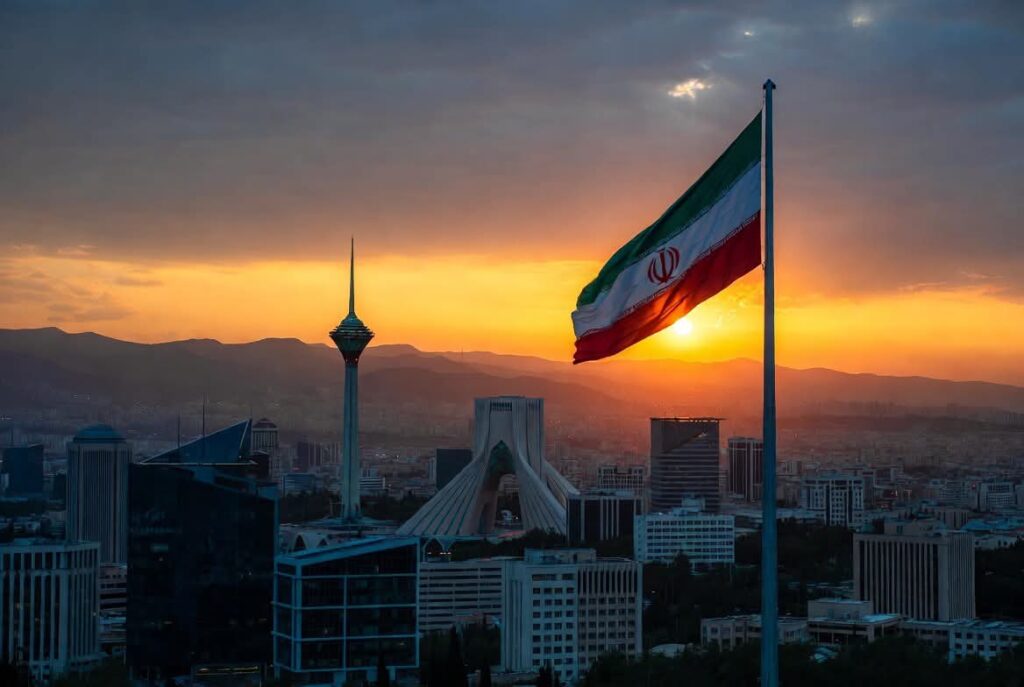
Heavy fighting broke out in the southeastern Iranian city of Saravan on Saturday, with Iranian security forces battling armed gunmen in several neighborhoods of Sistan and Baluchestan province.
The clashes began before dawn in the Bakhshan area and continued for hours, according to the Baloch rights organization Haalvsh and reporting by Iran International. The fighting reportedly involved gunfire, explosions and attacks on vehicles carrying military and security personnel.
Iranian authorities later gave a different account of the confrontation, saying security forces had launched a joint operation against an armed group that had gathered in Saravan and was allegedly preparing attacks and targeted killings.
The two accounts differ substantially over the scale of the fighting and casualties, and independent verification remains limited.
Fighting Began Before Dawn
According to Haalvsh, the confrontation began at approximately 4 a.m. local time on Saturday after dozens of Iranian military and security personnel entered the Bakhshan neighborhood.
The rights group said gunmen opened fire and that at least three vehicles carrying security personnel were attacked.
Local sources cited by Haalvsh also reported repeated explosions and sustained gunfire in the area.
The fighting subsequently spread toward the Great Madani Mosque and parts of the Jahadabad neighborhood, according to the group. Roads around the mosque were reportedly blocked as Iranian forces attempted to contain the confrontation.
Ambulances were also reportedly seen in the area.
Haalvsh said the identities of the gunmen and the reason for the initial security operation were not immediately established.
Competing Accounts of the Casualties
Casualty figures remain one of the most uncertain aspects of the incident.
Haalvsh cited local sources who reported that dozens of Iranian security personnel were killed or wounded. Iran International, which reported the Haalvsh account, emphasized that those figures had not been independently confirmed.
Iranian authorities subsequently released a much lower official figure.
State media and the Islamic Revolutionary Guard Corps said three members of the security forces were killed during the operation. Iranian reports initially said four gunmen had been killed, while a later IRGC statement put the number of armed men killed at five.
Because access to the area is restricted and independent observers cannot readily verify events on the ground, the competing casualty claims should be treated separately rather than combined into a single figure.
Iranian Authorities Describe a Counterterrorism Operation
Iranian officials characterized the incident as a planned security operation rather than an unprovoked attack on government forces.
According to the Iranian account, the IRGC, intelligence authorities and police carried out a coordinated operation after identifying an armed group that had gathered in Saravan.
Deputy provincial governor Ali Khalilabadi said the group was allegedly preparing to disrupt public order and conduct attacks.
Iranian authorities said weapons, ammunition and explosives were recovered during the operation. They also said security forces continued clearing the area after the main confrontation.
The IRGC’s Quds headquarters said the operation involved its forces together with the General Intelligence Directorate and police.
The official account did not initially identify the armed group publicly in a way that could be independently verified.
Jaish al-Adl Connection Remains Unclear
The confrontation occurred in an area where several armed groups have operated, including the Baloch militant organization Jaish al-Adl.
Some Iranian state-linked reporting described the target as Jaish al-Adl or an associated armed group. However, the initial Haalvsh reporting did not establish the identity or affiliation of the gunmen involved in Saturday’s fighting.
That distinction is important.
Sistan and Baluchestan has experienced repeated armed clashes involving Iranian security forces and Baloch militant organizations, but the existence of a history of violence does not by itself establish that the same organization was responsible for a particular incident.
No independent source had established responsibility for Saturday’s confrontation at the time of the latest reports.
Saravan Has Seen Repeated Violence
Saravan is located in Sistan and Baluchestan, one of Iran’s most restive provinces.
The region borders Pakistan and has a predominantly Sunni Baloch population within a country where the majority of the population is Shia Muslim.
The province has experienced years of conflict involving Iranian security forces, Baloch militant groups, drug-smuggling networks and other armed actors.
Jaish al-Adl has been among the most prominent militant organizations operating in the region and has claimed responsibility for attacks against Iranian security forces in the past.
The area’s location near the Pakistani border has also made cross-border security a persistent concern.
Economic Hardship Adds to Local Tensions
The latest fighting is taking place against a backdrop of longstanding economic hardship in Sistan and Baluchestan.
The province has historically faced high levels of poverty, unemployment and inadequate infrastructure compared with many other parts of Iran.
Those problems predate the current confrontation between Iran and the United States.
At the same time, Iran’s broader economic difficulties have intensified under sanctions and other restrictions affecting oil exports, financial transactions and international trade.
The combination of longstanding regional underdevelopment and broader economic pressure has contributed to a difficult environment for residents of the province.
However, economic hardship alone does not establish a direct cause for Saturday’s armed confrontation.
The Conflict Comes as Iran Faces Wider Military Pressure
The Saravan fighting is occurring while Iran is already dealing with a much broader military and geopolitical crisis.
The country has been under significant pressure from the ongoing confrontation with the United States and regional actors, while disruptions to energy infrastructure and shipping routes have added economic uncertainty.
The conflict has also increased the importance of Iran’s internal security apparatus as authorities seek to prevent attacks and maintain control over strategically sensitive areas.
At the same time, the government has faced criticism from rights organizations over its treatment of the Baloch population and its security operations in the province.
Those broader tensions form part of the background to Saturday’s events but do not by themselves explain precisely what triggered the fighting.
Roads Were Blocked as Fighting Continued
Local reports described significant security restrictions around the areas where the confrontation took place.
Haalvsh said roads near the Great Madani Mosque were blocked as Iranian forces deployed around the area.
The organization also reported that civilians were present near some of the fighting, although it did not have confirmed information about civilian casualties.
The presence of civilians complicated an already volatile security operation.
Because independent access to the affected neighborhoods is limited, details about the final duration of the fighting and its effect on local residents remain incomplete.
Officials Say the Area Was Brought Under Control
Iranian officials later said the security situation had been brought under control.
Khalilabadi said the operation was continuing to clear the area and that security forces had inflicted significant losses on the armed group. Iranian reports characterized the operation as a successful counterterrorism action.
The IRGC separately said its forces had eliminated the armed team and seized weapons and explosives.
Those statements represent the government’s account of the operation and have not been independently verified in full.
No Independent Confirmation of the Larger Casualty Claims
The biggest unresolved issue is the discrepancy between the official casualty figures and reports from local sources.
Iranian authorities say three security personnel were killed and four or five gunmen were killed.
Haalvsh, meanwhile, cited sources reporting dozens of security personnel killed or wounded.
Iran International specifically noted that those higher casualty figures had not been independently confirmed.
Until additional evidence becomes available, including independently verified casualty records or reporting from sources with direct access to the scene, it would be premature to treat either the higher unofficial figure or the full government account as conclusively established.
Why Sistan and Baluchestan Matters
The province occupies a strategically important position in southeastern Iran.
It borders both Pakistan and Afghanistan and sits near important regional transportation and smuggling routes.
Its Baloch population has long complained of economic marginalization, discrimination and inadequate access to public services, while Iranian authorities have repeatedly cited militant attacks and cross-border security threats as reasons for maintaining a heavy security presence.
The result has been a cycle of armed attacks, security operations and political tensions.
Saravan has repeatedly appeared in reports of clashes between Iranian forces and armed Baloch groups.
What Remains Unknown
Several key questions surrounding Saturday’s fighting remain unanswered.
It is not yet independently established:
- Which armed group the gunmen belonged to.
- What specifically prompted Iranian forces to enter the Bakhshan area.
- How many gunmen were present.
- The exact number of security personnel killed or wounded.
- Whether any civilians were killed or injured.
- Whether all of the armed men were killed or whether some escaped.
- Whether the confrontation was connected to a larger planned attack.
Iranian officials have provided their version of events, while Haalvsh and local sources have supplied a substantially different account.
Further reporting will be needed to reconcile those versions.
A Volatile Region Under Growing Pressure
The Saravan confrontation highlights the continuing security challenges facing Iran’s southeastern border region.
For years, Sistan and Baluchestan has experienced violence involving militant organizations, security forces and criminal networks. The province’s economic difficulties and political grievances have added another layer to an already complicated environment.
Saturday’s battle occurred as Iran was simultaneously dealing with a wider military confrontation and severe economic pressure.
But while those conditions provide important context, the immediate cause of the Saravan fighting remains uncertain.
The Bottom Line
Heavy fighting broke out Saturday in Saravan’s Bakhshan area between Iranian security forces and unidentified armed men.
Iranian authorities say the confrontation was part of a joint operation against an armed group allegedly preparing attacks and that three security personnel and four or five gunmen were killed. Haalvsh, citing local sources, reported substantially higher security-force casualties, but those figures have not been independently verified.
The identity of the gunmen and the precise circumstances that triggered the confrontation also remain unclear.
What is clear is that the incident occurred in Sistan and Baluchestan, a province with a long history of armed unrest and deep socioeconomic challenges. The latest fighting underscores the continuing volatility of Iran’s southeastern border region at a time when the country is already facing significant military and economic pressure.

Benjamin Harris is a RapidReports front page contributor and editor,proud father of four.