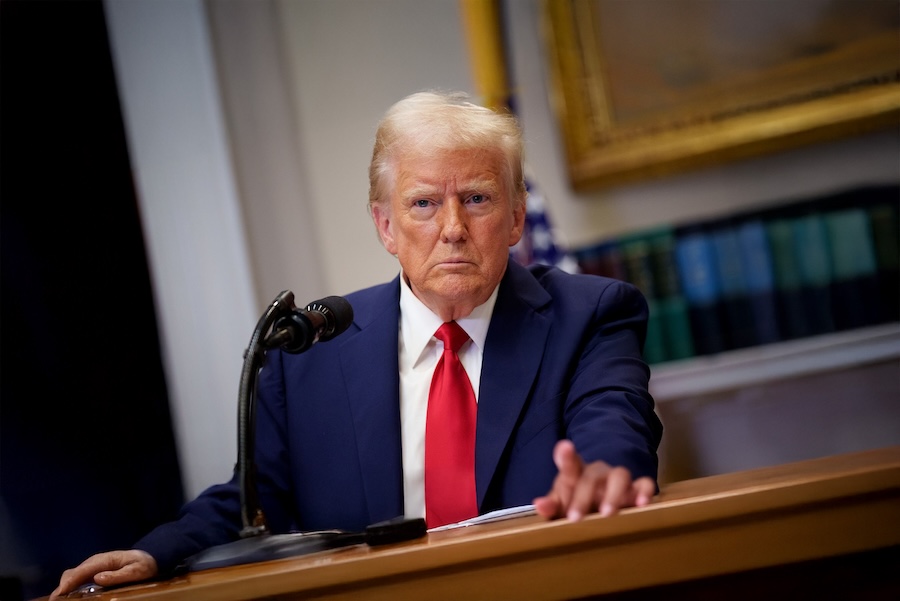
President Donald Trump has announced that he has a contingency strategy in place after the U.S. Supreme Court blocked his use of emergency powers to impose global tariffs. During a breakfast meeting with governors at the White House, Trump reportedly called the court’s decision a “disgrace” and assured those gathered that his administration has a backup plan ready to be deployed.
The Court ruled 6–3 that Trump could not rely on emergency legislation to justify imposing tariffs on a broad range of countries. Chief Justice John Roberts, along with Justices Amy Coney Barrett and Neil Gorsuch, sided with the liberal wing in the majority opinion. The ruling reinforced that Congress, not the president, holds the authority to impose tariffs during peacetime, rejecting the idea that tariffs related to foreign affairs could bypass constitutional limits.
Despite the setback, Trump and his team had anticipated the possibility of the ruling and prepared alternatives. National Economic Council Director Kevin Hassett highlighted that the administration had a detailed backup plan ready. One possible alternative discussed was the use of Section 301 powers, which allow the president to take action against unfair trade practices. Another potential option is Section 122 of the Trade Act, which provides authority for certain unilateral duties, though with more restrictions than the emergency powers initially invoked by Trump.
While these alternatives could be implemented relatively quickly, achieving a lasting solution may ultimately require congressional action. Lawmakers would need to grant the president clearer tariff authority, but this could face significant political challenges, especially given the narrow Republican majority in the House. For now, the White House is framing the Supreme Court’s decision as a temporary obstacle, signaling the administration’s continued push to reshape U.S. trade policy.