Oil Prices Shift as Strait of Hormuz Traffic Falls to Historic Lows
Oil markets are facing a contradictory set of signals as traffic through the Strait of Hormuz has fallen to exceptionally low levels while crude exports from major Middle Eastern producers continue.
Preliminary shipping data showed that only two commodity vessels crossed the Strait of Hormuz on Monday, down from 10 the previous day. Before the current conflict began, the waterway typically handled about 125 large commercial vessels each day.
Yet the sharp decline in visible ship traffic has not translated into a complete halt in regional oil exports. Some tankers are reportedly operating with their identification transponders turned off, while Saudi Arabia has increased crude shipments through the strait to compensate for disruptions affecting alternative export routes.
The unusual combination has become one of the most closely watched developments in global energy markets.
Visible Hormuz Traffic Has Collapsed
The Strait of Hormuz is one of the world’s most important energy corridors, connecting the Persian Gulf with the Gulf of Oman and the Arabian Sea.
Before the conflict, approximately 125 large commercial vessels crossed the waterway each day, including oil tankers, gas carriers, bulk vessels and container ships.
The latest preliminary data represents a dramatic reduction.
Only two commodity vessels were recorded crossing on Monday, according to Kpler data cited by Reuters. The vessels identified were a Panama-flagged Supramax and a Liberia-flagged bulk carrier.
However, the figures have an important limitation: tracking systems cannot identify ships whose Automatic Identification System, or AIS, transponders have been switched off.
That means the visible traffic count should not automatically be interpreted as the total amount of cargo moving through the waterway.
Oil Is Still Moving
Despite the collapse in trackable traffic, Middle Eastern producers have continued exporting crude.
Reuters reported that some tankers are traveling with their transponders turned off, making their movements more difficult to track publicly.
Saudi Arabia has also redirected more crude through the Strait of Hormuz after attacks disrupted its East-West pipeline and complicated exports through the Red Sea port of Yanbu.
Kpler data showed Saudi crude exports had recovered to more than 4 million barrels per day in September, compared with approximately 2.4 million barrels per day in August.
JPMorgan analysts estimated that Saudi crude moving through Hormuz averaged about 2.9 million barrels per day over six days, compared with roughly 700,000 barrels per day in August.
Saudi Arabia Is Adjusting Its Export Strategy
The attacks on Saudi infrastructure have forced the kingdom to rely more heavily on Gulf export terminals and the Strait of Hormuz.
Satellite and tanker-tracking data indicated that Saudi Arabia loaded approximately 14 million barrels of crude onto seven very large crude carriers at Gulf terminals over the weekend.
The move illustrates how producers are attempting to adapt rather than simply accepting a complete interruption of exports.
Saudi Arabia’s ability to maintain shipments is particularly important because the kingdom is one of the world’s largest oil producers and exporters.
At the same time, increased reliance on Hormuz means that the security of the waterway has become even more important for maintaining global supplies.
Two Tankers Were Hit
The decline in traffic comes as maritime risks remain elevated.
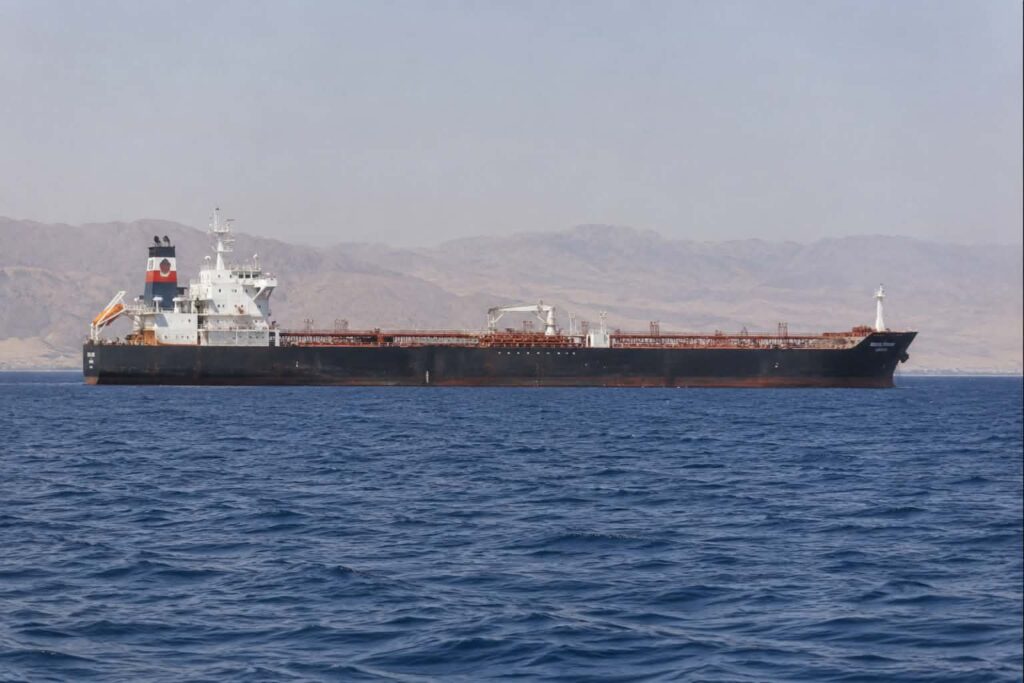
Reuters reported that two vessels were struck by projectiles in separate incidents while transiting the Strait of Hormuz.
The crude oil tanker LR Stephanie was hit by an unidentified projectile while entering the waterway, injuring two crew members. A separate LPG carrier, Al Maryah, was struck while leaving the strait.
Both vessels were able to continue without towing assistance, and responsibility for the incidents had not been established.
The incidents have added another layer of uncertainty for shipping companies and energy traders deciding whether and how to operate in the waterway.
Oil Prices Are Responding to Conflicting Signals
Oil prices have moved sharply in both directions as traders assess the competing risks.
On Monday, crude prices fell as markets responded to signs of possible U.S.-Iran diplomatic engagement and evidence that Saudi Arabia was finding ways to maintain exports.
On Tuesday, however, prices moved higher before later fluctuating as investors reassessed the prospects for additional Middle Eastern supply and negotiations.
Reuters reported Brent crude trading around $100 per barrel and WTI near $95-$96 during Tuesday trading, with prices sensitive to developments at the United Nations General Assembly and statements from Washington and Tehran.
That volatility reflects the unusual nature of the current supply situation.
Diplomacy Adds Another Variable
Potential negotiations between the United States and Iran are another major factor affecting oil prices.
President Donald Trump has indicated that he could meet Iranian President Masoud Pezeshkian during the U.N. General Assembly, while Iranian officials have communicated conditions for renewed negotiations through intermediaries.
Markets have reacted to those signals because a diplomatic agreement could potentially reduce restrictions on shipping and increase confidence in future oil supplies.
At the same time, no comprehensive agreement ending the conflict has been announced.
Why Hormuz Matters to the Global Oil Market
The Strait of Hormuz normally carries a substantial share of the world’s oil and liquefied natural gas exports.
Before the current conflict, roughly one-fifth of global oil and LNG supplies moved through the waterway.
That makes the current reduction in shipping activity significant even though producers have continued moving some crude through the corridor.
A prolonged disruption could affect not only crude prices but also tanker rates, insurance costs, refined petroleum products and energy prices in countries far from the Persian Gulf.
The Traffic Numbers Need to Be Read Carefully
The latest figures demonstrate both the scale of the disruption and the difficulty of measuring it.
Visible traffic has fallen dramatically, but AIS data does not capture ships that deliberately turn off their transponders.
At the same time, Saudi Arabia and other producers have continued moving substantial quantities of crude.
Consequently, two vessels crossing the strait in a day does not mean that only two commercial cargoes moved through the region.
It does, however, demonstrate how dramatically normal maritime traffic has changed since the conflict began.
What Traders Are Watching Now
Several developments could determine the next major move in oil prices:
- The number of tankers able to safely transit the Strait of Hormuz;
- Whether Saudi Arabia can maintain higher Gulf exports;
- The status of the kingdom’s alternative export infrastructure;
- Further attacks against commercial vessels;
- Whether Iran and the United States resume formal negotiations;
- Whether additional countries become involved in securing maritime traffic;
- Changes in global crude inventories and refined-product supplies.
For now, the oil market is balancing two opposing forces: extremely disrupted shipping conditions and continued efforts by producers to keep crude flowing.
The result is a market in which a relatively small change in either diplomacy or shipping security can produce a substantial move in crude prices.

Benjamin Harris is a RapidReports front page contributor and editor,proud father of four.