Blog

  • WHCD Shooting Suspect Previously Featured In 2017 Tech Innovation Story

    WHCD Shooting Suspect Previously Featured In 2017 Tech Innovation Story

    New details have emerged about Cole Allen, the suspect in the White House Correspondents’ Dinner shooting.

    In 2017, Allen was featured in a report highlighting early-stage technology projects aimed at assisting older adults.

    The report focused on innovations designed to improve mobility and safety for seniors.

    Allen was recognized for developing a wheelchair brake lock system.

    He explained that traditional wheelchair brakes may stop the wheels but do not fully prevent movement.

    According to his description, the device was designed to reduce unintended sliding.

    Authorities have identified Allen as a 31-year-old computer scientist from Torrance, California.

    Law enforcement officials said he was taken into custody at the scene shortly after the incident.

    Officials have not publicly confirmed a motive, and the investigation remains ongoing.

    Records show Allen studied at California Institute of Technology, graduating in 2017 with a degree in mechanical engineering.

    During his studies, he reported participating in research at NASA Jet Propulsion Laboratory.

    He later continued his education at California State University, Dominguez Hills, earning a master’s degree in computer science in 2025.

    Authorities say the incident occurred during the White House Correspondents’ Dinner, a major event in Washington.

    Investigators, including the Federal Bureau of Investigation and U.S. Secret Service, are reviewing evidence and background information.

    Officials said the suspect has been charged with firearm-related offenses and assault on a federal officer, and the case remains under active investigation.

  • Man Accused of Firing on White House Correspondents Dinner IDed

    Man Accused of Firing on White House Correspondents Dinner IDed

    Authorities have identified the suspect in the Washington Hilton shooting as Cole Allen, a 31-year-old from Torrance, California.

    The incident occurred during the White House Correspondents’ Dinner, a major annual event attended by journalists and public officials.

    According to available records, Allen has a background in engineering and software development.

    He studied mechanical engineering at California Institute of Technology and graduated in 2017.

    The institution confirmed that an individual with that name completed a degree during that year.

    In 2014, Allen reported participating in a summer research program at NASA Jet Propulsion Laboratory.

    His work there was described as related to astrophysics research.

    During his academic years, he also developed video game projects, including a physics-based title called “First Law.”

    Another project, titled “Bohrdom,” was described as a two-dimensional game released on Steam.

    His profiles also listed experience with robotics-related academic projects.

    Allen later worked with C2 Education, where he was recognized in a company post in 2024.

    He continued his education at California State University, Dominguez Hills, earning a master’s degree in computer science in 2025.

    Federal authorities, including the Federal Bureau of Investigation and U.S. Secret Service, are leading the investigation.

    Officials said the suspect allegedly approached a security checkpoint and opened fire, injuring a Secret Service officer who was protected by a ballistic vest.

    Donald Trump and other officials were escorted from the venue, and the situation remains under active investigation.

  • Trump Posts Photo of WHCD Shooting Suspect As He’s Taken Into Custody

    Trump Posts Photo of WHCD Shooting Suspect As He’s Taken Into Custody

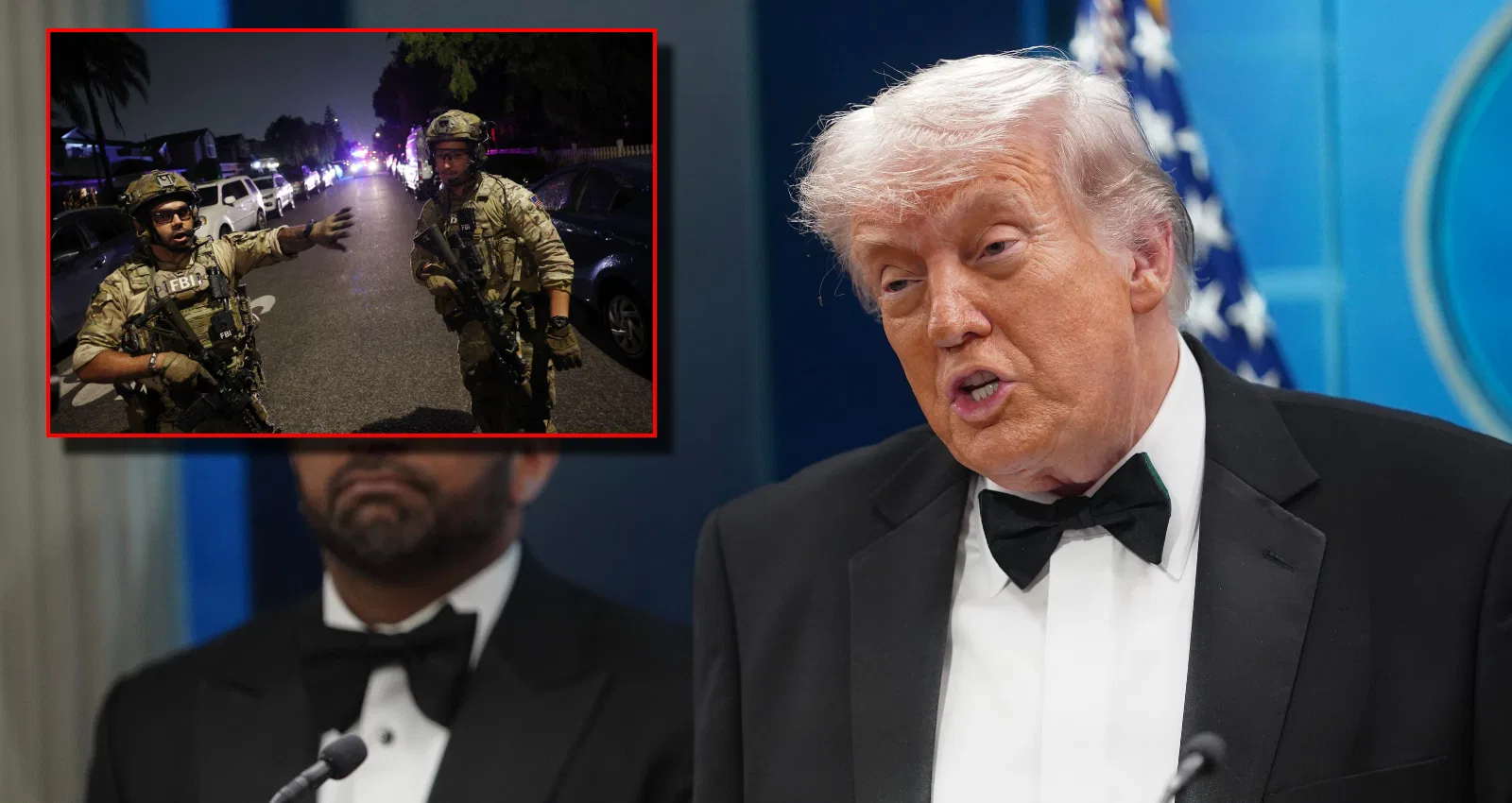
    Donald Trump shared an image on social media following a reported shooting at the White House Correspondents’ Dinner.

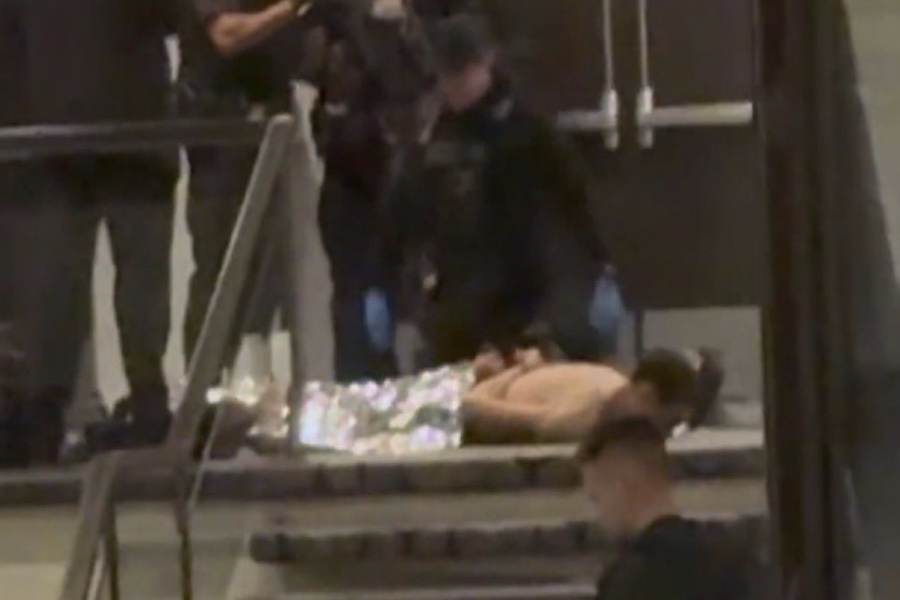
    The photo showed a shirtless suspect lying face down while being detained by law enforcement officers.

    Authorities identified the suspect as Cole Allen, a 31-year-old from Torrance, California.

    Law enforcement officials said he was taken into custody at the scene shortly after the incident.

    As of now, officials have not confirmed a motive, and the investigation remains ongoing.

    Reports indicate that Allen has an academic background in engineering and computer science.

    He attended California Institute of Technology, where he studied mechanical engineering and graduated in 2017.

    During his time there, he was reportedly involved in research connected to NASA Jet Propulsion Laboratory.

    Election Wizard on X: “BREAKING: PRESIDENT TRUMP POSTS PHOTO OF SHOOTER https://t.co/UKFb6Hfu3N” / X

    Later records show he continued his education at California State University, Dominguez Hills.

    He completed a master’s degree in computer science in 2025, according to available information.

    Online profiles suggest he worked as an independent developer, including creating physics-based video games.

    Employment records also indicate he worked with a tutoring organization in recent years.

    Federal investigators, including the Federal Bureau of Investigation and the U.S. Secret Service, are reviewing evidence and background details.

    Officials said the incident occurred during the annual White House Correspondents’ Dinner, a major gathering of journalists and public officials.

    Authorities continue to assess the situation, and further updates are expected as the investigation develops.

  • Trump Slams Door on Hamas Fans and Flag-Burners: No Green Cards for America-Haters

    Trump Slams Door on Hamas Fans and Flag-Burners: No Green Cards for America-Haters

    Recent immigration discussions in the United States have focused on how political activity may affect visa and green card eligibility.

    Officials have indicated that certain forms of public support for designated extremist organizations could influence immigration decisions.

    The administration led by Donald Trump has emphasized a stricter approach to evaluating applicants.

    According to policy statements, individuals who openly support groups such as Hamas may face additional scrutiny.

    U.S. authorities classify Hamas as a terrorist organization, which plays a role in immigration enforcement decisions.

    Marco Rubio has spoken publicly about visa enforcement and national security concerns.

    Reports indicate that some student visas have been revoked in cases involving alleged disruptive or unlawful activity.

    Officials say immigration policies are intended to prioritize safety and stability within the country.

    There is also discussion around how protest actions, including flag-related demonstrations, are interpreted in immigration reviews.

    Supporters of stricter enforcement argue that immigration benefits should align with respect for U.S. laws and institutions.

    Others raise concerns about how policies may intersect with free expression and lawful protest.

    Government agencies maintain that decisions are made based on legal standards and security assessments.

    Immigration status, including visas and green cards, can be subject to review if conditions of entry are violated.

    Public debate continues over how best to balance national security with civil liberties.

    As policies evolve, immigration enforcement remains a central topic in U.S. political discourse.

  • JUST IN: Gunman Identified After Shooting At WH Correspondents’ Dinner

    JUST IN: Gunman Identified After Shooting At WH Correspondents’ Dinner

    A report from New York Post correspondent Karol Markowicz states that a 31-year-old man, Cole Tomas Allen from Torrance, California, has been taken into custody after a shooting incident.

    The incident reportedly occurred during the White House Correspondents’ Dinner on Saturday night. Authorities have not yet officially confirmed all details.

    So far, neither the U.S. Secret Service nor other law enforcement agencies have released full confirmation of the suspect’s identity.

    However, the report is consistent with information from CNN, which described the suspect as a man in his 30s from the Los Angeles area.

    Video footage from the scene shows a shirtless man in handcuffs lying face down while surrounded by officers.

    Several media outlets, along with the Secret Service, confirmed that a suspect was detained shortly after the incident.

    Reports indicate that at least six shots were fired during the situation. One round struck a Secret Service agent’s protective chest plate.

    Agents responded quickly by returning fire before taking the suspect into custody.

    It is not yet clear whether the suspect was injured during the exchange.

    The Washington Post correspondent John Hudson reported that the suspect is alive and was transported to a hospital.

    Hudson also confirmed that a Secret Service agent sustained injuries during the incident.

    The shooting occurred near the main security screening area outside the ballroom, where guests were arriving.

    Witnesses reported hearing loud noises consistent with gunfire at approximately 8:30 p.m. Eastern Time.

    Security personnel reacted immediately, securing the area while guests were directed to take cover and officials were escorted out safely.

    Donald Trump was moved to a secure location and later returned to the White House, where he is expected to address the situation publicly.

  • Trump Says Admin Looking Into Mysterious Deaths of US Scientists

    Trump Says Admin Looking Into Mysterious Deaths of US Scientists

    The 2022 death of Amy Eskridge, a researcher once based in Huntsville, Alabama, is once again garnering attention as part of a growing list of scientists who have died or disappeared under unusual circumstances. Eskridge’s case has raised questions about potential connections between these incidents, many of which involve individuals working in sensitive fields like military, nuclear, and aerospace research.

    Eskridge is now identified as the 11th case in this series, with online investigators and watchdog groups highlighting the unusual timing and overlapping professional backgrounds of those involved. Despite this growing interest, officials have yet to confirm any links between these deaths, but the circumstances have drawn increased scrutiny from the public and the media.

    President Donald Trump addressed the situation on Thursday, confirming that he had recently attended a meeting to discuss the matter. Trump promised that more answers would be provided soon, describing the situation as “pretty serious.” He added that he hoped the incidents were random but assured the public that more information would be available within the next week and a half.

    White House Press Secretary Karoline Leavitt followed up on Friday, stating that the administration is taking a thorough approach in investigating these cases. The White House is coordinating with federal agencies and the FBI to look into potential common threads. “No stone will be unturned in this effort,” Leavitt emphasized, adding that updates would be provided as new information became available.

    Eskridge passed away on June 11, 2022, at the age of 34, in Huntsville, Alabama. Official reports describe her death as a self-inflicted gunshot wound, although limited details have been released by authorities. Eskridge was known for her work as a co-founder of the Institute for Exotic Science, where she focused on experimental propulsion research, including what she called “antigravity” technology.

    In a 2020 interview with YouTuber Jeremy Rys, Eskridge openly discussed the backlash she received due to her groundbreaking work. She claimed that her research into antigravity technology resulted in harassment and threats. “We discovered antigravity, and our lives went to [expletive] and people started sabotaging us,” Eskridge said during the interview.

    Eskridge described the challenges she faced, claiming that her public disclosure of her research put her and her colleagues in danger. “If you stick your neck out in public, at least someone notices if your head gets chopped off,” she remarked. “If you stick your neck out in private, they will bury you. They will burn down your house while you’re sleeping in your bed, and it won’t even make the news.”

    She also mentioned the increasing pressure to publish her findings, acknowledging that the situation was becoming more dangerous. “I have to publish because it’s only going to get worse until I publish,” Eskridge said, expressing concern over the mounting aggressiveness of those opposing her work.

    Eskridge’s death is now being compared to other mysterious cases involving scientists and researchers with connections to the U.S. military and federal agencies. These cases include the deaths of retired Air Force Maj. Gen. William “Neil” McCasland, NASA scientist Monica Jacinto Reza, contractor Steven Garcia, astrophysicist Carl Grillmair, MIT physicist Nuno Loureiro, and NASA engineer Frank Maiwald, among others.

    Several of these individuals were affiliated with prominent institutions like Los Alamos National Laboratory and NASA, with some linked to work on sensitive projects involving national security. The National Nuclear Security Administration (NNSA) at the Department of Energy is currently investigating reports related to personnel at federal labs and sites.

    The NNSA confirmed it is aware of the reports surrounding the deaths of employees at federal labs and sites and is looking into the matter. “NNSA is aware of reports related to employees of our labs, plants, and sites and is looking into the matter,” the agency said in a statement.

    At this time, there is no publicly available evidence to suggest that Eskridge’s death is connected to the other cases, and authorities have not indicated any direct link between her research and the circumstances surrounding her death. However, the investigation into these incidents is ongoing.

    Eskridge’s name has become a focal point in discussions about alternative technologies, particularly in the realms of advanced propulsion and antigravity research. Speculation about potential connections between her work and her untimely death has been widespread, though these claims remain unverified.

    The growing list of scientists with ties to sensitive research fields who have died under mysterious or unusual circumstances has fueled public interest and speculation. However, no official findings have substantiated the claims connecting these individuals’ deaths to any deliberate or coordinated actions.

    As the investigation continues, authorities are maintaining a cautious stance, with no conclusions drawn about the causes of death in these cases. Meanwhile, Eskridge’s legacy in the scientific community and her research into groundbreaking technologies remain subjects of ongoing debate and interest.

    For now, the cases of Eskridge and others in this growing list are raising important questions about the intersection of science, national security, and the potential risks faced by those who work in these highly sensitive fields. As the investigation unfolds, more details may emerge that could shed light on the true nature of these mysterious deaths.
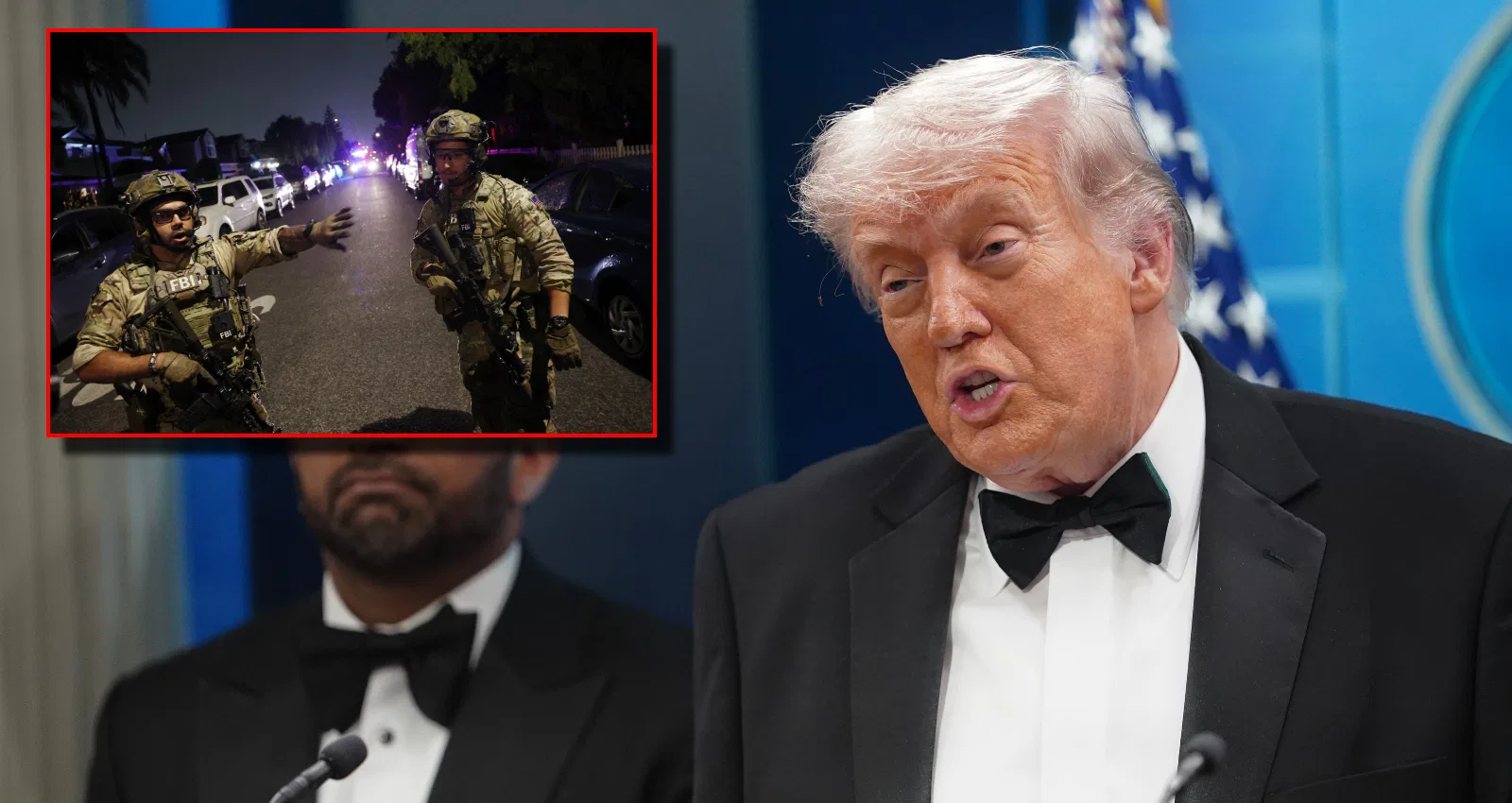
  • JUST IN: Trump Changes Course After Iran Peace Talks Stall

    JUST IN: Trump Changes Course After Iran Peace Talks Stall

    President Donald Trump announced on Saturday that a planned trip by U.S. special envoy Steve Witkoff and senior adviser Jared Kushner to Islamabad, Pakistan, has been cancelled. The delegation had been scheduled to engage in talks related to the U.S.-Iran ceasefire, following a previous announcement by the White House that the two officials would travel to meet with Iranian counterparts directly.

    The cancellation came shortly after Iranian Foreign Minister Abbas Araghchi concluded a brief visit to Pakistan and departed the country. The Iranian delegation, which had been described as small by Pakistani officials, left Saturday morning after a series of meetings with high-ranking members of the Pakistani government.

    While a Pakistani government source had expressed optimism, predicting a “breakthrough” in talks between the U.S. and Iran despite the departure, the Iranian delegation stated that no meeting with U.S. officials would take place over the weekend. This left the U.S. delegation’s planned visit in limbo.

    In response, President Trump spoke to Fox News, confirming that the U.S. trip had been called off. “I’ve told my people a little while ago they were getting ready to leave, and I said, ‘Nope, you’re not making an 18-hour flight to go there. We have all the cards. They can call us anytime they want, but you’re not going to be making any more 18-hour flights to sit around talking about nothing,’” Trump said.

    The U.S. delegation was intended to be part of ongoing efforts to initiate a second round of direct or indirect negotiations in Pakistan, a country that has previously hosted U.S.-Iran talks. Earlier in the week, the White House had confirmed that Witkoff and Kushner would take the lead in place of Vice President JD Vance, who had participated in the first round of discussions.

    White House Press Secretary Karoline Leavitt emphasized that the purpose of sending the envoys was “to hear the Iranians out” at the request of Pakistani officials, including Prime Minister Shehbaz Sharif and Army Chief Field Marshal Asim Munir. This meeting was seen as critical in addressing the fragile ceasefire and moving toward a longer-term agreement.

    The planned talks aimed to work out a more lasting ceasefire arrangement after President Trump had announced an indefinite extension of the truce earlier in the week. Despite the extension, the ceasefire remained fragile, with ongoing issues that both sides had yet to resolve.

    Among the key sticking points were Iran’s nuclear program, potential sanctions relief, and the ongoing blockade of the Strait of Hormuz. These issues continue to strain relations between the U.S. and Iran, with both countries still far apart on terms for a comprehensive peace deal.

    While the cancellation of the trip marks a setback in the negotiations, it also highlights the challenges involved in reaching a diplomatic breakthrough in the conflict. The U.S. has repeatedly insisted on firm terms regarding Iran’s nuclear ambitions and regional activities, while Iran has demanded the lifting of sanctions as part of any lasting deal.

    As the situation remains tense, the possibility of further diplomatic engagement between the U.S. and Iran remains uncertain. Both sides have indicated that they are open to talks but have yet to find common ground on the critical issues that divide them.

    The diplomatic wrangling over the U.S.-Iran ceasefire is not just a matter of military strategy but has profound implications for global stability. The Strait of Hormuz, a vital shipping lane for global oil shipments, remains a flashpoint in the broader Middle Eastern conflict, with the U.S. and Iran both seeking to assert control over the region’s strategic resources.

    With the cancellation of the planned meeting, both sides will likely reassess their approaches to negotiations. The U.S. has emphasized that it holds a strong position in the talks, and President Trump’s comments indicate that the administration is willing to wait for Iran to come to the table on its terms.

    For now, the future of the U.S.-Iran relationship remains uncertain, with the White House focusing on diplomacy while continuing to monitor Iran’s nuclear and military activities. The situation continues to evolve, and the international community will be watching closely to see how events unfold in the coming weeks.

    As the U.S. and Iran continue to grapple with these critical issues, the stakes remain high. The hope for a breakthrough in the negotiations is tempered by the reality of the deep-rooted mistrust between the two countries, which will likely continue to shape the course of future talks.

  • Trump Demands Schumer Resign Over ICE Comments

    Trump Demands Schumer Resign Over ICE Comments

    President Donald Trump has called for Senate Minority Leader Chuck Schumer to resign after comments the New York Democrat made about immigration enforcement agencies. The dispute arose during a standoff over funding for the Department of Homeland Security, in which Schumer criticized Border Patrol and Immigration and Customs Enforcement (ICE).

    Trump took to Truth Social to sharply criticize Schumer, accusing him of disrespecting federal agents. “Wow! Cryin’ Chuck Schumer just said, for the whole world to hear, that ‘NOBODY RESPECTS BORDER PATROL OR ICE,’” Trump wrote in a post.

    In the same post, Trump continued his harsh words. “That is one of the most egregious, incorrect, unpatriotic, and dangerous statements I have EVER heard from a ‘professional’ politician,” he added. Trump then demanded that Schumer apologize immediately. “HE MUST IMMEDIATELY APOLOGIZE TO THESE GREAT PATRIOTS, AND I MEAN NOW!” Trump insisted.

    Trump escalated his criticism in a subsequent post, suggesting that Schumer should resign. “Cryin’ Chuck Schumer should resign over this. He won’t be missed!” he declared, doubling down on his call for Schumer to step down.

    The National Border Patrol Council also weighed in, condemning Schumer’s remarks. The union issued a statement, vowing to defend its members against political attacks. “The National Border Patrol Council will not stay silent. We will defend our members when others attack them for nothing more than political expediency and personal gain,” the union said.

    The Border Patrol union directly criticized Schumer’s comments about immigration agents. “Extreme leftist advocate Chuck Schumer chose to attack and undermine Border Patrol agents and ICE officers—disrespecting the very people who risk their lives to protect this country,” the union stated.

    The union also emphasized that immigration enforcement agents are simply doing their jobs, enforcing laws passed by Congress. “Border Patrol agents don’t make the laws—they enforce them,” the statement said, underscoring the role agents play in national security.

    In addition, the union highlighted the role of Border Patrol agents in emergency situations. “These are the same agents who respond when the country needs them most—deploying to natural disasters like hurricanes, floods, and wildfires,” it added.

    The council ended with a message of support for law enforcement. “WE STAND WITH AND SUPPORT OUR AGENTS! We support all law enforcement, and we will not tolerate anyone who disrespects our wonderful men and women protecting America!” the union declared.

    Schumer made the comments during a debate on the Senate floor on Wednesday, as he opposed Republicans’ efforts to fund the Department of Homeland Security after a prolonged government shutdown. His remarks came amid broader concerns over immigration enforcement and accountability within federal agencies.

    The ongoing funding standoff has put pressure on the Department of Homeland Security. According to administration officials, the department faces a growing financial strain as lawmakers continue to negotiate funding measures.

    Homeland Security Secretary Markwayne Mullin warned that the department could soon run out of money to cover payroll. He stated that the agency is projected to face payroll issues by the first week of May unless funding is secured.

    The funding dispute follows public backlash earlier this year over incidents involving immigration enforcement. In January, agents were involved in the fatal shootings of two American citizens in Minneapolis, Minnesota, prompting calls from Democrats for reforms within the agency.

    Lawmakers have linked their calls for reform to ongoing funding negotiations, making the issue a central point of contention in the political debate. In the midst of the shutdown, Department of Homeland Security employees, including TSA agents, continued working without pay.

    The situation changed after Trump directed the department to tap into previously approved funds. The administration accessed $10 billion allocated for border security in a spending package passed last July to keep operations running.

    With the funding impasse continuing, the pressure on both parties to reach a deal has increased. As Schumer and Trump trade public barbs, the larger debate over immigration enforcement and government operations remains unresolved.

  • Trump, Musk, and Lee Renew Push to Nuke Fillibuster

    Trump, Musk, and Lee Renew Push to Nuke Fillibuster

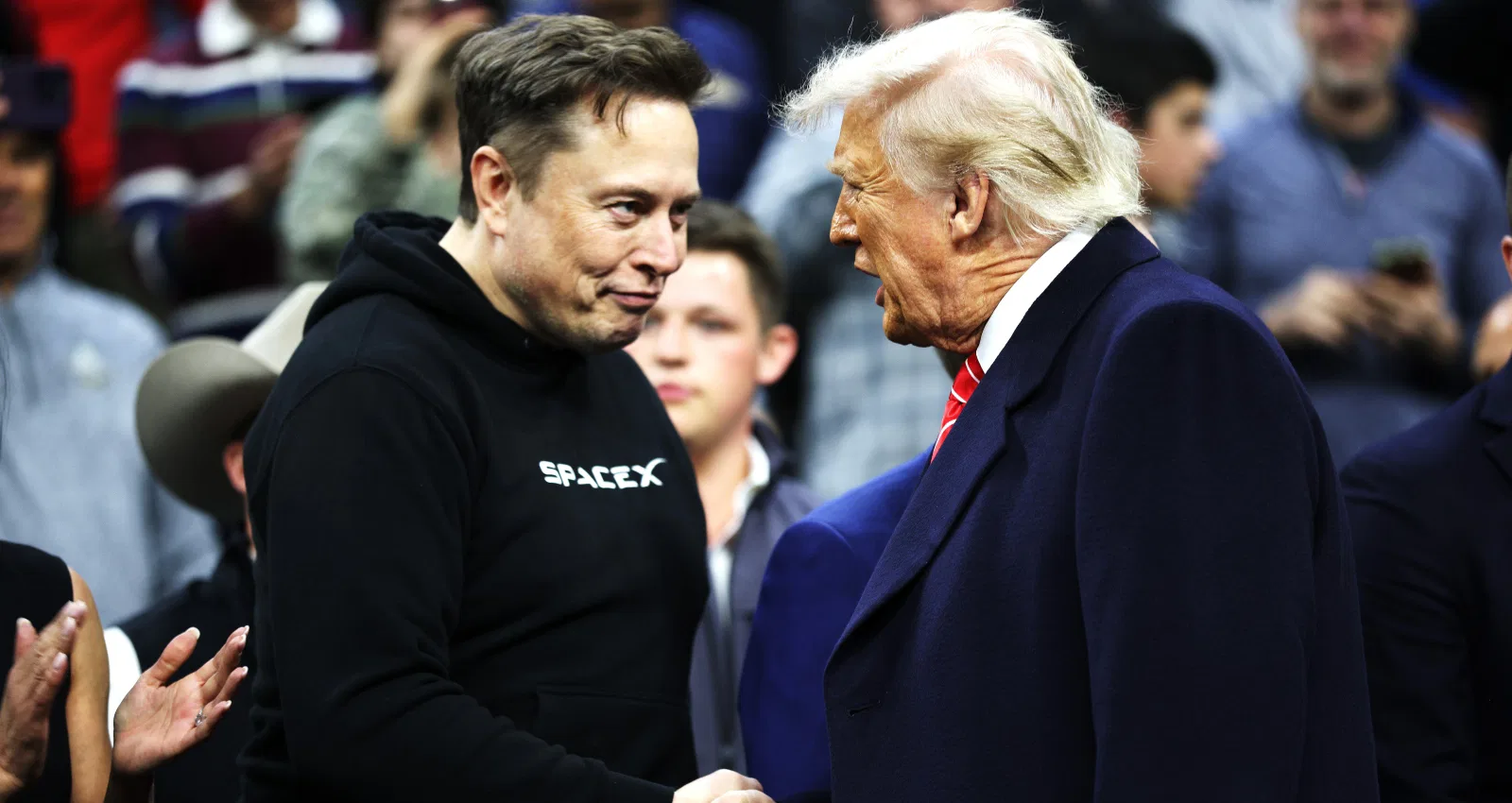
    A renewed push to eliminate the Senate filibuster is gaining attention. High-profile figures such as President Donald Trump, entrepreneur Elon Musk, and Senator Mike Lee (R-Utah) have publicly aligned behind calls to change Senate rules. The proposed change would allow key legislation to advance with a simple majority rather than the current 60 votes required to overcome a filibuster.

    One of the main drivers of this effort is the SAVE America Act, a Republican-backed proposal. This bill would require proof of U.S. citizenship and photo identification to register and vote in federal elections. Proponents argue that the bill is crucial for strengthening election integrity. However, critics claim that it could create significant barriers for eligible voters, particularly those without easy access to identification.

    Currently, under Senate rules, most legislation needs 60 votes to break a filibuster and move forward. Since Republicans hold a narrow majority in the Senate, they would need Democratic support to pass most bills under the existing rules. This makes advancing certain legislation, like the SAVE America Act, more challenging.

    Trump has repeatedly urged Senate Republicans to consider using the “nuclear option” to eliminate the filibuster threshold. He has framed this move as a way to allow the party to advance its priorities more efficiently and to avoid legislative gridlock. Trump has emphasized that it is necessary to move quickly on key issues and prevent the Senate from being stalled by the 60-vote requirement.

    Senator Mike Lee has echoed Trump’s call to eliminate the filibuster. He believes that the Senate should move towards passing legislation with a simple majority, which would make the process more efficient. His comments come as Republicans continue to face obstacles in advancing the SAVE America Act, which has already experienced procedural hurdles.

    Elon Musk has also weighed in on the debate, suggesting that the modern-day filibuster is not aligned with its original purpose. Musk believes that the filibuster was historically intended to allow extended debate, not to require a supermajority for the passage of most legislation. This shift, according to Musk, has changed the way the Senate operates and has led to greater gridlock.

    Despite the vocal support for eliminating the filibuster from figures like Trump, Lee, and Musk, Senate Majority Leader John Thune has shown resistance to such a change. Thune has indicated that the votes are not currently there within the Republican conference to remove the filibuster. His position reflects the divisions within the Republican Party on how Senate rules should evolve.

    The filibuster has long been a contentious issue for both major parties. In recent years, Democrats have also debated changes to the rule, particularly as they tried to pass voting rights and other significant legislation. However, those efforts were unsuccessful due to internal party opposition and lack of unity.

    Supporters of keeping the filibuster argue that it protects the rights of the minority party in the Senate. They also contend that the filibuster encourages bipartisanship by requiring cross-party cooperation for significant legislation. Critics, however, argue that the filibuster has become a tool for obstructing legislative progress, contributing to gridlock in the Senate and limiting the ability of the majority party to govern.

    The SAVE America Act continues to be a focal point in the debate over Senate rules. Republicans view it as a critical policy on election integrity, while Democrats argue that it could disenfranchise voters by imposing stringent documentation requirements. This divide underscores the broader struggle over the role of the filibuster in shaping legislative outcomes.

    If Republicans manage to unify around the idea of eliminating the filibuster, it would represent a significant institutional change in how the Senate operates. Such a change could be enacted with a simple majority vote, but it would likely have lasting implications for future legislative strategies and the balance of power in the Senate.

    For now, the proposal to end the filibuster remains uncertain. Despite the support from high-profile figures, Senate leadership has been cautious. No formal vote on changing the rule has been scheduled, and the issue continues to be part of broader discussions about Senate procedures.

    The debate over the filibuster is expected to remain central to ongoing discussions in the Senate, particularly as lawmakers navigate a closely divided chamber. The outcome of this debate will likely shape the future legislative agenda and the strategies both parties use to advance their priorities.

    As the push to eliminate the filibuster continues to evolve, it remains a critical issue for Senate Republicans and Democrats alike. How the debate unfolds will influence not only the fate of the SAVE America Act but also broader questions about Senate procedures and the future of U.S. governance.