Blog

  • FIREWORKS As Treasury Secretary Bessent Unloads on Maxine Waters

    FIREWORKS As Treasury Secretary Bessent Unloads on Maxine Waters

    A tense exchange unfolded during a House Financial Services Committee hearing on Wednesday as Representative Maxine Waters questioned Treasury Secretary Scott Bessent about economic policy. The hearing, which focused on issues such as inflation, tariffs, and housing affordability, became increasingly heated as lawmakers from both parties pressed their concerns.

    During her remarks, Waters raised questions about whether tariffs supported by Donald Trump were contributing to rising costs for consumers. She asked whether Bessent would advise changes to tariff policy, suggesting that such measures could be impacting American households. The discussion quickly became contentious, with both participants speaking over each other as they attempted to respond.

    Bessent countered by pointing to broader economic factors, including housing demand and population growth, as part of the inflation conversation. The exchange escalated further when interruptions increased, prompting a back-and-forth that drew the attention of the committee chair. French Hill, who was presiding over the hearing, intervened to restore order as time limits expired.

    The hearing then moved forward after the chair reiterated procedural rules. While disagreements over economic policy are common in congressional settings, the moment highlighted the challenges of maintaining structured debate during high-stakes discussions.
  • BREAKING / Supreme Court Could Still Tilt Midterms Toward Republicans

    BREAKING / Supreme Court Could Still Tilt Midterms Toward Republicans

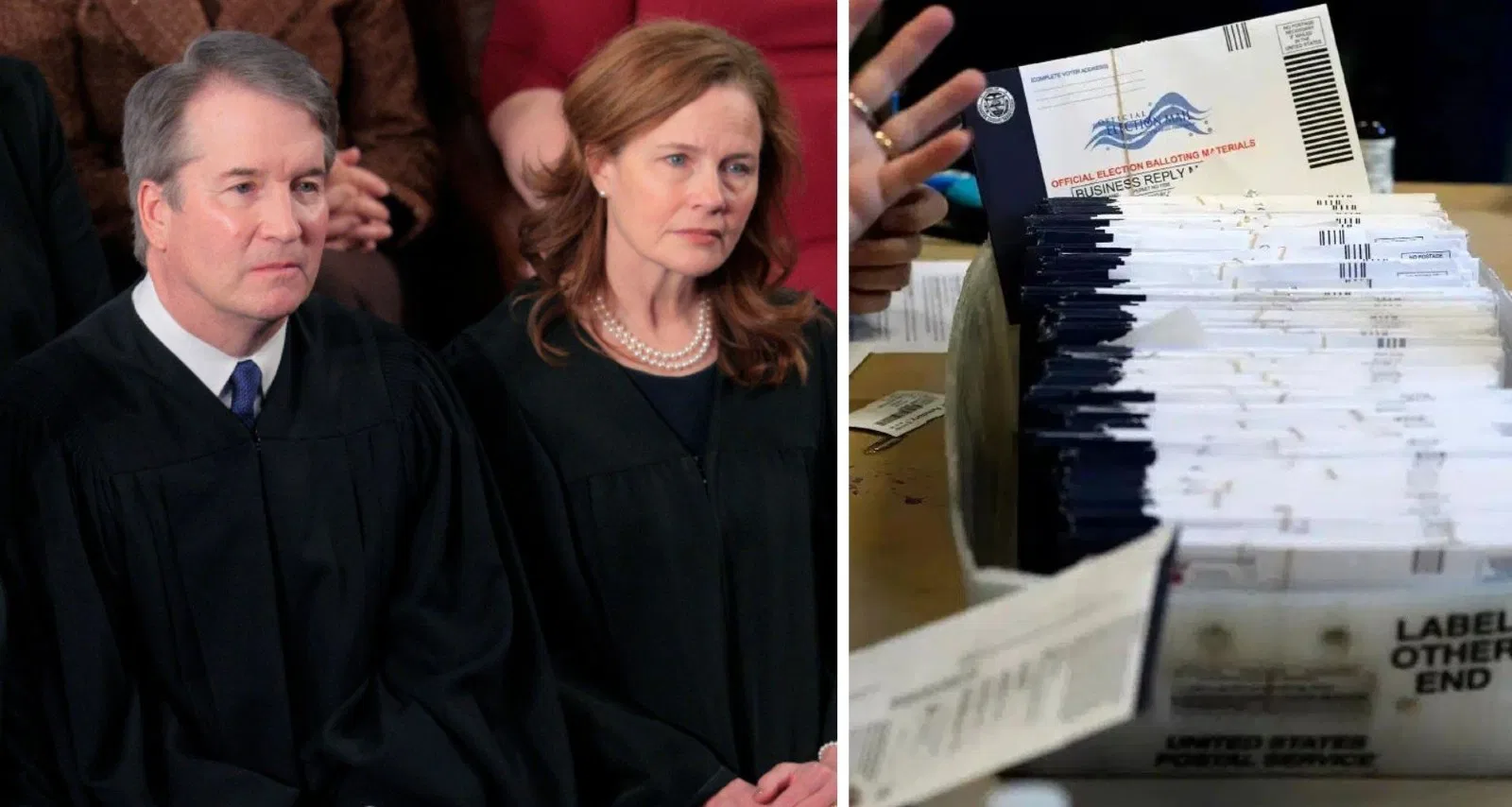
    The U.S. Supreme Court recently issued an emergency order allowing New York’s current congressional map to remain in place, temporarily blocking a lower court ruling that found the map may have diluted the voting power of Black and Latino communities.

    As is common with emergency docket decisions, the Court did not provide a written explanation or disclose how individual justices voted. The ruling ensures the existing map will likely be used in the upcoming midterm elections while legal challenges continue.

    The decision has drawn attention because of its potential political impact, particularly in a closely divided House of Representatives.

    By keeping the current district lines in place for now, the ruling may influence the balance of power, especially in competitive districts. The case highlights the ongoing legal and political debates surrounding how congressional boundaries are drawn and challenged.

    At the same time, the Supreme Court is considering another major redistricting case, Louisiana v. Callais, which could have broader implications nationwide.

    The case focuses on whether Louisiana’s congressional map, which includes a second majority-Black district, complies with federal law. Central to the dispute is Section 2 of the Voting Rights Act of 1965, which allows challenges to voting practices that may disadvantage minority groups.

    The outcome of the Louisiana case could shape future redistricting efforts across several states.

    Legal questions include how race can be considered when drawing district lines and how those decisions align with the Equal Protection Clause of the 14th Amendment.

    Experts say the ruling may affect how courts evaluate similar cases moving forward, particularly in states where new district maps could be proposed ahead of future elections.

  • White House Press Secretary Karoline Leavitt delivered a tough message to the Iranian regime

    White House Press Secretary Karoline Leavitt delivered a tough message to the Iranian regime

    White House Press Secretary Karoline Leavitt said the United States is urging Iran to engage in negotiations, describing the current moment as an opportunity to pursue a diplomatic resolution. Speaking during a briefing, she indicated that the administration is encouraging Iranian leaders to come to the table while discussions remain possible.

    Leavitt also emphasized that military options remain available if talks do not move forward. She stated that U.S. forces are prepared to act if necessary, underscoring that the administration is maintaining both diplomatic and security strategies as the situation develops.

    Her remarks come amid ongoing military operations involving the United States and its allies in the region. Officials say those efforts have focused on targeting military infrastructure and reducing capabilities tied to ongoing hostilities, while also seeking to create conditions that could support negotiations.

    U.S. officials have continued to frame their approach as a combination of pressure and diplomacy, with the goal of reaching a longer-term resolution. While the situation remains fluid, the administration has signaled that future steps will depend on how Iran responds in the coming days.

  • NATO Intercepts Iranian Missiles As War Edges Closer To Alliance Territory

    NATO Intercepts Iranian Missiles As War Edges Closer To Alliance Territory

    The widening conflict involving Iran, the United States, and Israel is drawing closer to NATO territory after another missile entered Turkish airspace and was intercepted by alliance الدفاع systems. According to NATO officials, the projectile was neutralized before posing a direct threat, marking the latest in a series of similar incidents. Turkish authorities confirmed this was the fourth such interception since tensions escalated in the region.

    While no injuries or damage have been reported, the repeated incursions are raising concerns among NATO members. Missiles crossing into the airspace of a member state—even if unintended—add complexity to an already volatile situation. So far, the alliance has not indicated any move toward invoking Article 5, which would treat an attack on one member as an attack on all, but officials say the situation is being closely monitored.

    Turkey faces a particularly delicate position as both a NATO member and a country that has maintained diplomatic channels with Iran. As incidents continue, balancing those relationships may become increasingly difficult. The presence of key military sites in Turkey, including facilities that support NATO’s regional defense systems, adds another layer of sensitivity to the situation.

    For now, NATO’s air defense systems have successfully prevented damage, but the frequency of these events suggests the risk of escalation remains. Officials have warned that continued incidents—whether accidental or otherwise—could heighten tensions further, particularly if a missile were to strike populated areas or critical infrastructure.

  • Key Ally Betrays America, Closes Airspace To US Planes Involved In Iran Conflict

    Key Ally Betrays America, Closes Airspace To US Planes Involved In Iran Conflict

    Spain has denied U.S. military aircraft access to its airspace in connection with operations tied to the Iran conflict, marking a significant escalation in tensions between Washington and Madrid. Spanish Defense Minister Margarita Robles confirmed the policy, stating that both base access and overflight permissions had been ruled out from the outset for missions related to the conflict.

    The decision expands on earlier restrictions that blocked U.S. forces from using key installations such as Naval Station Rota and Morón Air Base. These locations have long served as strategic hubs for American military operations across Europe, Africa, and the Middle East. By extending the ban to include airspace, Spain is further limiting logistical routes available to U.S. forces.

    Spanish officials, including Prime Minister Pedro Sánchez, have voiced strong opposition to the military campaign, describing it as inconsistent with international law. Government representatives said the decision reflects Spain’s position of not participating in or supporting the conflict. The stance has added strain to diplomatic relations between the two countries.

    U.S. officials have indicated that operations will continue despite the restrictions, with adjustments already underway. American forces have reportedly shifted some activity to other European bases, including locations in Germany and France, to maintain operational continuity. The situation highlights ongoing divisions among allies as the broader conflict continues.

  • Trump Treasury Secretary Vows: America Will Retake the Strait of Hormuz and Restore Freedom of Navigation

    Trump Treasury Secretary Vows: America Will Retake the Strait of Hormuz and Restore Freedom of Navigation

    Treasury Secretary Scott Bessent said the United States is working to ensure stability in the Strait of Hormuz following recent disruptions to shipping traffic. Speaking in a television interview, Bessent noted that vessel movement through the strategic waterway has begun to increase, with some limited arrangements helping maintain the flow of goods while markets remain stable.

    He emphasized that current conditions are temporary and suggested that the United States, along with its partners, is focused on restoring consistent access to the route. Bessent said efforts could include coordinated security measures, such as naval escorts, to help ensure safe passage for commercial shipping in the region.

    The Strait of Hormuz is considered one of the world’s most important energy corridors, historically accounting for a significant share of global oil shipments. Any disruption in the area can have wide-ranging effects on energy markets, trade routes, and economic stability, making it a focal point for international attention.

    Bessent framed the broader objective as maintaining open navigation and protecting global commerce. U.S. officials have indicated that ongoing coordination with allies will play a key role in addressing security concerns and supporting the continued movement of energy supplies through the region.

  • Former NJ Assemblyman , killed in fiery car crash

    Former NJ Assemblyman , killed in fiery car crash

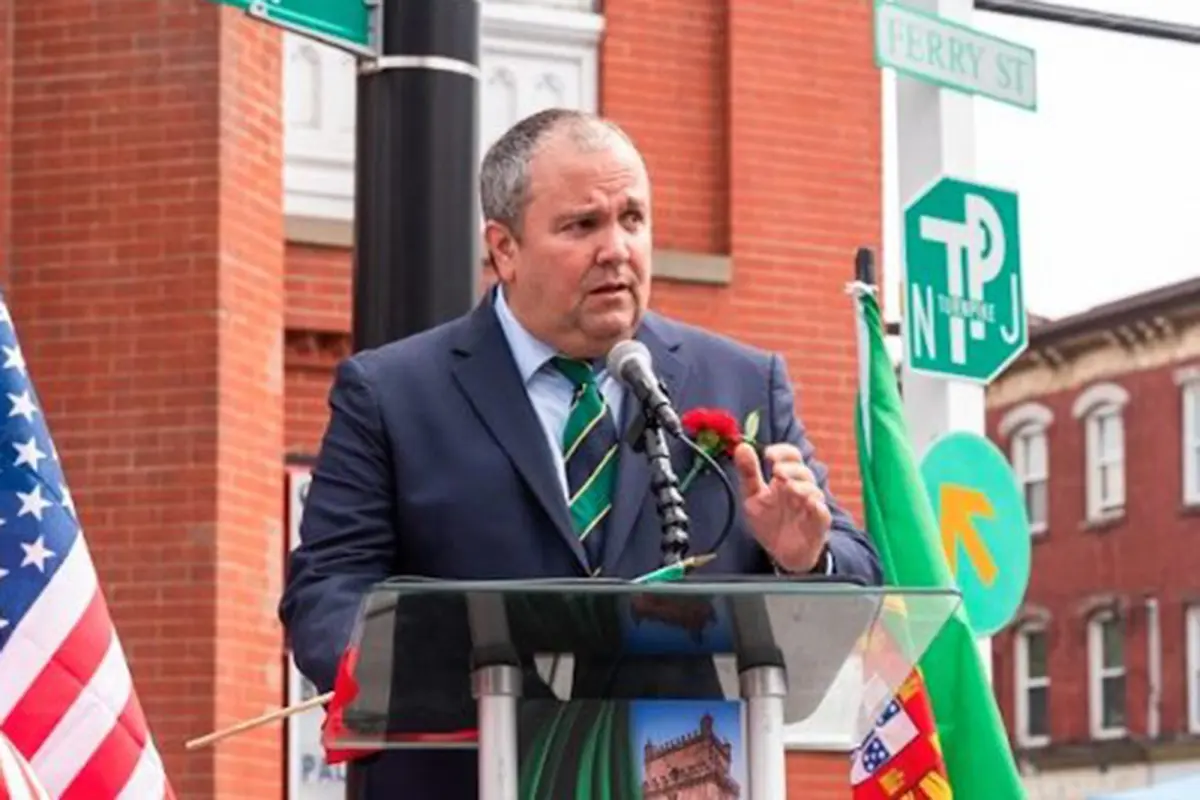
    Former New Jersey Assemblyman Albert Coutinho died Sunday morning following a two-car crash in Newark. The 56-year-old was involved in the collision on McCarter Highway around 7:30 a.m. According to reports, he initially survived the crash but later suffered a fatal heart attack at the scene.

    Coutinho, a Democrat, served more than five years in the New Jersey State Assembly and was widely known within the state’s Portuguese community. He played a prominent role in organizing Newark’s annual Portugal Day Festival, a long-running cultural event tied to his family’s charitable foundation. His involvement in community activities continued even after his time in public office.

    He stepped down from the legislature in 2013 after authorities found he had improperly taken funds from a family charity. Coutinho later accepted a plea agreement that included probation and restrictions on holding public office. In early 2026, he received a pardon from New Jersey Governor Phil Murphy.

    Outside of politics, Coutinho remained active in local initiatives, including co-founding the Ironbound Soccer Club and supporting youth athletics. He was inducted into the New Jersey Soccer Association Hall of Fame in 2021. Friends, community members, and public officials remembered him for his dedication to others and his lasting contributions to the community.

  • EXPOSED. Anti-ICE protestors filmed packing up and leaving on BUSES.

    A video posted by a self-described citizen journalist has sparked online debate after it appeared to show groups of anti-ICE demonstrators boarding buses following a protest. The footage, which circulated widely on social media, prompted questions from viewers about where the protesters had traveled from and how the demonstration was organized.

    In the video, the individual recording claims that many of the protesters were not local residents, pointing to buses parked near the demonstration site. The narrator suggests that the presence of organized transportation indicates coordination beyond grassroots participation, though no independent verification of those claims has been provided.

    The video has fueled broader discussions online about protest organization, funding sources, and political activism. Some commentators have called for increased transparency regarding how large demonstrations are funded and coordinated, while others cautioned against drawing conclusions based solely on limited footage.

    Experts note that the use of buses at large demonstrations is not uncommon, particularly for rallies involving participants traveling from neighboring cities or states. Advocacy groups across the political spectrum frequently arrange transportation to ensure accessibility for supporters, especially for events held in major metropolitan areas.

    At this time, no evidence has been publicly released confirming illegal activity or improper funding related to the protest shown in the video. Authorities have not announced any investigations, and organizers associated with similar demonstrations have previously stated that their activities comply with applicable laws and regulations.

  • President Trump drops a major Iran war update and it’s what we’ve all be waiting to hear!

    President Trump drops a major Iran war update and it’s what we’ve all be waiting to hear!

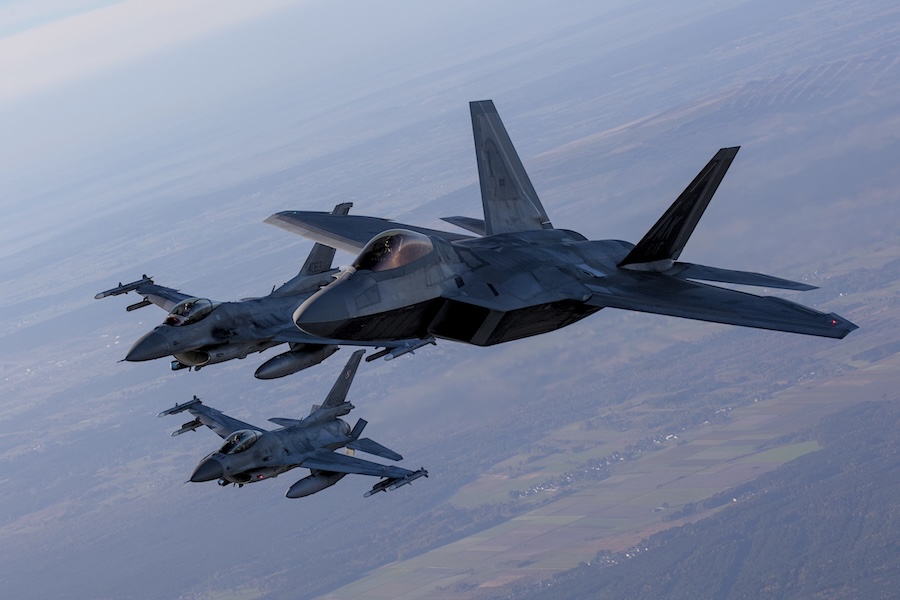
    President Donald Trump stated on Friday that U.S. and allied forces are nearing the final phase of their military campaign against Iran, with a significant portion of their targets already struck. Speaking at a keynote address in Miami, Trump indicated that roughly 3,500 targets remain, and suggested the operation could conclude in the near term. “We have another 3,554 targets left, and that will be done pretty quickly,” Trump said, hinting that the military campaign would soon transition to its final phase.

    The remarks come as the United States and Israel continue a joint military operation, which began on February 28, targeting Iran’s military infrastructure, leadership, and strategic assets. According to U.S. Central Command, more than 10,000 targets have already been hit. The operation, named “Operation Epic Fury,” was initially intended to last four to six weeks, with goals to degrade Iran’s missile systems, limit weapons production, neutralize naval capabilities, and prevent the country from developing nuclear weapons.

    Trump also pointed to ongoing negotiations with Tehran, asserting that Iran is actively seeking a resolution following significant military losses. “They are negotiating. They’re begging to make a deal,” Trump said, disputing prior Iranian statements denying talks. A key point in the discussions, according to Trump, is the status of the Strait of Hormuz, a critical global energy passageway. Trump emphasized that any agreement with Iran would require the country to guarantee the waterway remains open to international shipping, stressing its strategic importance for global markets and U.S. policy.

    The president described the broader operation as a major shift in the Middle East, stating that Iran’s long-standing regional influence has been severely weakened. He framed Iran’s previous role as the “bully of the Middle East” and said, “They’re not the bully any longer. They’re on the run.” While military operations continue, Trump acknowledged that decisions regarding the post-conflict strategy in the region would be made once the current phase is completed. Despite the progress, analysts caution that risks remain, particularly if Iran escalates its response, as thousands of targets still remain.

  • House Republicans Reject Senate Bill That Doesn’t Fully Fund ICE

    House Republicans Reject Senate Bill That Doesn’t Fully Fund ICE

    In a contentious 213-203 vote, House Republicans rejected a bipartisan Department of Homeland Security (DHS) funding deal that had been passed by the Senate. Instead, they approved their own measure, extending the government shutdown to 42 days. With lawmakers now heading into a two-week recess, the path to resolving the standoff remains unclear. The Republican proposal would fund DHS for eight weeks, including money for border enforcement, which was absent from the Senate bill. This move effectively blocks the Senate’s plan and keeps the shutdown ongoing.

    The Senate measure, supported by both parties, would fund most of the DHS operations but omits funding for immigration enforcement agencies. This omission became a point of contention, particularly for House Republicans and President Donald Trump, who were vocal about the need to include border security measures. Republicans insisted that the Senate should return from recess and take up the House bill, while Trump took executive action to ensure Transportation Security Administration (TSA) workers continue to be paid during the shutdown.

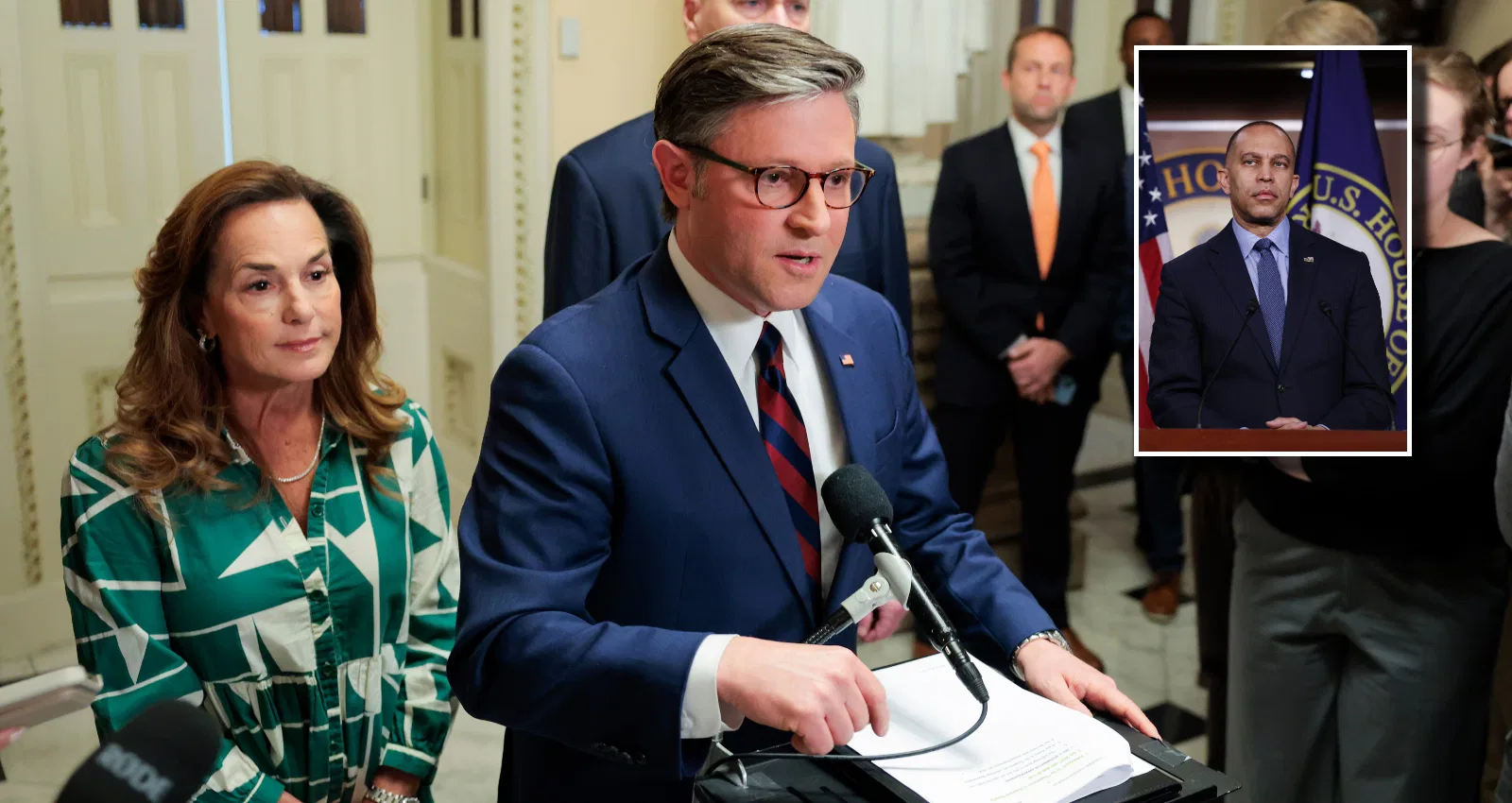
    The decision represents a growing divide between House and Senate Republicans. Speaker Mike Johnson and other House GOP leaders openly criticized the Senate’s negotiations, with Johnson calling the situation a “joke” and blaming Senate Democrats for shaping the bill. While Johnson acknowledged speaking with Senate Majority Leader John Thune before rejecting the bill, House Republicans, including Majority Whip Tom Emmer, expressed frustration with the Senate’s approach, believing it undermines their priorities.

    House Democrats, on the other hand, backed the Senate’s version of the bill, arguing that it has the votes to pass immediately if brought forward. Minority Leader Hakeem Jeffries maintained that the bipartisan agreement remains the best option for resolving the impasse. As the shutdown continues to impact government operations, some Republicans, like Rep. Jeff Van Drew, urged their colleagues to act swiftly to reopen the department and restore normal government functions. The ongoing tension underscores the difficulties of finding a consensus amid a divided Congress.