Senate Passes Bipartisan Energy and Permitting Reform Bill in 62–33 Vote, Sending Measure to House
The U.S. Senate has approved a sweeping bipartisan energy and infrastructure permitting bill designed to accelerate construction of major projects, expand the nation’s electricity infrastructure and establish stronger protections against households absorbing the costs associated with large data centers.
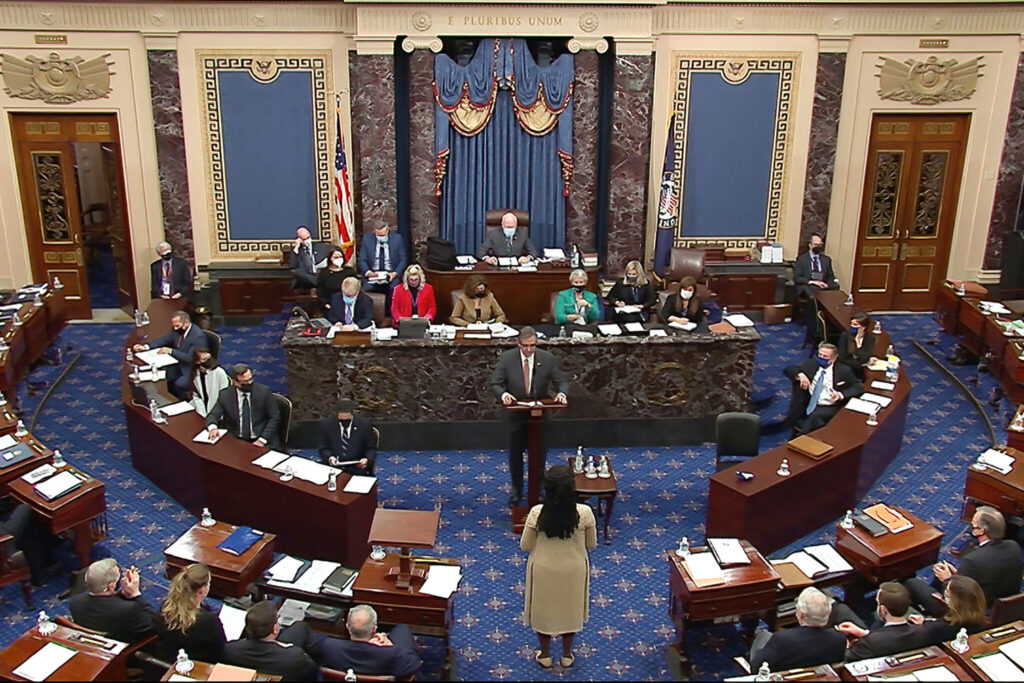
The Bipartisan American Affordability and Jobs Act of 2026 passed the Senate on November 19 by a vote of 62–33. The legislation received support from lawmakers in both parties, including 15 Democrats who joined the Republican majority in backing the measure. Two Republicans, Sens. Josh Hawley of Missouri and Mike Rounds of South Dakota, voted against it.
The legislation now heads to the House of Representatives, which previously approved a narrower permitting proposal. House lawmakers will have to decide whether to consider the Senate’s more comprehensive version or pursue another legislative approach.
The vote represents a significant step in a yearslong effort to revise federal permitting rules that supporters argue have delayed energy production, electricity transmission and other major infrastructure projects.
The legislation also addresses growing concerns about the electricity requirements of artificial intelligence companies and large data centers. Its provisions are intended to ensure that these facilities cover the costs associated with connecting to and using the electrical grid rather than shifting those expenses onto ordinary electricity customers.
A Bipartisan Agreement on Energy Costs and Infrastructure
The legislation was negotiated by four senators who hold leadership positions on the Senate’s principal energy and environmental committees.
The group includes Republican Sens. Mike Lee of Utah and Shelley Moore Capito of West Virginia, along with Democratic Sens. Martin Heinrich of New Mexico and Sheldon Whitehouse of Rhode Island.
The four lawmakers worked on a compromise intended to address concerns from energy producers, infrastructure developers, environmental advocates and electricity consumers.
Their agreement reflects a growing debate in Washington over how quickly the United States can expand its energy infrastructure while maintaining environmental protections and ensuring that the costs of new electricity demand are distributed fairly.
Supporters say the current federal permitting system can leave projects waiting years for regulatory decisions. They argue that delays increase construction expenses, discourage investment and make it harder to expand the electricity supply as demand rises.
The bill seeks to establish clearer procedures and shorter review timelines for a range of projects, including power plants, transmission lines, pipelines, mines and renewable-energy facilities.
Senate Majority Whip John Barrasso of Wyoming argued that the existing process has made it unnecessarily difficult to build infrastructure that could increase energy supplies.
“In America today, it takes too long and costs too much to build,” Barrasso said.
He added that energy projects that could help reduce prices remain delayed for years while awaiting federal approval.
The bill’s supporters contend that improving the permitting process could make it easier to bring new electricity generation and transmission capacity online.
What the Bipartisan American Affordability and Jobs Act Would Change
The legislation proposes changes to several major federal laws governing environmental reviews, energy development, water protections, endangered species and historic preservation.
Among the laws affected are:
- The National Environmental Policy Act, which establishes procedures for federal agencies to evaluate the environmental consequences of major proposed actions.
- The Clean Water Act, which regulates discharges into U.S. waters and establishes federal and state responsibilities for water quality.
- The Endangered Species Act, which provides protections for threatened and endangered species and their habitats.
- The National Historic Preservation Act, which requires consideration of historic properties in certain federally connected projects.
- The Federal Power Act, which governs significant aspects of electricity regulation and interstate power transmission.
The bill also includes provisions involving federal energy leasing, geothermal development, hydropower, offshore energy and electric transmission.
A central objective is to make the review process more predictable for developers while establishing clearer expectations for agencies responsible for approving projects.
Supporters say a more efficient system could reduce uncertainty and make it easier for companies to finance major infrastructure investments.
The Congressional Research Service’s analysis describes the legislation as a package of changes affecting seven areas across two divisions, covering environmental review and energy permitting. It does not establish that every project will receive approval faster or that every proposed development will be economically viable.
Data Centers and the Cost of Electricity
One of the bill’s most closely watched provisions addresses the growing electricity consumption of large data centers.
Data centers provide the computing infrastructure used by cloud services, artificial intelligence applications, online platforms and other digital services. Their electricity requirements can be substantial, particularly as technology companies expand facilities to support increasingly demanding computing workloads.
The expansion of these facilities has intensified debate over electricity prices and the cost of upgrading power infrastructure.
Utilities may need to build new transmission lines, expand substations and make other improvements to accommodate large new customers. Those investments can involve significant costs, raising questions about how the expenses should be allocated among data center operators and other electricity users.
The legislation seeks to address that issue by requiring the Federal Energy Regulatory Commission to ensure that data centers cover the costs associated with their grid connections and electricity demand.
The framework addresses both embedded costs and incremental costs associated with serving these large facilities.
Embedded costs refer to expenses associated with existing grid infrastructure that customers share under applicable rate arrangements. Incremental costs involve additional investments or expenses required because of new demand.
Under the proposed framework, states could also adopt additional requirements. These could include requiring data centers to provide their own electricity generation or establishing arrangements through which excess revenue collected from these facilities benefits other electricity customers.
The goal is to prevent households and smaller businesses from bearing an unfair share of the infrastructure costs associated with major technology companies.
Sen. Mike Lee has argued that these provisions are an important part of the legislation’s affordability agenda.
The debate has become increasingly important as utilities and regulators face questions about how to accommodate rapidly growing electricity demand without placing excessive financial pressure on residential customers.
Lee Says the Bill Will Give Americans More Freedom to Build
After the Senate vote, Lee described the legislation as an important step toward changing how the federal government handles infrastructure development.
“This is a big day for the American people,” Lee said.
He argued that the bill would make it easier to build projects needed to support economic growth and improve the country’s energy infrastructure.
“BAAJA is all about giving the American people the freedom to build, the freedom to build things that the American people need,” he added.
Lee also predicted that the legislation would eventually benefit consumers once it becomes law.
Those expected savings are based on the argument that faster approvals could reduce project costs and help expand electricity supplies. They are not guaranteed reductions in household bills, and the actual effects would depend on which projects are built, how quickly they become operational and how electricity markets and utility rates respond.
The legislation’s sponsors have presented the measure as a way to connect infrastructure development with the broader goal of making energy more affordable.
Heinrich Highlights Electricity Costs and Job Creation
Democratic Sen. Martin Heinrich has also defended the legislation, emphasizing its potential effects on energy prices, electricity infrastructure and employment.
Heinrich said the bill would help bring more affordable energy onto the grid while requiring data centers to pay their share of electricity and transmission expenses.
He also projected that the legislation could support more than 100,000 good-paying American jobs.
That figure is a projection cited by the bill’s supporters, not a verified count of jobs already created. The eventual employment effects would depend on investment decisions, project approvals, construction schedules and the wider economic environment.
Heinrich has argued that the legislation can expand energy infrastructure while retaining important environmental protections and strengthening consultation with Tribal governments.
His support is notable because the measure has attracted criticism from other Democrats who believe the permitting changes could weaken environmental safeguards or make it harder for communities and Tribal nations to challenge projects.
The disagreement demonstrates that support for permitting reform does not necessarily translate into agreement about the appropriate balance between infrastructure development and environmental oversight.
Trump Administration Backs the Legislation
President Donald Trump and his administration supported the permitting overhaul before the Senate vote.
The White House argued that the existing federal system has delayed construction of pipelines, power plants, mines and other infrastructure needed to support the economy.
In a November 9, 2026, statement of administration policy, the Office of Management and Budget formally expressed support for the legislation.
The administration said the bill would reform federal environmental review and infrastructure-permitting processes, encourage energy development and help deliver cheaper energy.
It also said the legislation would make Trump’s Ratepayer Protection Pledge part of federal law.
The administration’s endorsement helped demonstrate that the bill had support beyond the four senators who negotiated it.
Trump also publicly urged lawmakers to approve the measure, presenting it as a step toward expanding U.S. energy production and lowering costs for American families.
However, the bill’s passage does not mean that all of the administration’s predicted economic benefits will automatically materialize. The impact will depend on how federal agencies implement the new rules and how energy companies respond.
Environmental Organizations Raise Concerns
Despite its bipartisan support, the legislation has faced opposition from environmental organizations and lawmakers concerned about its effects on federal environmental protections.
Critics argue that shortening permitting timelines and limiting certain legal challenges could reduce opportunities for communities to scrutinize major development projects.
They have raised concerns about potential effects on endangered species, public lands, clean water, historic sites and Tribal interests.
Some environmental groups also argue that the changes could make it easier to approve fossil-fuel infrastructure, including natural gas power plants, pipelines and liquefied natural gas facilities.
Jen Duggan, executive director of the Environmental Integrity Project, criticized the legislation, arguing that it could expand fossil-fuel development while weakening protections for communities.
Other critics have questioned whether the legislation gives Congress enough opportunity to examine the consequences of the proposed changes.
Sen. Jeff Merkley of Oregon was among the Democrats who pushed for additional amendments before final passage. He and other lawmakers sought opportunities to address issues such as data center development on public lands and the treatment of clean-energy projects.
Republican leaders did not allow a broader amendment process before the final vote.
That decision became another source of criticism among opponents, who argued that lawmakers should have had more opportunities to modify the legislation.
Tribal Sovereignty and Public Land Concerns
Tribal consultation has been another significant point of disagreement.
Some Tribal representatives and lawmakers have expressed concern that faster federal approvals could reduce the ability of Tribal nations to protect sacred sites, cultural resources and areas with historical significance.
Oneida Nation Vice Chairman Jameson Wilson warned that infrastructure development must not undermine Tribal sovereignty or meaningful consultation.
The concerns extend beyond the environmental effects of individual projects. They also involve the role of Tribal governments in federal decisions affecting their lands, cultural heritage and traditional practices.
Supporters of the legislation say the revised proposal includes provisions intended to strengthen consultation and preserve important protections.
Former Energy Secretary Jennifer Granholm, who served during the Biden administration, said the revised legislation had improved certain provisions relating to Tribal consultation and state authority over water quality.
Nevertheless, disagreements remain over whether the changes provide sufficient protection.
The issue is likely to remain part of the debate as the House considers the Senate-passed version.
How Senators Voted
The final Senate vote was 62–33, with five senators not voting.
Fifteen Democrats joined the Republicans who supported the legislation. Two Republicans—Josh Hawley of Missouri and Mike Rounds of South Dakota—voted against it.
The result demonstrates that the measure attracted support across party lines, even though most Democrats opposed final passage.
The vote also illustrates the divisions within the Democratic caucus over energy policy. Some Democrats support changes intended to accelerate transmission development and expand electricity supplies, while others believe the legislation does not do enough to protect clean-energy priorities, environmental standards and Tribal interests.
For Republicans, the bill represented an opportunity to advance permitting reform and energy infrastructure priorities that have been central to their legislative agenda.
The bipartisan coalition was sufficient to pass the Senate measure, but it does not guarantee that the House will approve the same text.
What Happens Next in the House?
The legislation now moves to the House of Representatives.
The House previously passed a narrower permitting proposal, meaning lawmakers will need to consider how the Senate’s broader legislation fits with the version already approved by the lower chamber.
The Senate’s changes cover multiple environmental laws and energy infrastructure policies, so the House could face difficult negotiations over whether to accept the Senate language, make additional changes or pursue another compromise.
The House’s decision will determine whether the legislation can advance toward President Trump’s desk.
If the House approves the Senate version without changes, the bill could proceed to the president. If lawmakers make changes, additional congressional action would be required to resolve the differences.
The measure’s supporters are expected to emphasize the need for faster infrastructure development, expanded electricity supplies and stronger protections for ratepayers.
Opponents are likely to continue pressing for changes involving environmental review, public participation, clean-energy development and Tribal sovereignty.
Why the Legislation Matters for American Households
The debate over permitting reform is closely connected to a wider challenge facing the U.S. economy: how to provide enough reliable electricity for homes, businesses, factories and rapidly expanding technology infrastructure.
Electricity demand is increasing as data centers, artificial intelligence systems, industrial facilities and other large users require additional power.
Expanding supply requires investment in generation facilities, transmission lines, substations and other infrastructure. Those projects can take years to plan, approve and construct.
Supporters believe that reducing unnecessary delays could make the process more efficient and help prevent infrastructure bottlenecks from contributing to higher costs.
The data center provisions address a related concern: ensuring that the companies driving new demand pay the costs associated with their use of the grid.
Critics, meanwhile, argue that faster approvals must not come at the expense of clean water, wildlife protections, public participation or Tribal rights.
Those competing priorities will shape the next stage of the legislative debate.
The Senate’s 62–33 vote represents a major step for the bipartisan permitting effort, but the final outcome remains uncertain until the House acts. For American consumers, the practical test will be whether the legislation leads to additional electricity infrastructure, fairer allocation of grid costs and measurable improvements in energy affordability.

Benjamin Harris is a RapidReports front page contributor and editor,proud father of four.