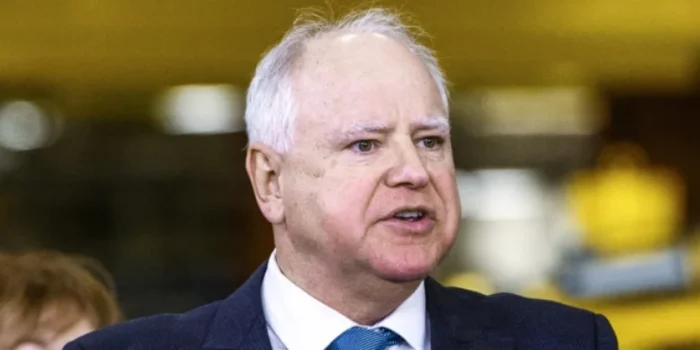
Minnesota Gov. Tim Walz is facing criticism over his recent public remarks, as opponents argue that his rhetoric has contributed to heightened political tensions.
Walz previously referred to Immigration and Customs Enforcement (ICE) in highly critical terms and said Minnesota was “at war” with certain federal policies. He also described Homeland Security Secretary Kristi Noem as acting as “judge, jury, and basically executioner” in a separate comment. Following a recent shooting incident, Walz stated that he has not used inflammatory language, a claim that has drawn pushback from critics who point to his earlier statements.
The debate intensified after an ICE agent was struck by a vehicle in what authorities described as a targeted incident. Some Democrats characterized the situation in strong terms, while Walz announced the deployment of the National Guard, saying the move was intended to protect Minnesotans from what he described as “rogue” federal actions.
Walz’s lieutenant governor also drew attention for encouraging residents to use peaceful protest to oppose federal immigration enforcement. Critics argue that such messaging risks escalating tensions, while supporters say it reflects constitutionally protected free speech and civic engagement.
In recent remarks, Walz referenced historical conflicts when discussing disagreements between state and federal authorities, framing the situation as a serious constitutional dispute. He has also stated that his administration will oversee any related investigations, pledging fairness and transparency.
Opponents have compared his current response to his handling of unrest in Minneapolis in 2020, when portions of the city experienced significant property damage. They argue that his timeline for deploying the National Guard then differed from his current approach. Walz has defended his record, saying decisions were made based on the circumstances at the time.
As tensions continue between state and federal officials over immigration enforcement and public safety, the situation highlights broader national debates about executive authority, states’ rights, and political rhetoric.