Trump Announces White House Ban on CNN, MS NOW and Politico, Warns More Outlets Could Follow
President Donald Trump announced Friday that CNN, MS NOW and Politico would be barred from the White House, accusing the three news organizations of repeatedly publishing what he called “fake news” about his administration.
Trump said the restrictions were effective immediately and warned that other news organizations could face similar treatment.
The announcement immediately raised questions about how the administration intends to enforce the move and whether broader restrictions on White House press access would survive a legal challenge.
Trump Accuses Three Outlets of False Reporting
Trump announced the move in a post on Truth Social on Sept. 18.
He accused CNN, MS NOW and Politico of “constant” false reporting about him, his administration and the United States, and said other “Fake News Media Outlets” could be targeted next.
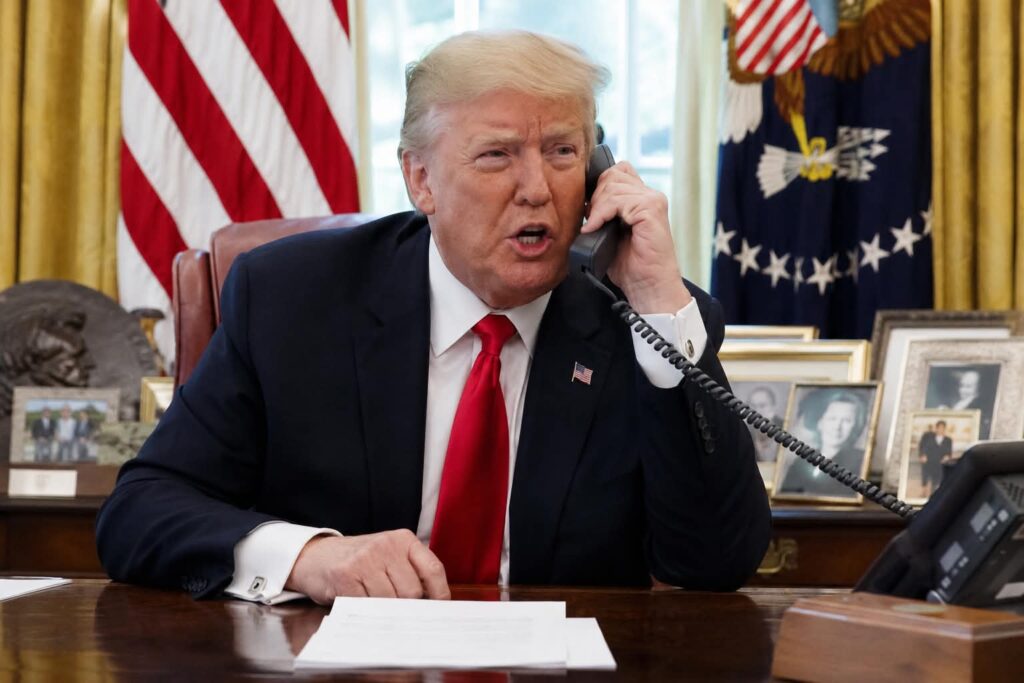
Later, when reporters asked Trump about the decision in the Oval Office, he said there was no single incident that prompted the announcement. Instead, he described the action as the result of what he characterized as a cumulative pattern of coverage over several years.
Trump also argued that he did not have to allow the organizations into the White House.
The White House had not immediately provided detailed instructions explaining precisely what the announcement meant for reporters’ credentials, access to White House workspaces, briefings or presidential events.
Reporters Remained at the White House After the Announcement
One important detail was still unresolved Friday evening: the announced ban had not immediately resulted in all journalists from the three organizations being removed from the White House complex.
Reuters reported that representatives of CNN, MS NOW and Politico could still be seen working at the White House after Trump’s announcement. CNN personnel remained at their workspace near the briefing room, while CNN also continued participating in presidential coverage.
That distinction matters because “banning” an organization from the White House could involve several different forms of access.
The administration could seek to restrict access to particular presidential events or limited-capacity press pools. A broader attempt to revoke general White House press access would present a different legal question.
As of Friday, the administration had not publicly clarified the precise scope of the restrictions.
First Amendment Issues Are Likely to Become Central
The announcement is likely to generate a constitutional dispute over the government’s ability to restrict journalists because of their coverage.
The First Amendment protects freedom of speech and freedom of the press. Legal questions surrounding presidential press access can become particularly complicated because the White House contains both generally accessible press facilities and events where space is inherently limited.
Reuters reported that courts have given presidents substantial discretion over access to certain restricted events, including small presidential pools. Broader exclusions based on the content or viewpoint of a news organization’s coverage present different constitutional issues.
The legal question is therefore not simply whether a president can control access to every individual presidential event. It also concerns whether the government can exclude an established news organization from government press access because officials object to its reporting.
The Associated Press Case Provides an Important Precedent
The latest confrontation follows an earlier dispute between the Trump administration and The Associated Press.
In 2025, the administration restricted AP reporters from certain presidential events after the news organization declined to adopt Trump’s preferred terminology for the Gulf of Mexico.
The AP challenged the restrictions in federal court.
A federal judge subsequently ruled that the White House could not exclude the AP from presidential spaces based on disagreement with its editorial viewpoint. An appeals court later allowed the administration greater control over some smaller, restricted events while the broader litigation continued.
That case could become relevant if CNN, MS NOW or Politico challenge the latest restrictions.
The precise legal outcome would depend in part on how the administration implements Trump’s announcement.
Trump Has Warned Other Media Organizations Could Be Next
Trump’s announcement did not identify the three organizations as the only outlets that could face restrictions.
He explicitly warned that additional “Fake News Media Outlets” could follow.
That language leaves open the possibility of further restrictions involving other news organizations whose coverage Trump considers inaccurate or unfavorable.
The administration has previously had contentious relationships with several major news organizations, and Trump’s second term has included multiple disputes over press access and coverage.
The latest announcement therefore represents another escalation in an already extensive conflict between the White House and parts of the national news media.
CNN Defends Its White House Reporting
CNN said it stood behind its journalists and indicated that its White House operation would continue.
The network’s personnel remained on site following Trump’s announcement, according to Reuters.
Politico and MS NOW had not immediately issued detailed public responses at the time of the initial reports.
The organizations’ ability to continue physically operating inside the White House could depend on how administration officials interpret and implement Trump’s announcement in the coming hours and days.
What Happens Next Could Depend on the Scope of the Ban
For now, the most significant unanswered question is what “banning” the three organizations actually means in practice.
If the administration limits specific event access, it would involve a different set of legal considerations from revoking general press credentials or preventing reporters from entering White House press facilities altogether.
The distinction could become especially important if the affected organizations seek an emergency court order.
Trump’s announcement also raises a broader question about whether additional media organizations will face similar restrictions, given his warning that more outlets could be targeted.
For the moment, CNN, MS NOW and Politico remain at the center of a developing dispute over White House press access, presidential authority and the constitutional protections surrounding news coverage of the federal government.
The administration’s next steps will determine whether Friday’s announcement becomes a limited change to event access or a broader challenge to the established system of White House press credentials.
Benjamin Harris is a RapidReports front page contributor and editor,proud father of four.