Trump Says He Will Meet Michigan Senator-Elect Abdul El-Sayed to Discuss ‘Trumpcare’ Healthcare Proposal
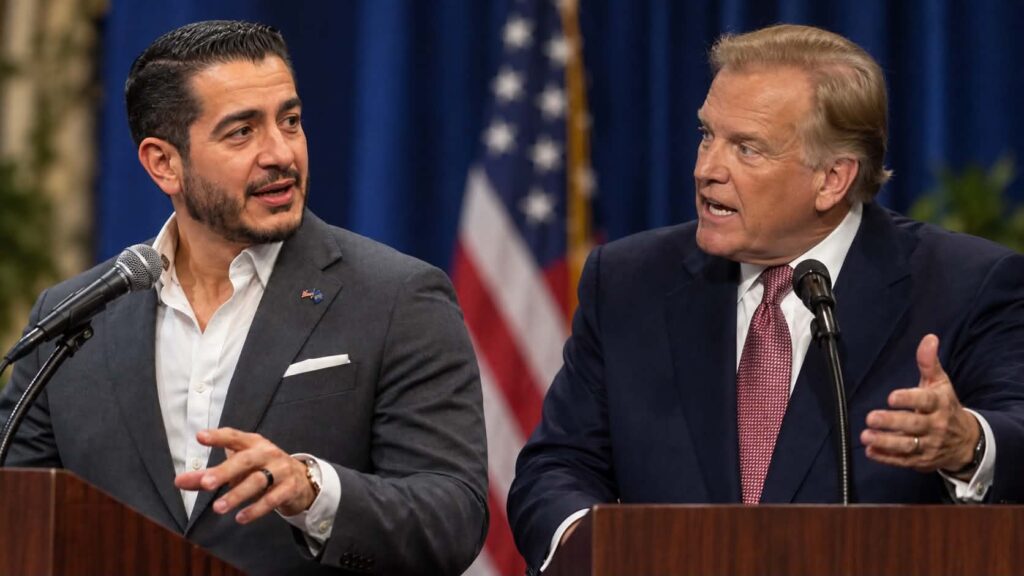
President Donald Trump says he plans to meet with Michigan Senator-elect Abdul El-Sayed to discuss a universal healthcare proposal that the incoming Democratic senator has branded “Trumpcare,” raising the possibility of negotiations over one of the most significant and politically divisive issues in American domestic policy.
Trump made the comments during an interview with the New York Post published November 24, 2026. Asked about El-Sayed’s decision to attach the president’s name to a proposal modeled on Medicare for All, Trump praised the branding and suggested the two could find common ground.
“He’s a smart guy,” Trump said. “He did a good job. He actually did a very good job.”
Trump confirmed that he expected to meet with El-Sayed but did not provide a date or outline a specific agenda. He suggested that negotiations could produce a compromise between the positions of the incoming senator and the administration.
“Maybe there’s some place in the middle that we could go,” Trump said.
The president also expressed interest in working with congressional Democrats on healthcare and other legislative priorities. His comments came as Democrats prepared to take control of Congress in January, creating a political environment in which negotiations between the White House and Democratic lawmakers could become important to advancing major legislation.
However, Trump’s remarks do not amount to an endorsement of Medicare for All or a commitment to establish a government-run national insurance program. No legislation, financing agreement or policy framework has been announced.
Trump praises El-Sayed’s ‘Trumpcare’ branding
El-Sayed, a physician and former public health official, has made universal healthcare a central part of his political platform. Rather than presenting the proposal under the traditional Medicare for All label, he has attempted to attract Trump’s attention by suggesting that a universal coverage plan could carry the president’s name.
Earlier in November, El-Sayed published images on X showing a mock gold-colored insurance card bearing the name “Trumpcare.” The design was intended to illustrate a healthcare system that would guarantee coverage to Americans throughout their lives.
“Donald, this is on the table. Guarantee healthcare for every American, from cradle to grave,” El-Sayed wrote alongside the images.
The mock card included references to hospital services, prescription medications, dental care, vision services and hearing coverage. Its design also promoted a system without premiums, deductibles or copayments for covered services.
Trump subsequently shared a screenshot of El-Sayed’s post on Truth Social. The president did not add a detailed explanation or announce support for the policy at that time.
His November 24 comments were a more direct indication that he was interested in discussing the proposal with the senator-elect. Trump described the use of his name as “very smart” and said he believed there might be an opportunity to reach an agreement.
For El-Sayed, the branding is intended to make the proposal more appealing to a president who has frequently criticized Democratic healthcare initiatives. He has said that the name attached to the program matters less to him than whether the policy delivers universal coverage.
“Put his name on it,” El-Sayed said in an earlier interview with NPR. “He’ll probably pass it. I’m not above doing that. I don’t care what it’s called.”
The strategy represents an effort to frame universal healthcare as a potential bipartisan achievement rather than an exclusively Democratic policy objective.
What El-Sayed means by Medicare for All
Medicare for All generally refers to a healthcare system in which the federal government finances coverage for the population through a public insurance program. Under traditional single-payer proposals, most Americans would receive their primary health coverage through that public system, replacing much of the role currently played by private health insurers.
The approach is different from the existing Medicare program, which primarily covers older Americans and certain people with disabilities. A universal program would extend public coverage to people who are currently insured through employers, individual insurance policies, Medicaid or other arrangements.
Supporters argue that a universal system could reduce the number of uninsured people, simplify insurance administration and limit the financial burden patients face when seeking medical treatment. They also argue that a single large public purchaser could negotiate prices for medical services and prescription drugs.
But El-Sayed has described a version of Medicare for All that would preserve a role for private insurance.
During a November 22 appearance on NBC’s Meet the Press, he compared his preferred approach to the public education system. Public schools are available to everyone, he explained, but families can still choose private schools if they prefer.
His proposed healthcare model would similarly guarantee access to a public insurance option while allowing people to retain or purchase private coverage.
El-Sayed said he supports the Medicare for All legislation associated with Senator Bernie Sanders, but emphasized that the details of any eventual plan would need to be negotiated.
“The essence of Medicare for All is the guaranteed public health insurance,” he said during the interview.
That distinction matters because a universal public option that operates alongside private insurance would not necessarily have the same structure or financial consequences as a strict single-payer system that replaces most private coverage.
El-Sayed has also discussed more incremental policy changes, including expanding Medicare eligibility, extending healthcare coverage to children and improving existing Medicare benefits. Those measures could become subjects for negotiation even if a comprehensive Medicare for All bill does not advance.
Trump signals willingness to negotiate with Democrats
Trump’s comments about El-Sayed were part of a broader discussion about cooperation with congressional Democrats.
The president said he believed the two parties could eventually negotiate on major legislative questions, including healthcare. At the same time, he suggested that he would initially use his veto power to pressure Democrats into negotiations.
“I’m just going to veto everything there is, and then at some point I think they’re going to want to negotiate,” Trump said.
He then returned to healthcare as an area where an agreement might be possible.
“I will, and we can do health care. We can do a lot of great things together,” he added.
The comments indicate an interest in negotiations, but they do not establish what the president would accept. Trump has not publicly endorsed the full Medicare for All model, and his previous comments about healthcare have included criticism of government-run approaches as well as expressions of interest in working with Democrats on reforms.
A compromise could involve narrower measures that expand coverage without replacing the existing insurance system. Possible areas for discussion include changes to Medicare eligibility, additional benefits, expanded coverage for children, prescription drug costs and reforms to existing insurance programs.
Those options would differ substantially in cost, scope and political support from a comprehensive single-payer system.
The White House has not announced a formal negotiating framework or provided details about the proposed meeting with El-Sayed.
The potential financial cost of a universal healthcare system
The cost of Medicare for All remains one of the central questions in the debate over universal healthcare in the United States.
Estimates vary considerably because analysts use different assumptions about the benefits included, the number of people covered, reimbursement rates for hospitals and doctors, administrative savings, prescription drug prices and the taxes or other revenue sources used to finance the program.
One frequently cited analysis comes from the Congressional Budget Office. In a 2020 report examining illustrative single-payer healthcare options, the CBO estimated that federal healthcare subsidies in 2030 could be approximately $1.5 trillion to $3 trillion higher than under then-current law, depending on the structure of the proposed system.
That figure represents additional federal financing compared with the projected baseline. It does not mean that total national healthcare spending would necessarily increase by the same amount.
The distinction is important because a single-payer system would move many costs currently paid by employers, households, private insurers and state governments into the federal budget. Federal spending could rise substantially even if some administrative costs or total healthcare expenditures declined.
More recent estimates have also produced substantial differences.
An August 2026 analysis by the American Action Forum, using its Center for Health and Economy modeling, estimated that a particular Medicare for All proposal could generate approximately $47.4 trillion in additional federal budget costs over the 2027–2036 period before accounting for new revenue.
The analysis also examined proposed financing measures and estimated that a substantial funding gap would remain under the assumptions used in its model.
That estimate should be understood as the result of a specific policy design and set of assumptions, not as an agreed-upon forecast for every possible universal healthcare system. Other researchers have reached different conclusions about potential savings, spending and health outcomes.
The central financial questions include how much the government would pay healthcare providers, whether patients would face any cost-sharing requirements, which services would be covered and how the program would be funded.
A plan with broad benefits and little or no out-of-pocket spending could require more public financing than a narrower proposal that preserves premiums, deductibles or other patient contributions.
The financing debate would therefore be a major part of any negotiations between Trump and El-Sayed. Agreeing on the principle of universal coverage would not, by itself, resolve how the program would be paid for.
Healthcare access and waiting times in other countries
The experiences of countries with publicly financed healthcare systems are also likely to feature in the American debate.
Supporters of universal coverage frequently point to countries where residents receive healthcare through government-financed systems and do not face the same insurance arrangements found in the United States. They argue that universal coverage can reduce financial barriers to treatment and protect households from large medical bills.
Critics, meanwhile, often focus on waiting times, provider capacity and the availability of specialist appointments. They argue that expanding coverage without sufficient investment in medical personnel and facilities could increase pressure on healthcare services.
Canada provides one example frequently discussed in this debate.
The Fraser Institute’s 2026 Waiting Your Turn survey, released November 17, reported a median wait of 30.7 weeks between referral by a general practitioner and receipt of treatment by a specialist. The figure was the longest recorded in the survey’s history.
The survey was based on responses from physicians across Canada and covered 12 medical specialties. It measured the time patients waited from referral through specialist consultation and treatment.
The figure does not mean every Canadian patient waits more than seven months, nor does it represent every type of medical appointment. Waiting periods vary by province, specialty, urgency and individual circumstances. The Fraser Institute is also an independent policy organization rather than a government statistical agency, so its methodology should be considered when interpreting the results.
England’s National Health Service provides another example of the challenges involved in managing demand for publicly funded treatment.
NHS England’s September 2026 referral-to-treatment statistics reported approximately 7.4 million waiting pathways at the end of that month. The agency estimated that about 6.2 million individual patients were represented because some people were waiting for more than one treatment pathway.
Of those pathways, 116,353 involved waits longer than 52 weeks. Approximately 65.8 percent of pathways had been waiting 18 weeks or less, below the NHS standard that more than 92 percent should meet that timeframe.
These figures illustrate continuing pressures within the English system, but they do not establish that public financing alone causes long waits. Staffing levels, hospital capacity, the effects of previous disruptions, demand for services and government funding decisions can all affect treatment times.
The American healthcare system also faces access problems, including high costs, insurance gaps, uneven provider availability and delays for certain services. Comparisons between countries therefore need to consider the full range of differences rather than treating one waiting-time statistic as a complete measure of system performance.
For lawmakers considering universal coverage, the practical challenge would be to guarantee access while ensuring that hospitals, doctors and other healthcare providers have the capacity to meet additional demand.
The political questions facing a potential Trump-El-Sayed agreement
Even if Trump and El-Sayed meet, turning their discussion into legislation would require agreement on several difficult questions.
The first is the role of private insurance. El-Sayed has said he wants a universal public guarantee while preserving the possibility of private coverage. Traditional single-payer proposals generally envision a much smaller role for private insurance in providing core medical benefits.
The second is financing. A national public plan would require lawmakers to decide how federal spending would replace or absorb payments currently made through employer-sponsored insurance, private premiums, Medicaid and other programs. Tax policy and the distribution of costs among households and businesses would be central to that discussion.
The third is provider reimbursement. Hospitals, doctors and other healthcare organizations would need to understand how much they would receive for treating patients under a new system. Changes in payment rates could affect hospital finances, medical practices and the availability of services.
The fourth is the scope of coverage. El-Sayed’s proposed gold card highlighted hospital treatment, prescriptions, dental care, vision and hearing services, but a legislative proposal would need to define precisely which services qualify, how treatments are approved and whether any exceptions or cost-sharing rules apply.
Finally, lawmakers would need to determine how quickly any changes could be implemented. A major restructuring of American healthcare would affect employers, insurers, hospitals, state governments and millions of households. A gradual transition could raise different administrative and financial questions from an immediate shift to a new national program.
Trump’s willingness to meet with El-Sayed could create an opportunity to discuss these issues, but substantial disagreements remain possible.
What happens next?
As of November 26, Trump has publicly said he expects to meet with El-Sayed, but no date or formal policy negotiations have been announced.
El-Sayed has also indicated that he is willing to speak with the president and work with administration officials if doing so could advance universal healthcare coverage. His public comments suggest that he is open to discussing the design of a plan rather than insisting that every detail of a traditional Medicare for All proposal must remain unchanged.
The president’s praise for the “Trumpcare” branding has attracted attention because it places a progressive healthcare proposal in the context of a possible bipartisan negotiation. However, a positive reaction to the name does not establish agreement with the underlying policy.
The most consequential question is whether the two sides can identify a proposal that expands access to healthcare while addressing the costs, insurance arrangements and provider-capacity concerns that have shaped the national debate.
For now, the proposed meeting remains an opening for discussion rather than evidence that a new healthcare program is close to becoming law. Any agreement would still need to be translated into legislation, financed and approved through the federal legislative process.
The next steps will depend on whether Trump and El-Sayed can move beyond the political branding and agree on the practical details of a universal coverage plan.

Benjamin Harris is a RapidReports front page contributor and editor,proud father of four.