Trump Pitches $5,000 ‘Dividend’ as Midterm Campaign Intensifies
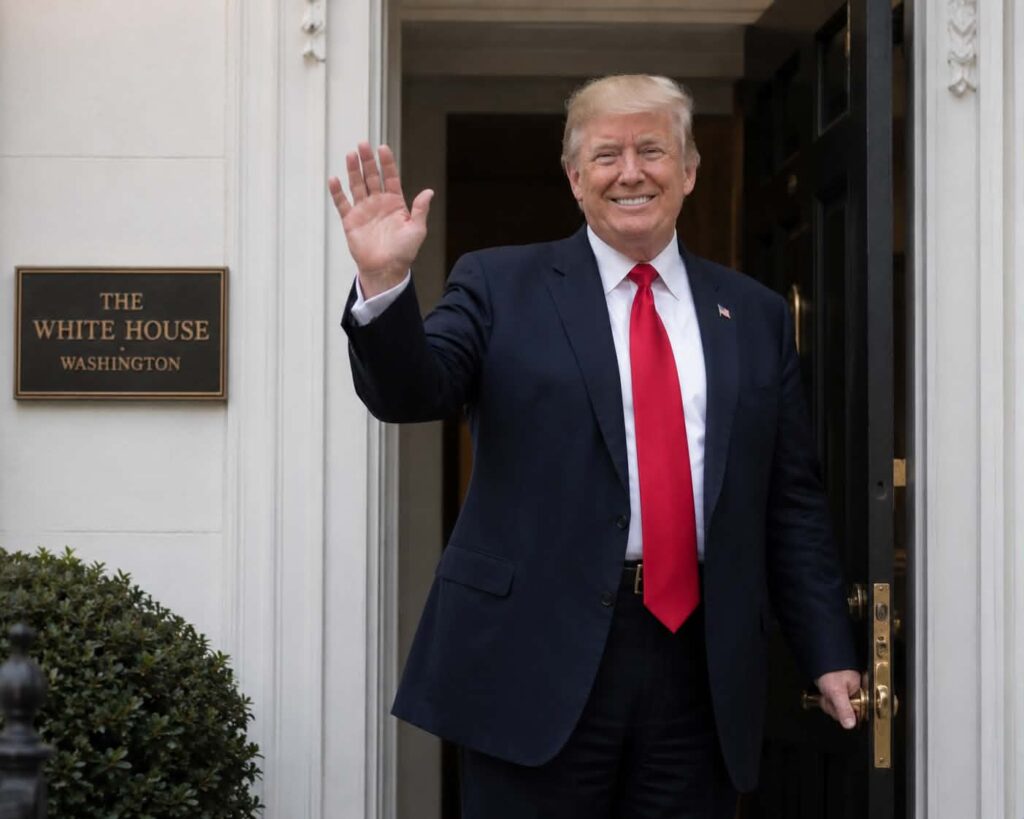
President Donald Trump has put himself at the center of the 2026 midterm election campaign, combining a proposed $5,000 payment for American adults with a highly personal appeal to Republican voters at the party’s midterm convention in Dallas.
Trump’s remarks came during the Republican Party’s first-ever midterm convention, where he urged supporters to treat the upcoming congressional elections as a referendum on his presidency.
The president’s proposal for what he called a “Trump Dividend” has quickly become one of the most closely watched political and economic proposals of the midterm campaign.
Under Trump’s proposal, adults would receive $5,000 if Republicans retain control of both the House of Representatives and Senate in the November elections.
However, significant questions remain about how such payments would be authorized, financed and distributed.
Trump Announces Proposed $5,000 “Trump Dividend”
During his speech in Dallas, Trump told the Republican audience that a Republican victory would mean voters would receive a financial benefit.
“If the Republicans win, you win with us and you get $5,000,” Trump said.
He referred to the proposed payment as a “Trump Dividend.”
The proposal immediately attracted attention because of the size of the potential payments and because Trump tied the proposal to the outcome of the congressional elections.
The Associated Press and Reuters reported that the proposal could cost more than $1 trillion if broadly applied to eligible American adults.
Trump has suggested that tariff revenue and other government-related financial resources could help fund the payments.
However, the administration has not publicly provided a complete financing plan that demonstrates how the proposed payments would be funded.
How Would the $5,000 Payment Work?
That remains one of the biggest unanswered questions surrounding the proposal.
Trump has not provided a detailed mechanism explaining how every proposed payment would be authorized and distributed.
There are also questions concerning eligibility.
Trump initially described the proposal broadly as a payment to American adults, while subsequent comments from Vice President JD Vance suggested that the administration could consider limiting payments based on income.
The precise eligibility requirements have not been established.
Another major question is whether Congress would need to authorize the payments.
A program involving more than $1 trillion in federal spending would have substantial budgetary implications, making the legislative process an important part of any attempt to implement the proposal.
The proposal should therefore be understood as a political pledge rather than an existing federal benefit.
Trump Links the Proposal to the Midterm Elections
The timing of Trump’s announcement has made the proposal especially significant.
The 2026 midterm elections will determine control of Congress, rather than the presidency.
Trump has repeatedly encouraged Republican voters to view the elections through the lens of his administration and its policies.
At the Dallas convention, he reinforced that message by presenting the proposed dividend as something that would follow a Republican victory.
Reuters reported that Trump urged voters to effectively treat him as if he were on the ballot during the midterm campaign.
That strategy puts the president at the center of an election in which his name will not appear on the ballot as a presidential candidate.
Trump Also Asked Supporters to Pledge Their Support
Trump’s convention appearance went beyond the proposed payment.
During his remarks, he asked attendees to raise their right hands and repeat a pledge supporting him and Republican candidates.
The moment became one of the more unusual portions of the convention and reflected Trump’s highly personal approach to political campaigning.
Trump has frequently encouraged supporters to view Republican electoral success as directly connected to his administration.
At the Dallas event, he continued that approach while also discussing economic policy, tariffs, energy prices and other national issues.
Trump Makes a Remark About Voting “Right”
Trump also made a provocative joke while speaking to supporters about voting.
He asked the audience what would happen if they did not “vote right” and responded that they would “go to hell.”
The remark was delivered in a joking and rhetorical context during a partisan political event.
Trump also told attendees that they could vote for Democrats if they wanted to, before suggesting that the people in the room were unlikely to do so.
The comments quickly circulated online because of their unusual wording.
Rather than treating the statement as a literal threat against voters, the remarks are more accurately described as part of Trump’s campaign rhetoric directed at an audience of Republican supporters.
Why Trump’s $5,000 Proposal Has Attracted Attention
The proposed dividend has attracted attention for several reasons.
First, the amount is substantial.
A $5,000 payment to millions of adults would represent a major federal expenditure.
Second, the proposal is directly connected to the congressional election.
Third, there is uncertainty about how the program would be implemented.
And fourth, economists and policy analysts have raised questions about whether tariff revenue could generate enough money to finance a payment of this size without additional borrowing or other sources of funding.
The scale of the proposal means that its economic consequences would depend heavily on how it was ultimately structured.
Could Tariff Revenue Pay for the Program?
Trump has pointed to tariff revenue as an important potential source of funding.
Tariffs generate money for the federal government when imported goods are subject to duties.
However, the amount of tariff revenue collected by the government is much smaller than the total cost that would result from distributing thousands of dollars to a very large number of adults.
The Wall Street Journal reported that Trump’s public claims about government revenue have exceeded official figures in some instances.
That makes the financing question one of the most important unresolved issues surrounding the proposed dividend.
If the government were to distribute payments on the scale Trump has described, policymakers would need to determine whether tariff collections could cover the cost or whether additional federal borrowing or other funding mechanisms would be required.
Economists Question the Potential Cost
The estimated cost of the proposed program varies depending on eligibility.
If every adult citizen were eligible, the total cost could reach well above $1 trillion.
The Associated Press reported that the proposal could cost more than $1 trillion and noted that the current federal government is already running a substantial deficit.
That raises broader questions about federal debt, inflation and the government’s ability to finance large-scale payments.
Supporters could argue that increased tariff revenue and other government receipts could provide funding.
Critics, meanwhile, have questioned whether the revenue would be sufficient.
Until the administration provides a detailed legislative and financial plan, the ultimate economic effect cannot be determined with certainty.
The Proposal Is Not Currently an Automatic $5,000 Payment
One important distinction for voters is that Trump’s announcement does not mean Americans are currently entitled to receive a $5,000 federal payment.
The proposal would need to be translated into an actual government program.
That would require decisions about eligibility, funding, administration and potentially congressional legislation.
CBS News reported that Trump did not provide details during his convention speech about how the payments would work or whether he would seek congressional authorization.
Consequently, headlines describing the proposal as an already-approved stimulus check would be misleading.
It is more accurately described as a proposed payment contingent on a Republican congressional victory.
What Happens in the 2026 Midterm Elections?
The November elections will determine the composition of Congress.
Voters will choose members of the House of Representatives and, in relevant states, members of the Senate.
The election will not determine the next president.
Trump’s current presidential term continues beyond the midterms, while the next presidential election is scheduled for 2028.
That makes the congressional elections particularly important for Trump’s ability to advance legislation and for the balance of power between the White House and Congress.
Why Control of Congress Matters to Trump
A president’s ability to enact major legislation depends heavily on the composition of Congress.
If the president’s party controls both chambers, legislation supporting the administration’s priorities may have a clearer path through Congress, although individual legislation can still face disagreements within the governing party.
If the opposing party controls one or both chambers, congressional investigations, oversight and legislative negotiations can become more significant.
That political reality helps explain why Trump has placed such a strong emphasis on the 2026 midterms.
The $5,000 dividend proposal is therefore not simply an economic announcement.
It is also part of a broader campaign message about what Trump says voters could receive from maintaining Republican control of Congress.
Trump’s Approval Rating Has Become Part of the Midterm Debate
Trump’s political standing is another important part of the campaign environment.
Recent polling has shown relatively low approval ratings for the president, although individual polls differ and national approval numbers can fluctuate over time.
Reuters reported that some Republicans attending the Dallas convention expressed concern about making Trump the central figure in competitive midterm races, particularly because of his standing among independent voters.
Other Republicans continue to argue that Trump’s popularity among his core supporters can help drive turnout.
The disagreement reflects a larger question facing the Republican Party: whether emphasizing Trump can maximize Republican participation or whether candidates in competitive races need to establish more independent political identities.
Trump Wants the Midterms to Be About His Presidency
Trump’s approach in Dallas was clear: he wants voters to view the congressional elections as a judgment on his administration.
That strategy allows him to campaign for Republican candidates even though he himself is not seeking another presidential election in 2026.
It also gives Trump an opportunity to connect congressional races with issues that define his presidency, including tariffs, immigration, energy policy and federal spending.
The Republican convention was therefore as much about Trump’s political future and influence as it was about individual congressional candidates.
Questions About the Proposal Remain
Despite the attention surrounding the proposed $5,000 dividend, several major questions remain unanswered.
How would eligibility be determined?
Would wealthy Americans receive the same amount as middle-income households?
Would children or dependents qualify?
Would Congress need to approve the payments?
How much tariff revenue would actually be available?
Would additional borrowing be necessary?
And what would happen if Congress rejected the proposal?
Until those questions are addressed, voters cannot know exactly what the proposed dividend would mean for their household finances.
The Difference Between a Campaign Promise and Existing Policy
Political campaign promises frequently receive intense attention during election years.
But voters should distinguish between a candidate’s proposal and an enacted government program.
Trump’s $5,000 dividend is currently a proposal.
There is no indication that the federal government has already approved a universal $5,000 payment to American adults.
The details would need to be established through the political and legislative process.
That distinction is particularly important because social media posts and headlines can sometimes present campaign proposals as if they were already guaranteed benefits.
What Trump Said About Voting
The $5,000 proposal was not Trump’s only appeal to Republican voters in Dallas.
His speech repeatedly returned to the importance of turning out for Republican candidates.
The president has sought to make the 2026 congressional elections a test of his administration’s popularity and a referendum on his policies.
His remarks about voting “right” and his request that supporters pledge their allegiance were part of that broader political appeal.
The language generated substantial attention online, but the comments occurred in the context of a partisan convention attended primarily by Republican supporters.
A Highly Unusual Midterm Campaign
The Republican midterm convention itself was unusual.
The party had never before held a comparable national midterm convention centered so heavily on the sitting president.
The event gave Trump a national platform to outline his political message and encourage supporters to focus on the November elections.
It also demonstrated how closely the Republican Party’s national campaign remains connected to Trump.
Reuters reported that some Republicans questioned whether making Trump the centerpiece of the midterm strategy could create difficulties in competitive races.
What Voters Should Watch Next
The coming weeks are likely to provide more information about the proposed dividend.
The most important developments will include any legislation introduced in Congress, details from the White House concerning eligibility and funding, and additional economic analysis of the proposal.
Voters may also hear more from Republican congressional candidates about whether they support the payment and how they believe it should be financed.
At the same time, Democrats are likely to make the proposal part of their broader argument about federal spending, taxes, deficits and the direction of the economy.
The Bottom Line
Donald Trump’s appearance at the Republican midterm convention in Dallas marked another escalation in his effort to make the 2026 congressional elections a referendum on his presidency.
His proposed $5,000 “Trump Dividend” has generated significant attention because of both its size and its connection to the outcome of the elections.
But the proposal remains just that: a proposal.
Its cost, funding mechanism, eligibility requirements and legal and legislative pathway have not been fully established.
Trump also attracted attention with remarks encouraging supporters to vote for Republican candidates and joking that people who did not “vote right” would “go to hell.”
Taken together, the remarks illustrate Trump’s highly personal campaign style and his effort to mobilize Republican voters ahead of the November elections.
For voters, the key questions now are not simply whether a $5,000 payment has been promised, but whether such a program could actually be enacted, who would qualify, how it would be funded and what Congress would need to do for it to become reality.
As the midterm campaign moves forward, those unanswered questions are likely to become increasingly important.
The 2026 elections will determine control of Congress, and the outcome will shape the political environment for the remainder of Trump’s current presidential term.

Benjamin Harris is a RapidReports front page contributor and editor,proud father of four.