Republican Senators Split Over Push to Hold Anthony Fauci in Contempt of Congress
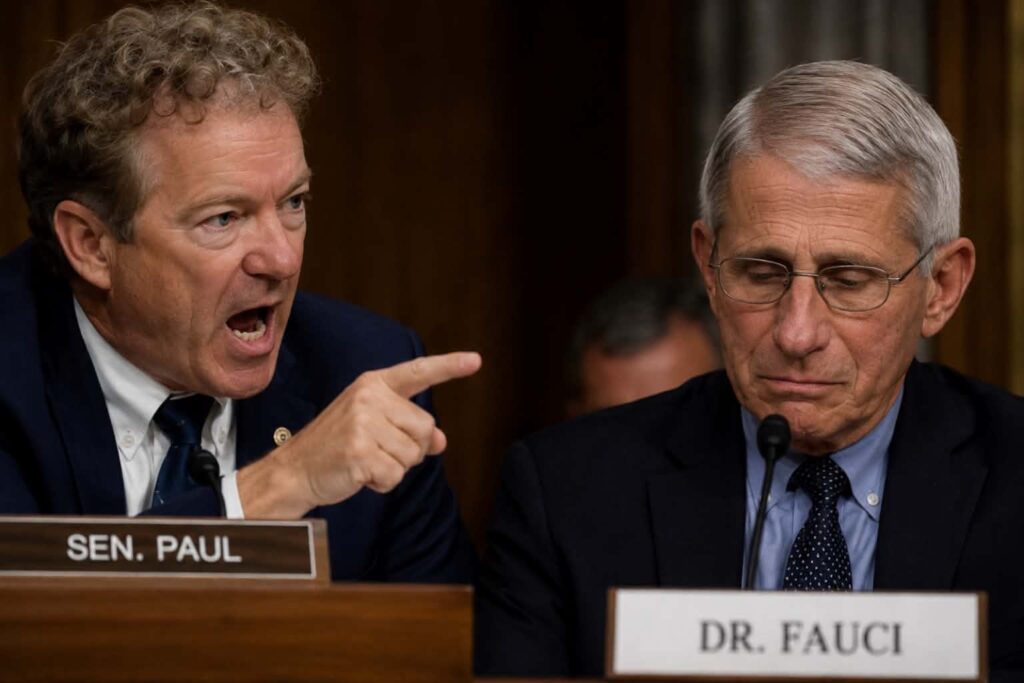
Two Republican senators are urging caution as colleagues move to refer former White House COVID adviser Anthony Fauci to the Justice Department for criminal contempt of Congress. Sen. Rand Paul of Kentucky is leading the effort, arguing that Fauci’s repeated invocation of the Fifth Amendment during questioning justifies a contempt referral. The internal debate highlights both the depth of conservative demand for accountability and the procedural complications that still stand in the way.

[poll id=”4″]
Paul said Tuesday he believes the votes exist to hold Fauci in contempt. Rather than waiting for a full Senate vote that would require 60 votes to advance, Paul is considering a more direct route: sending the referral straight to the Justice Department. Sen. Josh Hawley is already preparing the groundwork. His staff is drafting a legal memo for acting Attorney General Todd Blanche that argues Fauci can and should be prosecuted.
“My team is working right now on a memo to Blanche explaining why we think that he can be prosecuted for contempt of Congress,” Hawley told Fox News Digital. “He’s not entitled to immunity, taken the Fifth, when he already has a pardon. It’s one or the other.”
The Senate Homeland Security and Governmental Affairs Committee voted Thursday to hold Fauci in contempt. Under the normal process, the resolution would next go to the full Senate. Paul’s alternative would allow Vice President JD Vance, in his role as president of the Senate, to certify the resolution and refer the case to the U.S. attorney for the District of Columbia.
Not every Republican is comfortable with that shortcut. Sen. James Lankford warned that bypassing the full Senate could create lasting political consequences. “It’s got to actually go through the full Senate,” Lankford said. “That’s the challenge.” He cautioned that changing the established process now could leave Republicans vulnerable if Democrats regain control of the chamber in the future. “The vice president would have to make a decision if he wants to try to change the structure of what has been done in the Senate, because then that would make them vulnerable three years from now to a future, maybe, Democrat Senate,” Lankford said.
Sen. Mike Rounds expressed deeper skepticism about the legal foundation for contempt. “The first thing you have to do is identify what it is that you would be holding him in contempt for,” Rounds said. “I think he took the Fifth. And doing so, I think it makes it more difficult for anybody to actually suggest that.” Rounds also urged colleagues to keep the early pandemic context in mind. “Whether the advice was really good advice or if it was the best advice they had, it was a different time period,” he said. “So I just hope we all remember that.”
Those cautionary notes from Lankford and Rounds could complicate Paul’s drive at a moment when many conservatives continue to demand answers about Fauci’s pandemic-era decisions, his congressional testimony, and the origins of COVID-19.
Other Republicans are standing with Paul. Sen. Ashley Moody argued that a court should ultimately resolve the dispute over Fauci’s Fifth Amendment claim. “I think Rand Paul feels very strongly that you can’t have him coming in and pleading the Fifth in this situation,” Moody said. “I think he also believes ultimately this will wind up in a court and that will be clarified by a court, and I think that’s probably necessary as we move forward.”
A central complication is the sweeping pardon Fauci received from former President Joe Biden. The pardon covers actions taken between Jan. 1, 2014, and Jan. 19, 2025. That broad protection has raised a pointed legal question: if Fauci has already been pardoned for the relevant period, can he still claim that answering congressional questions would expose him to criminal liability? Hawley’s memo is expected to argue that the pardon and the Fifth Amendment invocation cannot both stand as absolute shields.
From a conservative perspective focused on accountability and institutional transparency, the push to hold Fauci to account reflects unfinished business from the pandemic years. Millions of Americans lived under shifting guidance, school closures, vaccine mandates, and official statements that later required revision or clarification. Questions about the virus’s origins, the role of gain-of-function research, and the consistency of public health messaging remain unresolved for a significant portion of the public. Congressional oversight is one of the few remaining mechanisms for forcing answers into the open.
Invoking the Fifth Amendment is a constitutional right. It is also a choice that carries political and public consequences, especially for a former senior government official who spent years as the public face of the federal pandemic response. When that official has already received a presidential pardon covering more than a decade of activity, the decision to refuse to answer further questions inevitably invites scrutiny. Paul’s and Hawley’s position is that Congress retains the authority to compel testimony and that contempt remains an available tool when that authority is resisted.
Lankford’s and Rounds’ concerns are not trivial. Senate process exists for a reason. Shortcuts that appear advantageous in the moment can become precedents used against the same party later. Establishing a clear record of what specific conduct constitutes contempt is also necessary if any prosecution is to withstand legal challenge. Those process arguments deserve serious consideration even among those who believe Fauci has questions still unanswered.
The tension inside the Republican conference therefore reflects two legitimate impulses. One prioritizes substance: the public interest in full accountability for decisions that affected every American household. The other prioritizes institutional guardrails: the need to follow established Senate procedure and to avoid creating tools that future majorities could weaponize. Both impulses can coexist with a shared recognition that the pandemic era left deep scars and unresolved questions.
Paul has given no indication he intends to retreat. That leaves Vice President Vance and the Justice Department potentially facing a decision about whether Fauci’s combination of a broad pardon and Fifth Amendment claims places him beyond the practical reach of congressional accountability. The committee has already voted for contempt. The full Senate path remains available but politically difficult. The direct-referral option is faster but carries the risks Lankford identified.
As the debate continues, the underlying demand for answers is unlikely to fade. Conservatives who spent years watching official narratives shift, dissenting scientists marginalized, and basic questions about origins and policy deferred will continue to press for resolution. Whether that pressure produces a formal Justice Department referral, a court ruling on the Fifth Amendment claim, or simply a sustained public record of unanswered questions will depend on how the current internal Republican debate is resolved.
What remains clear is that Fauci’s appearance before Congress did not close the book. By repeatedly invoking the Fifth Amendment after receiving a sweeping pardon, he has kept the controversy alive. Paul, Hawley, and their allies intend to force the next chapter. Lankford, Rounds, and others are determined to ensure that chapter follows rules that will still protect the institution when the political tables turn. The outcome will say as much about Republican priorities and process as it will about Anthony Fauci’s remaining obligations to the public.

Benjamin Harris is a RapidReports front page contributor and editor,proud father of four.