Donald Trump informed Congress on Friday that hostilities between the United States and Iran have “terminated,” pointing to a ceasefire implemented last month as evidence that active conflict has come to an end. His statement coincided with the expiration of the 60-day period outlined in the War Powers Resolution of 1973.
In a formal letter to lawmakers, Trump stated that there had been no direct military exchanges between U.S. and Iranian forces since early April. “The hostilities that began on February 28, 2026, have terminated,” he wrote, suggesting that the absence of recent combat reflects a shift toward de-escalation.
However, the situation remains complex. U.S. forces are still deployed across the region, and administration officials have not ruled out the possibility of further military action if conditions change. The president has also argued that the ceasefire effectively resets the timeline under the War Powers framework, meaning any new engagement could begin a new 60-day period.
Senior defense officials, including Pete Hegseth, have echoed this interpretation in recent congressional testimony, emphasizing that the pause in hostilities creates a different legal context than an ongoing conflict.
At the same time, Trump raised broader constitutional questions about the War Powers Resolution itself. Like several past presidents, he suggested that the law may place limits on executive authority that are open to legal challenge, particularly regarding the president’s role as commander-in-chief.
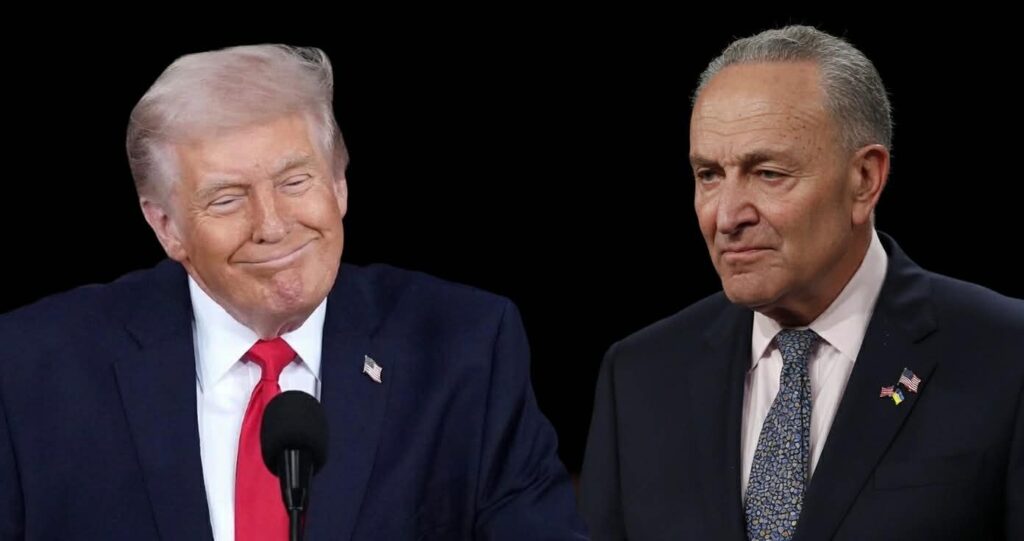
Democratic lawmakers pushed back on the administration’s position, arguing that the current conditions do not fully support the claim that the conflict has ended. Chuck Schumer, along with other members of Congress, expressed concern that U.S. personnel remain exposed to potential risks in the region.
Jeanne Shaheen noted that tens of thousands of American service members are still stationed in areas where tensions remain elevated. She also pointed to continued instability in key locations such as the Strait of Hormuz, which plays a critical role in global energy transport.
The debate reflects a long-standing institutional tension between Congress and the executive branch over the use of military force. The War Powers Resolution, enacted in the aftermath of the Vietnam War, was designed to ensure that prolonged military engagements receive congressional approval. However, presidents from both major parties have often challenged or interpreted its provisions differently.
Historical precedents illustrate this pattern. Barack Obama authorized extended U.S. involvement in Libya without explicit congressional approval, while Bill Clinton maintained that funding approved by Congress effectively supported U.S. operations in Kosovo.
Under the law, presidents may request an additional 30-day period to safely withdraw forces if needed. As of now, the current administration has not formally invoked that provision.
Some Republican lawmakers have also voiced concerns about the lack of explicit authorization. John Curtis indicated he would be hesitant to support further funding for military operations without a formal declaration of war. Similarly, Susan Collins emphasized Congress’s constitutional role in decisions involving armed conflict.
Recent legislative action highlights the division on Capitol Hill. The Senate narrowly rejected a resolution that would have required the withdrawal of U.S. forces, reflecting differing views on how to proceed.
Meanwhile, John Thune and other lawmakers have called for a clearer strategy from the administration, particularly regarding long-term goals and exit plans. Josh Hawley also expressed hope that officials would soon provide more detailed guidance on the path forward.
Lisa Murkowski noted that while she did not support the recent resolution, she remains concerned about the absence of formal congressional authorization. She suggested that additional legislative action could be considered if greater clarity is not provided.
As discussions continue, the situation underscores the broader challenge of balancing national security decisions with constitutional processes. While the ceasefire has reduced immediate military activity, policymakers on both sides of the aisle are continuing to evaluate what comes next and how best to ensure stability moving forward.

Benjamin Harris is a RapidReports front page contributor and editor,proud father of four.