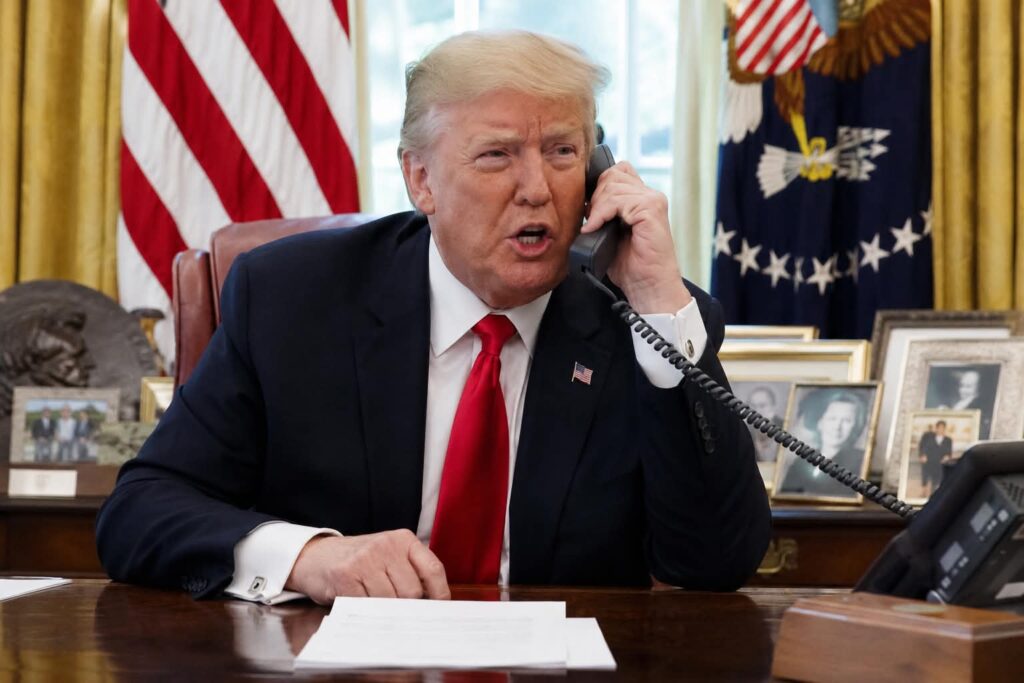
President Donald Trump ( Rapid Reports Photo – Benjamin Harris )
Jerome Powell to Step Down as Fed Chair but Plans to Stay on Board Through 2028
[poll id=”4″]
Jerome Powell is preparing to conclude his term as chair of the Federal Reserve later this month, but he is not planning a full departure from the institution. Instead, Powell has indicated that he intends to remain on the Federal Reserve Board of Governors through 2028, a move that could shape the central bank’s direction for years to come.
Powell’s term as chair is set to expire on May 15. While it is common for chairs to step down from leadership roles at the end of their terms, remaining on the board itself is less typical. His decision ensures continuity within the Fed during a period of ongoing economic uncertainty and policy debate.
A Transition in Leadership
Donald Trump has nominated Kevin Warsh to succeed Powell as chair. Warsh, a former Federal Reserve governor, is expected to bring his own approach to monetary policy if confirmed.
The transition comes at a time when interest rates, inflation trends, and economic growth remain key concerns for policymakers, businesses, and consumers alike. The leadership shift may influence how the Federal Reserve navigates these challenges.
Economic analysts note that leadership changes at the Fed often signal potential shifts in policy priorities. However, the presence of experienced board members like Powell could provide continuity and institutional stability.
Powell’s Continued Role
By remaining on the board, Powell would continue to participate in key decisions regarding monetary policy, including interest rate adjustments and economic outlook assessments. This role allows him to contribute his perspective even after stepping down as chair.
Some economists suggest that his continued presence could influence internal discussions, especially if policy approaches differ between board members and incoming leadership.
Joe Brusuelas, chief economist at RSM US, highlighted the potential impact of this arrangement. He noted that Powell’s decision could shape the early tenure of Warsh, particularly if their views on interest rates or inflation diverge.
Interest Rate Debate Continues
Interest rate policy has been a central focus of the Federal Reserve in recent years. The Fed raised rates to address inflation, then made limited reductions as economic conditions evolved.
Debate continues among policymakers about the appropriate timing and scale of future rate changes. While some advocate for easing rates to support economic growth, others emphasize caution to prevent inflation from rising again.
These differing perspectives underscore the importance of Federal Reserve decision-making and the balance it must maintain between growth and stability.
Ongoing Oversight and Review
In addition to monetary policy, Powell has referenced ongoing reviews related to Federal Reserve operations, including oversight of building renovations. He has indicated that he intends to remain on the board until these matters are resolved with transparency.
Jeanine Pirro has stated that further action regarding related inquiries would depend on the outcome of an internal review conducted by the Federal Reserve’s inspector general.
Oversight processes like these are part of broader efforts to maintain accountability within public institutions. Officials have emphasized that decisions will be guided by findings and established procedures.
Political and Institutional Considerations
The Federal Reserve operates independently from direct political control, a principle widely regarded as essential for maintaining economic stability. At the same time, its leadership is appointed through a political process, which can draw attention during periods of transition.
Some policymakers have expressed concern about maintaining the Fed’s independence, particularly during times of political debate over economic policy. Others emphasize the importance of transparency and accountability in leadership decisions.
Thom Tillis has previously commented on the importance of ensuring that oversight processes do not interfere with the central bank’s independence.
What This Means Going Forward
Powell’s decision to remain on the board creates a unique situation in which a former chair continues to play an active role in shaping policy. This could lead to a dynamic environment within the Federal Reserve as new leadership takes over.
For markets and investors, the transition will be closely watched. Changes in Federal Reserve leadership often influence expectations around interest rates, inflation, and overall economic direction.
At the same time, the continued presence of experienced policymakers may help reassure those seeking stability during a period of transition.
A Period of Adjustment
As the Federal Reserve prepares for this leadership change, attention will remain focused on how policy decisions evolve in the coming months. The interaction between incoming leadership and existing board members will likely play a key role in shaping outcomes.
Economic conditions, including inflation trends and employment data, will continue to guide decision-making. The Federal Reserve’s dual mandate—promoting maximum employment and stable prices—remains at the center of its work.
Looking Ahead
The coming months are expected to bring further clarity on the Federal Reserve’s direction under new leadership. Observers will be watching for signals on interest rates, economic forecasts, and broader policy priorities.
Powell’s continued role ensures that his experience and perspective will remain part of those discussions, even as the institution moves into a new phase.
While leadership transitions can introduce uncertainty, they also provide an opportunity to reassess strategies and adapt to evolving economic conditions.

Benjamin Harris is a RapidReports front page contributor and editor,proud father of four.