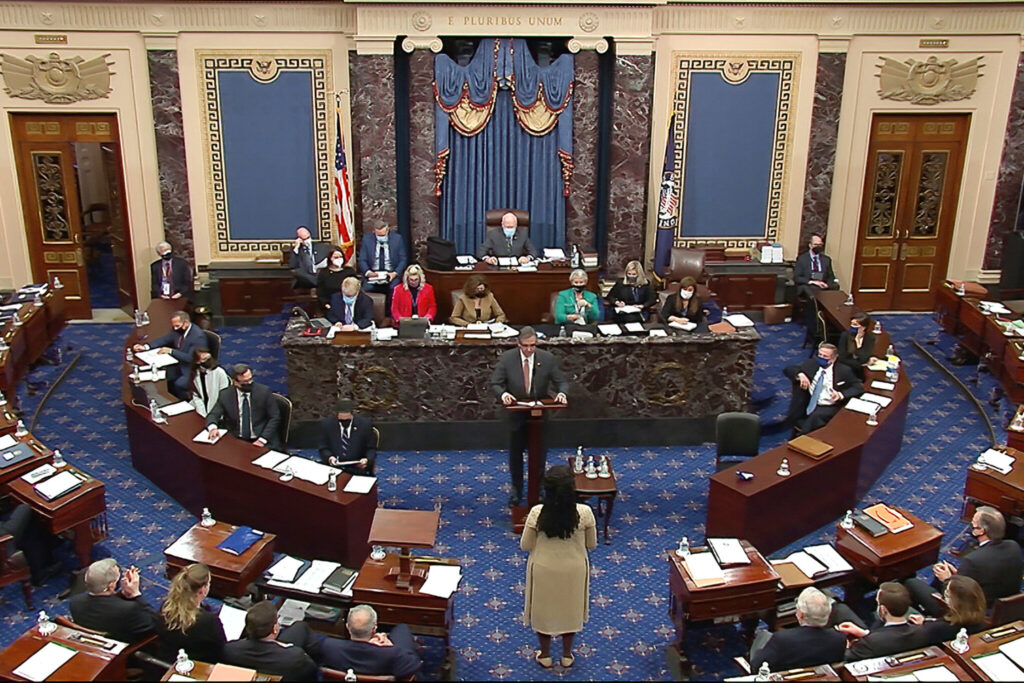

California Assemblyman James Gallagher won Tuesday’s special election to complete the remainder of the late Congressman Doug LaMalfa’s term, securing an outright victory without the need for a runoff. Early election results showed Gallagher receiving more than 60% of the vote, surpassing the majority threshold required to win the seat immediately.
READ MORE: NEW: Infamous ‘Squad’ Candidate Loses Primary Race
The special election was held following the passing of Rep. Doug LaMalfa, who represented California’s 1st Congressional District for more than a decade. LaMalfa, a longtime Republican lawmaker, served the district since 2013 and was widely recognized for his work on agricultural, water, and rural policy issues.
After the election results became clear, Gallagher expressed gratitude to voters and reflected on LaMalfa’s influence on his career. Gallagher has represented portions of Northern California in the State Assembly since 2014 and has built a legislative record focused on issues affecting rural communities, public safety, infrastructure, and economic development.
The election also determined which candidates would advance to the November general election for a full term in the newly redrawn 1st Congressional District. Gallagher and Democratic State Senator Mike McGuire secured the top positions and are expected to face each other in the general election later this year.
While Gallagher maintained a lead in both contests, political observers note that the updated district boundaries may create a more competitive environment than in previous election cycles. Both parties are expected to invest resources in the race as they seek to appeal to voters across the district’s diverse communities.
The outcome slightly reduces the number of vacant seats in the U.S. House of Representatives and comes as several special elections are being held across the country. Additional congressional vacancies are expected to be filled in upcoming elections, as both parties continue efforts to strengthen their positions ahead of the next session of Congress.
| Social Security’s Biggest 2026 Rule Change Just Handed 3 Million Retirees Thousands in Back Pay The Quiet Windfall Hiding in Public Sector Pensions Millions of retired public workers are seeing larger Social Security payments in 2026 thanks to one of the most significant retirement policy changes in decades. The update stems from the full implementation of the Social Security Fairness Act, a law that eliminated two long-standing provisions that had reduced benefits for many teachers, firefighters, police officers, postal workers, and other public-sector employees. For years, retirees who received pensions from jobs that did not pay into Social Security often saw their federal retirement benefits reduced. Many affected workers planned their retirement finances around those lower payments. Now, eligible retirees are receiving retroactive payments and larger monthly checks, creating a substantial financial boost for millions of households. The change impacts an estimated 3 million Americans and includes back payments dating to January 2024. Some beneficiaries have already reported receiving unexpected deposits followed by notices showing higher monthly benefit amounts. Others may still be waiting for adjustments as records continue to be reviewed. Retirement experts say the new law represents one of the largest benefit expansions for public-sector retirees in recent history. Individuals who previously delayed filing for certain Social Security benefits because of expected reductions may also want to review their eligibility under the updated rules. For retirees and surviving spouses who worked in public-sector positions, the law could significantly increase retirement income over the coming years. Those who believe they may qualify are encouraged to review their records and contact the Social Security Administration if they have not received updated information. What WEP and GPO Did, and Why Repeal Matters The two provisions eliminated by the Social Security Fairness Act were known as the Windfall Elimination Provision (WEP) and the Government Pension Offset (GPO). Both were designed decades ago to adjust Social Security benefits for individuals receiving pensions from employment not covered by Social Security taxes. Under WEP, workers who earned pensions from non-covered jobs often received reduced Social Security retirement benefits based on other employment. GPO affected spousal and survivor benefits, reducing or eliminating payments for many retirees whose spouses had paid into the Social Security system. Supporters of the repeal argued that the provisions unfairly penalized public servants who spent years working in education, public safety, and government service. Critics maintained that the rules created confusion and reduced benefits for retirees who had contributed to Social Security through other jobs during their careers. With the repeal now in effect, eligible retirees may receive retroactive payments covering previously reduced benefits. In addition, many are seeing permanent increases in their monthly Social Security checks moving forward. Experts note that some individuals who never applied for spousal or survivor benefits because they expected them to be reduced should consider reviewing their eligibility. The new rules may create opportunities that were unavailable under the previous system. The Social Security Administration continues processing updates, and retirees are encouraged to verify that their records accurately reflect their work history and pension status. The Other 2026 Updates That Add Up While the Social Security Fairness Act has received significant attention, several other changes are also affecting retirees in 2026. The annual cost-of-living adjustment (COLA) increased benefits by 2.8% beginning in January, providing additional monthly income for beneficiaries across the country. Although modest compared to some recent years, the adjustment helps offset rising living expenses. The taxable wage base also increased, meaning higher-income workers pay Social Security taxes on a larger portion of their earnings. In addition, earnings limits for retirees who have not yet reached full retirement age were adjusted upward. Maximum retirement benefits have also increased, reinforcing the long-standing financial advantage of delaying benefits beyond full retirement age for those who are able to do so. Meanwhile, policymakers continue monitoring the long-term financial outlook for Social Security as lawmakers debate potential solutions to future funding challenges. Together, these updates make 2026 an important year for retirement planning and benefit management. What to Do With This Anyone who has worked in public-sector employment or receives a government pension should review how the Social Security Fairness Act may affect their benefits. This is especially important for retirees who previously experienced reductions under WEP or GPO. Beneficiaries should log into their Social Security accounts, review recent payment records, and verify whether adjustments have already been made. In some cases, additional documentation or follow-up may be necessary. Surviving spouses, divorced spouses, and retirees who were previously told they were ineligible for certain benefits may wish to reassess their eligibility under the updated law. Financial advisors also recommend incorporating any new benefit amounts into broader retirement planning strategies, including budgeting, investment decisions, and long-term income planning. While larger monthly benefits can improve retirement security, experts caution that retirees should continue maintaining diversified income sources whenever possible. For millions of Americans, however, the Social Security Fairness Act represents a meaningful change that could provide additional financial stability for years to come. Released: The Ultimate Guide To Retirement Income Many investors spend decades building retirement savings but devote far less time to planning how those assets will generate dependable income after they stop working. Financial professionals often emphasize that the transition from accumulating wealth to creating sustainable retirement income is one of the most important stages of financial planning. Understanding Social Security benefits, pension income, investment withdrawals, and healthcare expenses can play a major role in long-term financial success. As retirement rules continue to evolve, staying informed about policy changes and benefit updates can help retirees make more confident decisions about their financial future. For individuals approaching retirement or already receiving benefits, developing a comprehensive income strategy remains one of the most valuable steps they can take. With major Social Security changes now taking effect, many retirees are finding new opportunities to strengthen their financial outlook and maximize available benefits. Disclosure: The opinions, analyses, and evaluations here are ours and not provided by any bank, financial institution, or any other company. They have not reviewed, approved or endorsed our content. |

Benjamin Harris is a RapidReports front page contributor and editor,proud father of four.