Oil Prices Sink as Trump Peace Deal Delivers Major Win for Energy Markets
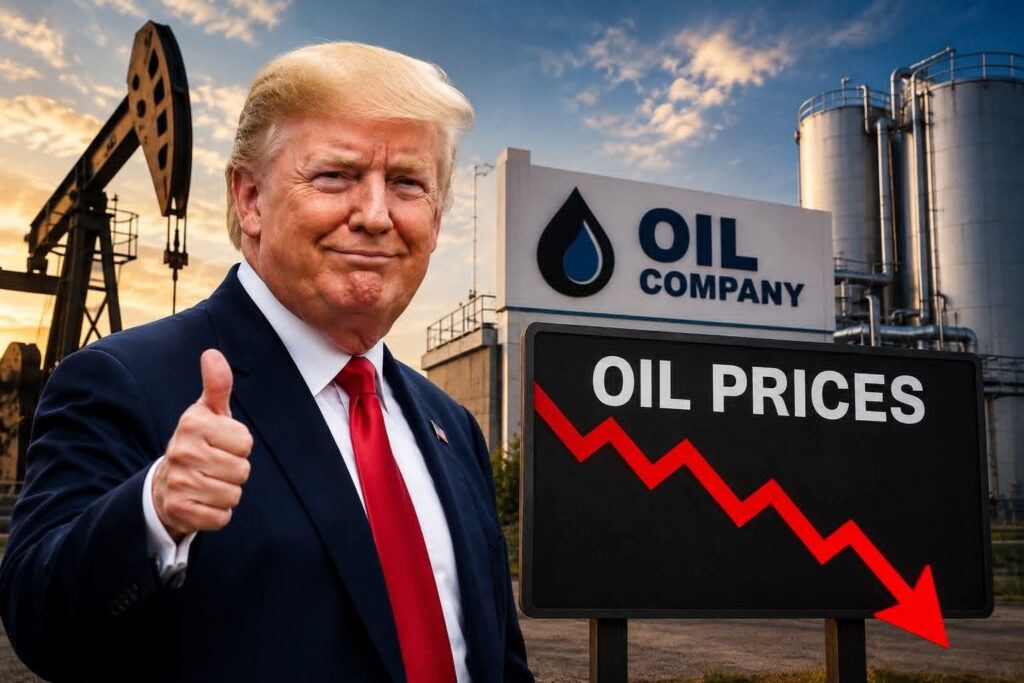
Global oil prices have fallen to their lowest levels in months following President Donald Trump’s announcement that a breakthrough peace agreement with Iran is moving toward final approval, easing concerns that had rattled energy markets for much of the year.
The sharp decline represents a major victory for consumers, businesses, and investors who have watched energy costs surge amid escalating tensions in the Middle East. Financial markets responded positively as traders began pricing in the possibility of restored stability across one of the world’s most critical energy corridors.
Earlier this year, fears of a wider regional conflict sent crude oil prices soaring after disruptions threatened shipping through the Strait of Hormuz, a strategic passage responsible for transporting roughly one-fifth of the world’s oil supply. At the height of market uncertainty, Brent crude briefly surged above $100 per barrel, while investors braced for prolonged supply shortages.
Under President Trump’s leadership, however, diplomatic efforts continued alongside a strong national security strategy aimed at restoring stability and protecting global energy flows. Supporters argue that the administration’s approach combined strength with negotiation, creating conditions for a breakthrough agreement.
Following Trump’s announcement that a memorandum of understanding is expected to be finalized, energy traders rapidly adjusted expectations. Brent crude has fallen into the mid-$80 range, while West Texas Intermediate (WTI) crude has dropped into the low $80s, marking a significant retreat from the highs reached during peak conflict concerns.
The decline is particularly important for American families. Lower oil prices often translate into reduced gasoline costs, lower transportation expenses, and relief from inflationary pressures that impact everything from food prices to manufacturing and shipping costs.

[poll id=”2″]
Energy analysts point to the anticipated reopening of the Strait of Hormuz as one of the most significant factors driving the market’s reaction. The restoration of unrestricted commrcial shipping could help normalize global supply chains and reduce risk premiums that had been built into energy prices.
The proposed agreement reportedly includes measures designed to prevent future escalation, strengthen regional stability, and address concerns surrounding Iran’s nuclear activities. Market participants view these developments as positive indicators for long-term energy security and international commerce.
For investors, the recent decline in crude prices highlights the powerful relationship between geopolitics and financial markets. Energy stocks, commodity traders, transportation companies, and manufacturing sectors are all closely monitoring developments as negotiations move toward completion.
If the agreement is formally signed as expected, many analysts believe additional economic benefits could follow, including lower fuel costs, improved market confidence, and stronger global growth prospects. For supporters of President Trump, the market’s response represents another example of how strong leadership, strategic diplomacy, and an America First approach can produce meaningful results for both the U.S. economy and global stability.

Benjamin Harris is a RapidReports front page contributor and editor,proud father of four.