Democratic Divisions Grow as More House Candidates Refuse to Back Hakeem Jeffries for Speaker
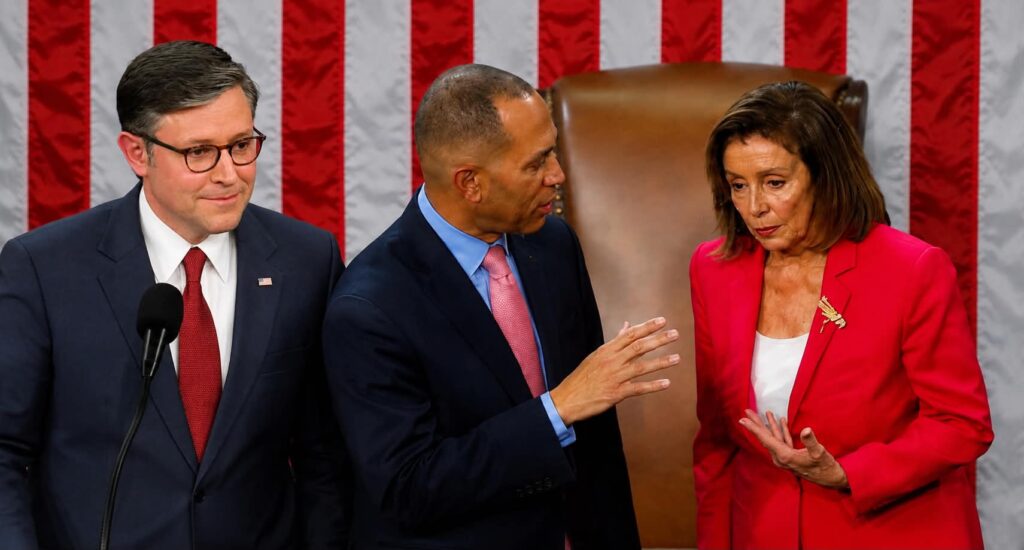
House Minority Leader Hakeem Jeffries is facing a growing challenge from within his own party as an increasing number of Democratic congressional candidates decline to commit to supporting him for Speaker of the House if Democrats regain control in November.
The hesitation marks a notable shift for Jeffries, who has long been viewed as one of the Democratic Party’s most secure leaders. As Democrats campaign to win back the House majority, questions are emerging about whether party leadership can maintain unity amid mounting disagreements over strategy, messaging, and priorities.
[poll id=”4″]
While Jeffries’ allies argue that concerns are being overstated, recent comments from candidates across the country suggest that support for his leadership is no longer automatic.
According to reports, dozens of Democratic candidates have either declined to endorse Jeffries for Speaker or indicated they remain undecided.
Candidates Distance Themselves from Party Leadership
In several key battleground districts, Democratic nominees have stopped short of pledging support for Jeffries.
In New Jersey’s 7th Congressional District, Democratic nominee Rebecca Bennett refused to commit to backing Jeffries before securing her primary victory. The seat is considered critical to Democratic hopes of winning a House majority.
Similarly, Iowa Democratic nominee Christina Bohannan said she has not yet decided whether she would support Jeffries for Speaker.
“I want to get elected first,” Bohannan said when asked about the leadership question.
Political analysts consider both races among the most competitive contests in the country.
Montana Democratic candidate Sam Forstag also declined to make a commitment, saying he would support whichever leader best represents working Americans.
“I’m not committing to anyone one way or the other,” Forstag said.
Progressive Wing Increasingly Frustrated
The strongest criticism has come from progressive candidates who argue that Democratic leadership has failed to effectively challenge President Donald Trump and Republican policies.
California congressional candidate Mai Vang openly criticized both Jeffries and Senate Democratic leadership, arguing that voters are demanding a new direction.
“The Democratic Party and its leadership have failed to mobilize meaningful opposition,” Vang said, adding that she could not support the current leadership structure.
Other progressive candidates have echoed similar concerns, suggesting that grassroots voters want more aggressive leadership and clearer policy priorities.
Leadership Questions Reflect Broader Party Challenges
The growing reluctance to endorse Jeffries highlights deeper divisions within the Democratic coalition.
Moderates, progressives, and establishment Democrats continue to disagree on key issues ranging from economic policy to foreign affairs and campaign strategy.
Some candidates argue that Democratic leaders have struggled to connect with working-class voters and have failed to present a unified vision heading into the election cycle.
Others remain supportive of Jeffries, pointing to his efforts to keep the caucus together during difficult legislative battles and government funding negotiations.
New York candidate Alex Bores praised Jeffries for managing a difficult leadership role and indicated he would support him if elected.
Republicans See Opportunity
For Republicans, the emerging divisions provide fresh evidence that Democrats remain divided over their future direction.
GOP strategists have increasingly argued that internal disagreements on leadership and policy could make it more difficult for Democrats to present a unified message to voters.
As the election season intensifies, the debate over Democratic leadership is likely to remain in the spotlight. Whether Jeffries can maintain support within a potentially expanded caucus may become one of the most important political questions facing House Democrats.
With control of Congress potentially hanging in the balance, voters are witnessing a growing debate over who should lead the Democratic Party—and what direction it should take moving forward.

Benjamin Harris is a RapidReports front page contributor and editor,proud father of four.