Trump Signals Strait of Hormuz Deal Could Arrive Wednesday — and Issues a Clear Warning
[poll id=”4″]
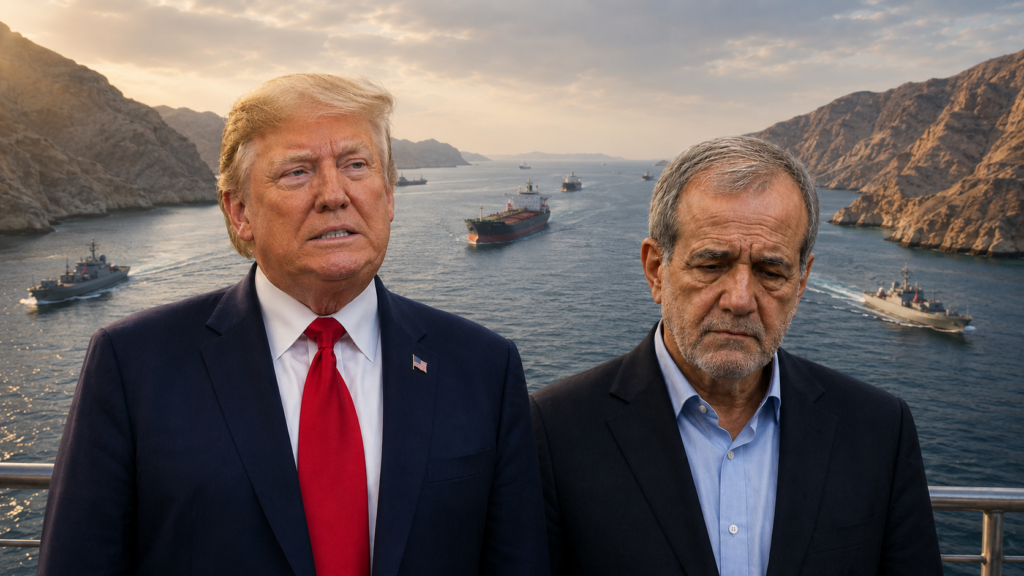
President Donald Trump has put the world on notice regarding one of the most strategically vital waterways on the planet. In recent remarks, he indicated that a deal involving the Strait of Hormuz could come as early as Wednesday. He paired that optimism with a blunt warning: “If they back out again, they are going to get hit really hard.”
The statement is classic Trump — direct, unapologetic, and focused on results. It reflects a governing style that prioritizes American leverage, energy security, and the willingness to back diplomacy with credible consequences. For conservatives who have long argued that strength deters aggression more effectively than endless process, the message lands with clarity.
The Strait of Hormuz is not an ordinary shipping lane. It is the narrow chokepoint through which a significant share of the world’s oil supply passes every day. Disruptions there send immediate shockwaves through global energy markets, raise prices at the pump for American families, and create uncertainty for industries that depend on stable fuel costs. Any serious negotiation involving the strait therefore carries weight far beyond the immediate parties at the table.
Trump’s comment that a deal “could come Wednesday” suggests active diplomacy is underway and that a concrete outcome is within reach. At the same time, the explicit warning against another walk-back signals that the United States is not prepared to tolerate endless delays or bad-faith maneuvers. In Trump’s framing, negotiations are not open-ended theater. They are time-sensitive efforts backed by the credible threat of consequences if the other side fails to follow through.
This approach stands in contrast to periods when American policy appeared more focused on process than outcomes. Extended talks without firm deadlines or clear penalties often invite the other side to test limits, extract concessions, or simply run out the clock. By pairing the prospect of a near-term deal with a straightforward warning, Trump is attempting to change the incentive structure. The message is that good-faith agreement will be met with engagement, while repeated retreats will trigger a response.
Energy security remains a core conservative priority for good reason. When oil prices spike because of instability in critical waterways, the costs land first on working families, truckers, manufacturers, and small businesses. A president who treats the free flow of energy as a national interest rather than a secondary concern is operating from a different set of assumptions than those who treat energy markets as primarily climate or diplomatic variables. Trump’s focus on the Strait of Hormuz fits within a broader record of treating energy abundance and secure supply routes as strategic assets.
The warning language — “they are going to get hit really hard” — will be parsed carefully by foreign capitals and by critics at home. Supporters hear a necessary restoration of deterrence. They argue that ambiguity and hesitation have historically invited testing of American resolve. Clear statements of consequence, in this view, reduce the likelihood that force will actually be required. Critics may characterize the rhetoric as escalatory. Yet the alternative — vague assurances and open-ended timelines — has its own track record of failure in high-stakes regions.
Presidential leadership on issues like the Strait of Hormuz also affects alliances. Partners who rely on the same shipping lanes watch closely to see whether the United States is prepared to defend shared interests or whether it will prioritize short-term diplomatic optics. A posture that combines openness to deals with readiness to impose costs if deals collapse can reassure allies that American commitments are not purely rhetorical.
The timing of Trump’s remarks adds further weight. By pointing to a possible Wednesday timeline, he creates a near-term test of seriousness on the other side. If a deal materializes, it will be presented as evidence that pressure and clear deadlines can produce results. If the other side backs out again, the warning has already been issued in public. That sequence leaves little room for claims of surprise or mixed signals.
Domestically, the issue intersects with ongoing debates about energy policy, inflation, and national strength. Voters who experienced high fuel prices in recent years understand the connection between distant chokepoints and the cost of filling a tank or heating a home. A president who treats those connections as central rather than peripheral is speaking to concerns that resonate beyond foreign-policy circles.
Trump’s style on these matters has always been distinctive. He prefers short, memorable statements over lengthy diplomatic formulations. He is willing to name consequences in public rather than reserving them for private channels. That approach generates both strong support and strong criticism. What it does not generate is ambiguity about where he stands. In the case of the Strait of Hormuz, the position is straightforward: a deal is possible soon, and further retreats will carry a price.
As the possible Wednesday timeline approaches, attention will turn to whether the other side responds with seriousness or with another delay. The American position, as articulated by the president, is already on the record. Diplomacy remains available. So do consequences. That combination is the essence of leverage.
For those who believe American power is most effective when it is both capable and clearly signaled, Trump’s remarks fit a consistent pattern. The Strait of Hormuz matters because energy markets matter, because allies matter, and because credibility matters. A president who treats those realities as non-negotiable is operating from first principles that many conservatives have long defended.
The coming days will test whether the prospect of a deal and the warning against backing out produce movement. In the meantime, the statement itself has already clarified the stakes. The world’s most important oil transit route is once again at the center of high-level attention, and the United States is speaking in terms of both opportunity and resolve.

Benjamin Harris is a RapidReports front page contributor and editor,proud father of four.