Trump Puts U.S. Attorney Jeanine Pirro on Notice After Prosecutors Drop Lincoln Memorial Vandalism Case
[poll id=”4″]
President Donald Trump has made it clear he is not satisfied with how federal prosecutors handled a high-profile vandalism case involving the newly renovated Lincoln Memorial Reflecting Pool. After his office abruptly dropped felony charges against former U.S. Olympian David Hearn, Trump met with U.S. Attorney Jeanine Pirro at the White House and later told reporters he has not decided whether she will keep her job.
Asked in Los Angeles on Tuesday whether Pirro was “safe,” the president left her future deliberately uncertain. “I haven’t made a determination,” Trump said before boarding Air Force One. “I told her I was not happy.”
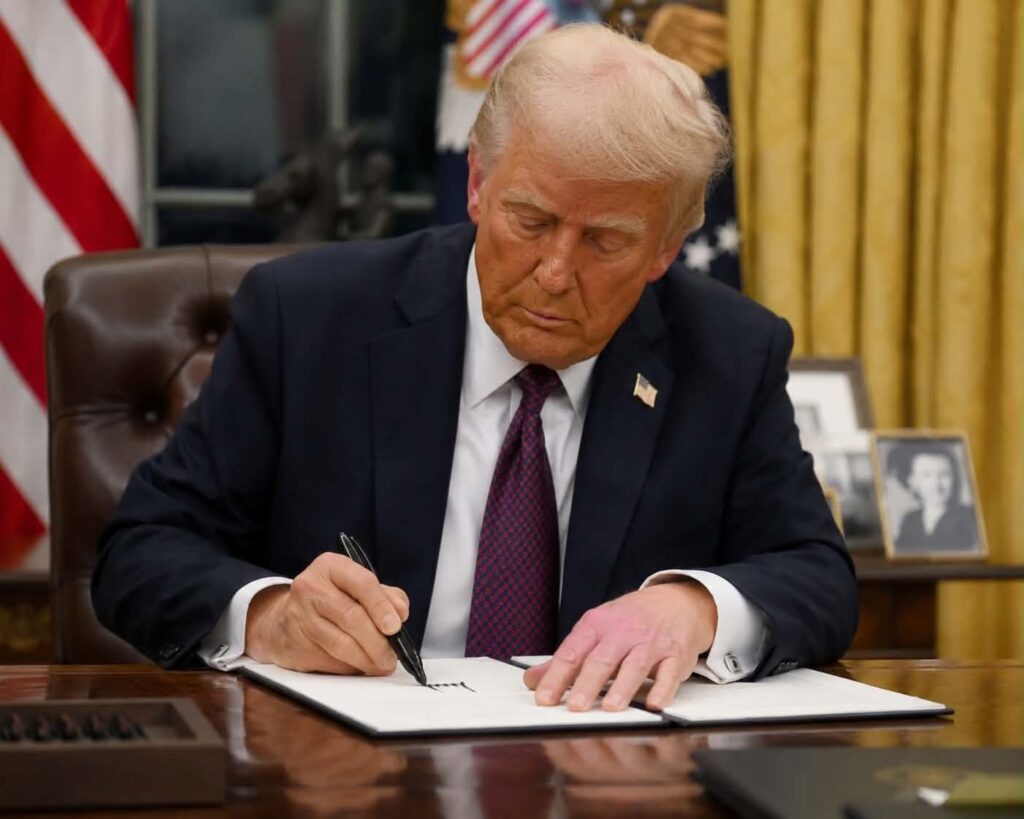
The comments follow a sharp public rebuke. During an Oval Office appearance Monday, Trump unloaded on the decision, saying he was “really disappointed with Jeanine Pirro.” He accused her of folding under pressure. “She folded like an umbrella, and people get away with things, and it’s a disgrace.” He went further: “Frankly, I think she choked. I don’t know what the hell happened.”
Trump has stood firmly by his assessment of the underlying incident. He maintains that the reflecting pool was deliberately damaged and has defended the contractors who completed the $16 million renovation. “I just think she was totally wrong. They did a beautiful job, there were a couple of little things but that was not a big deal and everybody saw the vandalism, all you have to do is look at the tape,” he said. “Plus, we have a witness or two witnesses that saw the vandalism, so certainly there was vandalism. In my opinion, it was major vandalism.”
The case itself began when U.S. Park Police arrested Hearn after he was seen reaching into the reflecting pool and examining a section of its detached liner. He was later indicted on one felony count of property destruction and pleaded not guilty. The charge carried a potential sentence of up to 10 years in prison, and a trial had been scheduled for September 28.
Prosecutors moved to dismiss the case on Friday, citing newly discovered evidence they said weakened the indictment. Court documents argued that the damage may have resulted from installation problems rather than vandalism. “Given all of this newly discovered information, it is difficult to attribute the widespread damage to the Reflecting Pool to vandalism, let alone to establish that fact beyond a reasonable doubt,” the filing stated.
Hearn’s attorneys have now asked a judge to dismiss the case permanently. In a 28-page motion filed Tuesday in D.C. Superior Court, the defense argued that the pool liner was already failing before their client touched it and that federal prosecutors ignored publicly available photographs, videos, and reports documenting problems with the pool. “From the outset, the evidence showed that the pool liner was already failing and that Mr. Hearn did not cause the damage alleged in the indictment,” the motion stated. The defense further accused the government of rushing to indict without properly evaluating the available information.
Pirro, a former judge, district attorney, and Fox News host, was appointed U.S. attorney for Washington in May 2025 after Trump’s first choice, Ed Martin, encountered resistance from Republican senators. The reflecting pool controversy is the latest difficulty for her office, which has also struggled to secure indictments in several politically charged cases involving prominent opponents of the president.
From a conservative perspective focused on accountability and the rule of law, the episode raises familiar concerns. National monuments and public spaces belong to the American people. When damage occurs—especially shortly after a major renovation—citizens expect a thorough investigation and, where the evidence supports it, vigorous prosecution. Dropping a felony charge after an indictment, particularly when the president and others point to video and witness accounts, invites questions about whether the threshold for accountability has been set too high or applied too unevenly.
Prosecutorial discretion is a real and necessary part of the justice system. Evidence can evolve. New information can weaken a case. Yet when the public sees a high-profile matter involving a national landmark dismissed after the president has publicly described it as major vandalism, confidence in even-handed enforcement can suffer. Trump’s frustration reflects a broader demand that federal prosecutors treat damage to public property with seriousness rather than defaulting to the path of least resistance.
The president’s refusal to guarantee Pirro’s continued tenure also sends a signal about standards inside his administration. Longtime allies are not exempt from scrutiny when decisions appear to undermine the commitment to law and order. By meeting with Pirro, expressing disappointment directly, and then declining to offer public reassurance, Trump is applying pressure for results rather than relationships. That approach may create short-term tension, but it aligns with a governing philosophy that prioritizes outcomes over personal loyalty when the two conflict.
The Lincoln Memorial Reflecting Pool is more than a construction project. It is part of a site that draws millions of visitors and stands as a symbol of American history and civic identity. Allowing significant damage—whether from vandalism, negligence, or a combination of factors—to go without clear accountability risks normalizing a lower standard of care for public assets. Trump’s insistence that the video and witnesses establish vandalism keeps the focus on observable evidence rather than legal technicalities alone.
As the defense seeks permanent dismissal and federal prosecutors defend their decision to drop the charge, the underlying dispute remains unresolved in the public eye. Was the liner already failing, as the defense and the dismissal filing suggest? Or does the available video and witness testimony support the claim of deliberate damage? Those questions deserved careful examination before an indictment was secured and before it was abandoned.
For now, the immediate consequence is political and institutional. A U.S. attorney who once enjoyed the president’s confidence finds her position uncertain. A felony case that once carried the possibility of a significant prison sentence has been dropped. And a president who campaigned on restoring accountability has made clear he views the outcome as a failure of nerve.
The coming days will determine whether Pirro remains in her post and whether any further review of the reflecting pool incident occurs. What is already established is the president’s position: he believes vandalism took place, he believes the case should have been pursued, and he is prepared to hold the responsible prosecutor to account for the decision to walk away. In an era when many Americans question whether the justice system applies rules evenly, that stance resonates with those who want public property protected and the law enforced without apology.

Benjamin Harris is a RapidReports front page contributor and editor,proud father of four.