JD Vance: America Will Use Every Tool — Military, Economic, and Diplomatic — to Resolve the Iran Conflict
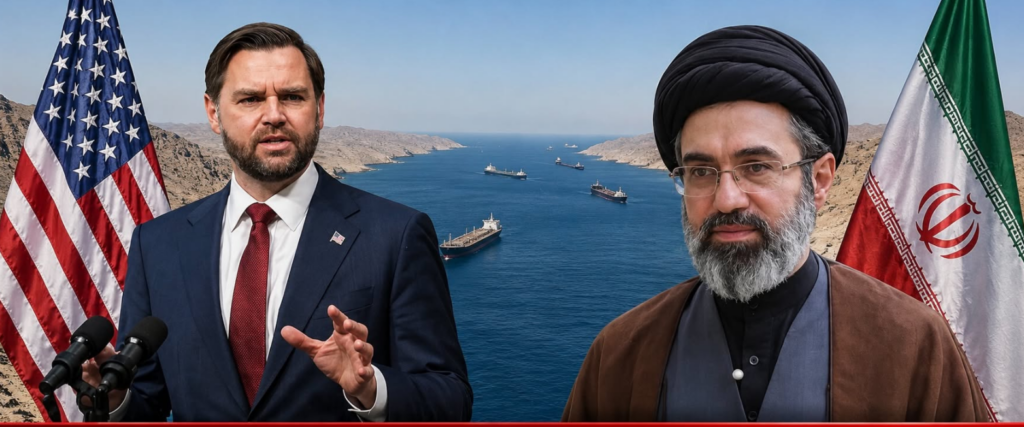
Vice President JD Vance delivered a clear and unapologetic assessment of the ongoing Iran challenge in a Fox News interview on Wednesday. The United States, he said, intends to employ the full range of American power — military, economic, and diplomatic — to bring the conflict to a resolution. When asked about setbacks in negotiations, Vance offered a blunt diagnosis rooted in realism rather than wishful thinking.
“Number one, the Iranians are extraordinarily difficult people. Number two, they have a fractured system,” Vance stated. He elaborated that internal divisions complicate any deal: “There are people within their system that want the war to be over and there are also people in their system that are crazy radicals who want the war to continue.”
The remarks reflect a governing philosophy that treats Iran as a serious adversary rather than a partner in waiting. For conservatives who have long argued that the Islamic Republic responds more to pressure than to concessions, Vance’s comments signal continuity with a maximum-pressure approach. Diplomacy remains on the table, but it is backed by economic leverage and the credible threat of military force. That combination is designed to change the calculations of a regime that has repeatedly tested American resolve.
Iran’s negotiation history provides ample reason for skepticism. Successive American administrations have encountered delays, demands for sanctions relief upfront, and a pattern of advancing nuclear and regional capabilities while talks drag on. Vance’s description of the Iranians as “extraordinarily difficult” acknowledges that reality without diplomatic softening. It rejects the notion that goodwill alone will produce breakthroughs. Instead, it places the burden on Tehran to demonstrate seriousness while Washington retains the ability to impose costs.
The second factor Vance identified — a fractured internal system — is equally important. Authoritarian regimes are rarely monolithic. Factions compete for influence, resources, and ideological primacy. In Iran’s case, the existence of elements that prefer continued confrontation alongside those who may favor de-escalation creates both opportunity and danger. Opportunity exists if pressure can strengthen the hand of those who want an end to conflict. Danger persists if the radical faction retains the ability to sabotage any agreement or simply outlast negotiations.
By openly naming this dynamic, Vance is refusing to treat the Iranian government as a unitary rational actor that will inevitably choose compromise. That candor is useful. It prepares the public and allies for the possibility that progress will be uneven and that hardliners inside Iran may prefer perpetual tension. It also justifies a strategy that does not rely solely on the goodwill of the most moderate voices in Tehran.
The multi-tool approach Vance outlined is central to the administration’s posture. Economic pressure, primarily through sanctions, aims to constrain the regime’s resources and raise the domestic cost of confrontation. Diplomatic engagement keeps channels open and creates space for any genuine willingness to de-escalate. Military tools remain available as the ultimate backstop, ensuring that Iran cannot assume American restraint is infinite. This layered strategy is intended to avoid the twin failures of pure engagement without leverage and pure isolation without off-ramps.
Critics of robust pressure often argue that it hardens Iranian resolve or empowers hardliners. Supporters counter that the opposite has been true: periods of reduced pressure have coincided with expanded Iranian influence across the region, advances in nuclear capabilities, and continued support for proxy forces. Vance’s framing aligns with the latter view. When the United States signals that every instrument of national power is available, the regime faces a clearer set of incentives.
Regional implications remain significant. Iran’s activities affect the security of Israel, the stability of Gulf partners, the flow of energy through critical waterways, and the broader balance of power in the Middle East. A strategy that combines economic, diplomatic, and military tools seeks to constrain those activities without committing the United States to open-ended conflict. The goal, as Vance described it, is resolution — not management of a permanent low-level crisis.
Domestically, the vice president’s comments reinforce a message of strength and clarity. American voters have repeatedly shown concern about foreign adversaries who appear to advance while Washington debates. By stating that the United States will use all available tools and by refusing to sugarcoat the difficulty of dealing with Tehran, Vance is speaking to those concerns directly. The language is not polished for international audiences. It is straightforward, and that is part of its force.
The fractured nature of the Iranian system also underscores why deadlines and consequences matter. If some factions want the conflict to continue, open-ended talks without pressure risk becoming a tool for those factions rather than a path to resolution. Linking diplomacy to economic and military leverage is an attempt to prevent that outcome. It raises the cost of obstruction and creates incentives for those inside the system who prefer an end to hostilities.
As the administration continues its efforts, the test will be consistency. Economic pressure must be sustained. Diplomatic openings must be real but not open-ended. Military readiness must remain credible. Vance’s interview suggests the administration understands these requirements. It also suggests a refusal to pretend that Iran is an easy negotiating partner or a regime free of radical elements determined to prolong confrontation.
The vice president’s assessment is grounded in the record of past negotiations and the observable internal dynamics of the Iranian government. It rejects both naïve optimism and pure fatalism. Diplomacy is possible. Progress is not guaranteed. The United States will not limit itself to a single instrument of power. That posture, if maintained, offers the best chance of forcing a resolution rather than accepting permanent tension on terms set by Tehran’s hardliners.
In the end, Vance’s message is one of realism backed by capability. The Iranians are difficult. Their system is fractured. Some want the conflict to end; others want it to continue. The United States, he made clear, is prepared to use military, economic, and diplomatic tools to shape the outcome. For those who believe American interests are best served by clarity and strength rather than endless process, the statement marks a welcome dose of candor.
Benjamin Harris is a RapidReports front page contributor and editor,proud father of four.