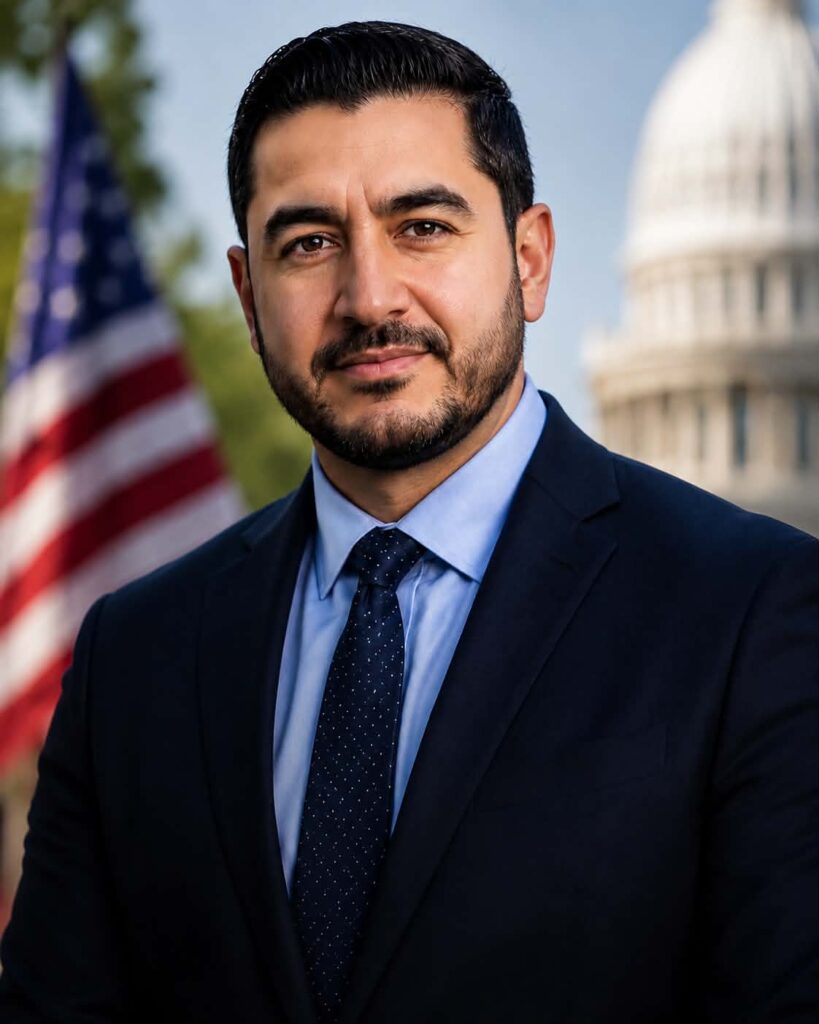
Abdul El-Sayed Democratic Senate Nominee ( Rapid Reports Photo – Benjamin Harris )
New Scrutiny on Abdul El-Sayed’s Fundraising Network as Republicans Move to Define Michigan Senate Race
[poll id=”4″]
A new report is forcing renewed attention onto the fundraising behind Michigan Democratic Senate nominee Abdul El-Sayed just days after he secured his party’s nomination. With one of the nation’s most competitive Senate races now underway, Republicans are intensifying efforts to define the candidate on the sources of his support and his past associations. The focus has landed squarely on donations linked to the Council on American-Islamic Relations, commonly known as CAIR, an organization that has faced years of political and legal controversy.
According to a Fox News Digital review, El-Sayed’s campaign has received more than $115,000 from individuals who currently work for, previously worked for, or have held leadership positions with CAIR. At least 41 donors connected to the organization contributed, including several senior officials. Among those identified were CAIR National Board Chair Manal Fakhoury, National Board Treasurer Eyas Abdeen, National Vice Chair Emad Sabbah, and CAIR-Michigan board member Jukaku Tayeb.
Tayeb’s role stands out. He is El-Sayed’s father-in-law and has also been one of the largest financial supporters of a super PAC backing the Democratic nominee’s Senate campaign. Fox News Digital further reported that Tayeb serves on the founding committee of the Islamic Society of North America, citing earlier reporting from the Washington Free Beacon. Donations from CAIR-affiliated individuals arrived from multiple states, including Michigan, California, Arizona, Texas, Georgia, Washington, Illinois, Minnesota, and Ohio.
Other contributors named in the review include CAIR-California Governance Board Treasurer Rubina Alvi, Governance Board Chair Asaad Traina, CAIR-Michigan board member Muzammil Ahmed (who reportedly gave $11,600), CAIR-California board members Atef Ibrahim and Dina Ezzeddine, and former CAIR National Board Chair Roula Allouch. The report also highlighted a contribution from CAIR Executive Director Nihad Awad, whose legal name appears in Federal Election Commission records as Nehad Hammad.
Awad has drawn significant criticism for remarks following the October 7, 2023, Hamas attack on Israel. He stated he was “happy” to see Hamas break out of Gaza and argued that Israel did not have the right to self-defense as an occupying power. Those comments remain part of the public record and continue to shape how many view the organization he leads.
The fundraising connections are not the only link. El-Sayed has appeared at CAIR-sponsored events in the past. According to the Washington Free Beacon, he participated in a 2022 CAIR event as a paid speaker, where he criticized Oklahoma’s ban on Sharia law and compared it to the Trail of Tears. For a candidate who has frequently emphasized reducing the influence of money in politics, the volume and sources of these contributions invite straightforward questions about consistency.
CAIR itself has been the subject of controversy for years over allegations regarding ties to Hamas. Federal prosecutors named the organization an unindicted co-conspirator during the Holy Land Foundation terrorism financing case in 2007, although CAIR was never charged with a crime. The organization has consistently denied allegations that it supports terrorism and has challenged its designation as an unindicted co-conspirator. Fox News also noted that the United Arab Emirates designated CAIR a terrorist organization in 2014, and that officials in Florida and Texas have formally designated or labeled the organization as a terrorist entity under state actions.
In response to the Fox News Digital reporting, CAIR rejected allegations of ties to terrorism. The group pointed to its longstanding public statements condemning terrorism and antisemitism, its “Dispelling Rumors About CAIR” webpage, previous statements condemning attacks by Hamas and other groups designated as terrorist organizations by the U.S. State Department, and a 2023 statement in which Awad said he agreed with CAIR’s condemnation of attacks targeting civilians.
From a conservative perspective focused on transparency and national security, the report raises legitimate issues that voters have a right to examine. Campaign finance disclosures exist so the public can see who is underwriting candidates. When a significant portion of support comes from individuals tied to an organization with a contested record on terrorism-related matters, that information belongs in the open. El-Sayed’s decision to accept the donations, appear at CAIR events, and maintain personal connections through family does not prove wrongdoing. It does, however, create a record that opponents are entitled to highlight and that voters are entitled to weigh.
Michigan’s Senate race is expected to be among the most closely watched in the country. Control of the chamber could hinge on a handful of seats, and both parties understand the stakes. Republicans are moving early to define El-Sayed not only on his progressive policy positions but on the networks that have helped finance his rise. That strategy is standard in competitive races. What makes this instance notable is the specific character of the donor network and the candidate’s own rhetoric about money in politics.
Progressive candidates often campaign against the influence of special interests and large donors. When their own fundraising includes substantial contributions from individuals linked to a controversial advocacy organization, the contrast becomes fair game. Voters can decide whether the associations matter. They cannot decide if the information remains obscured.
The timing of the report adds weight. Coming just after El-Sayed locked up the Democratic nomination, it arrives as the general-election phase begins and both sides prepare their narratives. Republicans see an opportunity to force the conversation onto judgment, associations, and consistency. Democrats will likely argue that the focus is an attempt to smear rather than debate policy. The underlying facts, however, are drawn from public campaign finance records and prior reporting.
National security considerations further elevate the scrutiny. In an era of heightened concern about foreign influence, terrorism financing, and the reliability of advocacy groups, connections to organizations that have faced formal designations or unindicted co-conspirator status in federal cases inevitably draw attention. CAIR’s denials and public statements condemning terrorism are part of the record. So are the designations by foreign governments and certain U.S. states, the Holy Land Foundation history, and the public comments of its executive director after October 7.
El-Sayed now faces the task of addressing these questions directly or allowing opponents to define them for him. In a competitive statewide race, silence or deflection rarely ends the conversation. Full transparency about the donor network, the personal ties, and the past speaking appearances offers the cleanest path. Voters in Michigan, and those watching the national implications for Senate control, deserve a clear picture of who is backing the Democratic nominee and what those relationships entail.
The report does not allege illegal activity by the campaign. It documents a pattern of financial support from individuals connected to CAIR, personal family links, and prior public appearances. Those facts are now part of the race. How El-Sayed and his supporters respond, and how Republicans press the issue, will help shape the coming months. In a contest this consequential, the sources of a candidate’s financial support are not a distraction. They are relevant information.
Benjamin Harris is a RapidReports front page contributor and editor,proud father of four.