Rapid Reports Photo – Benjamin Harris
New Capitol Development: Utah Republican Appeals for Support of SAVE America Act

[poll id=”4″]
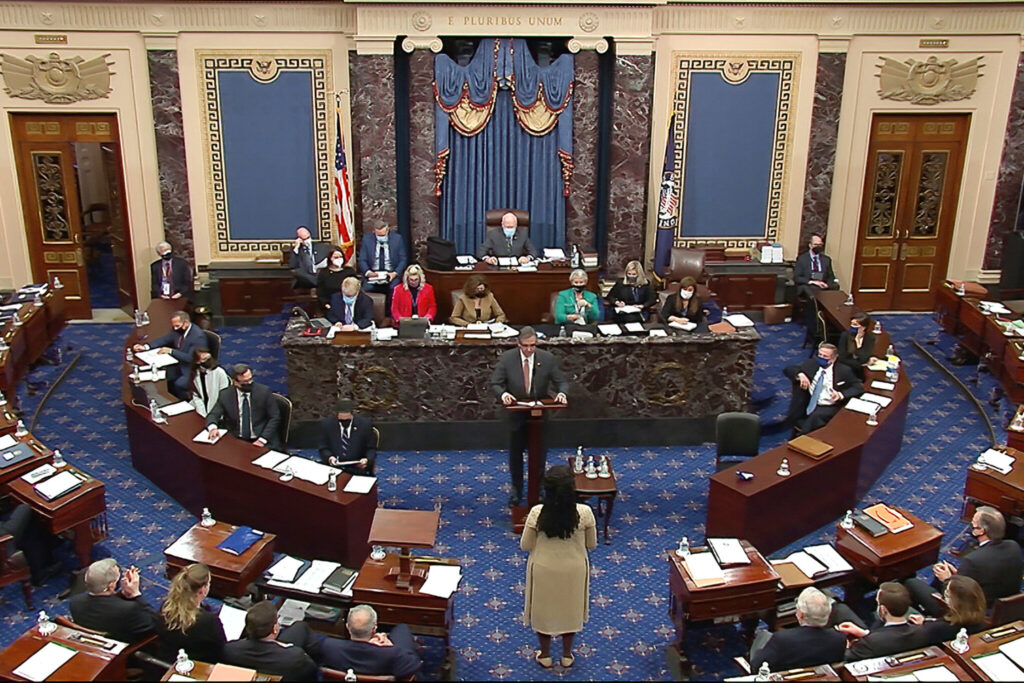
With roughly 90 days remaining before voters head to the polls in the midterm elections, pressure is mounting inside the Republican Party to advance more of President Donald Trump’s legislative priorities. Several Republican senators are now publicly urging Senate leadership to move with greater urgency, arguing that the window to deliver concrete results is closing fast as lawmakers prepare to leave Washington for the campaign season.
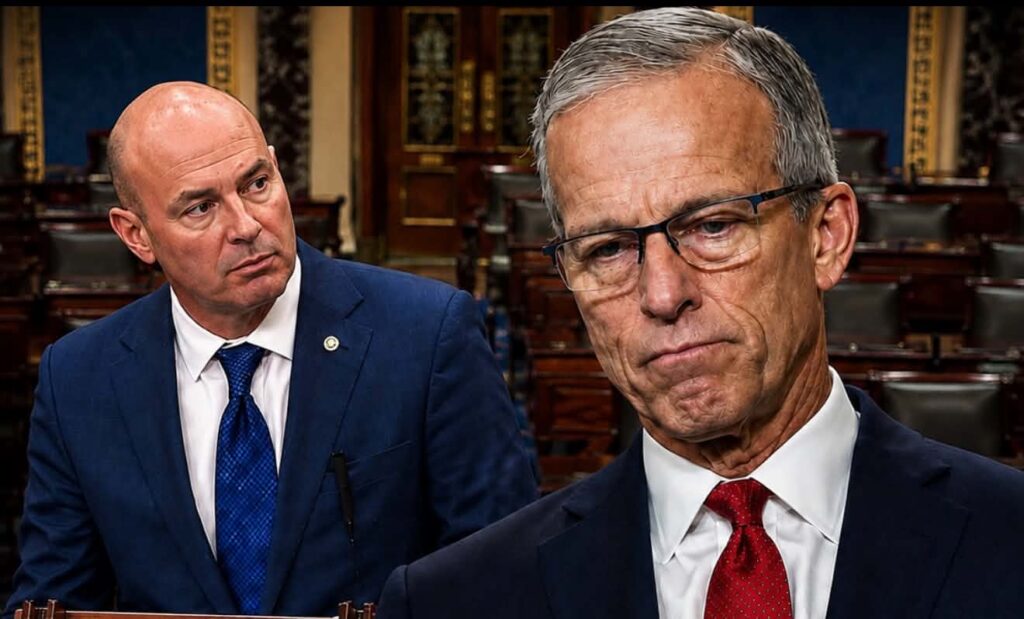
At the center of the debate is the SAVE America Act, a measure focused on strengthening election integrity through stricter voting requirements. Utah Republican Sen. Mike Lee has spent months pressing his colleagues to unite behind the bill. He has used his substantial social media following to keep the issue visible, repeatedly highlighting the need for action even as his preferred procedural paths have met resistance.
Lee has advocated alternatives such as advancing the legislation through the budget process or returning to a talking filibuster that would force senators to hold the floor and debate. Those approaches have not gained traction. Senate Republicans appear more focused on other priorities ahead of the upcoming monthlong recess, leaving Lee’s efforts struggling for broader support inside the conference.
Even a recent appeal invoking the memory of conservative activist Charlie Kirk has failed to shift the dynamic. “I suspect Charlie Kirk would want us to remain in session and either (1) pass the SAVE America Act through budget reconciliation, or (2) require filibustering senators to speak, and keep debating it until it passes,” Lee wrote in a Monday post on X. The message has not resonated widely among senators eager to shift attention elsewhere.
Senate Majority Leader John Thune has pushed back against the procedural ideas. He has insisted the bill currently lacks the necessary support in the chamber and has rejected Lee’s suggested routes around Democratic opposition. Thune has told reporters that advocates of the legislation should “turn our fire on the Democrats.” At the same time, he has described passing the measure as his top priority heading into the August recess.
President Trump has added to the pressure. In July he called on Thune to cancel the chamber’s upcoming August break until senators pass a strict proof-of-citizenship voting bill, even while acknowledging the vote count remains short. Thune’s response has been grounded in arithmetic. “It seems to me sometimes I’m the only one who can count to 50 in this town. But we don’t have the votes to get rid of the filibuster, and we aren’t flipping 10 Democrats to vote for the SAVE America Act,” he said.
Other senators are expressing similar impatience with the pace. Sen. John Kennedy of Louisiana called on Thune to move more aggressively, arguing that Republicans should stop waiting for Democratic cooperation and begin bringing major legislation to the floor. Speaking on CBS News’ Face the Nation, Kennedy offered personal praise for the majority leader while questioning the caution. “Look, I mean no disrespect. I love John Thune. He’s my leader. He’s got a big brain. He’s better looking than me, but I think he’s just being too cautious,” Kennedy said.
Kennedy framed the SAVE America Act as essential for public confidence in federal elections. “In my opinion, for both sides to have credibility in our elections, we need to do two things and only two things,” he said. Voters should prove they are eligible before registering, and election results should generally be known on Election Day or shortly afterward. “I think we can pass it … but we’re not going to know if we don’t try,” he added.
From a conservative perspective focused on election integrity and accountability to voters, the internal debate is both predictable and consequential. Proof-of-citizenship requirements and timely reporting of results address widespread public concerns about the security and transparency of the ballot box. When large numbers of Americans question whether only eligible citizens are voting and whether results can be trusted promptly, the legitimacy of the entire system comes under strain. Legislation that tightens those standards is a direct response to those concerns.
Democratic opposition has been consistent and effective. Republicans have repeatedly attempted to bring the bill up for consideration, only to encounter procedural blocks. The filibuster remains a powerful tool in the hands of the minority, and Thune’s vote-counting realism reflects the current numbers in the Senate. Yet the approaching midterms change the political calculus. Voters who supported Republicans in part because of promises on election integrity will soon render their own verdict on whether those promises produced results.
The tension between procedural caution and political urgency is familiar in Washington. Leadership must weigh the risk of failed floor votes against the risk of appearing inactive on a core priority. Rank-and-file senators closer to the base often prefer visible fights that clarify differences with the opposition. Both instincts have merit. Failed attempts can be used to highlight Democratic obstruction. Prolonged inaction can be used by critics to claim the majority is not serious about its own agenda.
Trump’s public demands raise the stakes further. By calling for the cancellation of the August recess until the bill advances, the president is applying outside pressure that leadership cannot easily ignore. The base responds to that kind of clarity. At the same time, Senate rules and the current vote math impose real constraints. Bridging that gap requires either finding additional support, changing procedural norms, or accepting that some priorities will remain unfinished before the election.
Time is the scarcest resource. With approximately 90 days until Election Day, the legislative calendar is shrinking rapidly. Once lawmakers depart for the campaign trail, the opportunity to pass major bills largely disappears until after the midterms. That reality explains the growing impatience among senators who believe election integrity legislation should not be deferred indefinitely.
The SAVE America Act’s focus on eligibility verification and prompt results is straightforward. It does not rewrite the entire election system. It targets two practical points where public confidence is most vulnerable. Kennedy’s formulation — prove eligibility before registering, and know the results quickly — captures the core of the argument in language accessible to ordinary voters. Whether that simplicity can overcome institutional resistance remains the open question.
Republicans now face a choice about how to use the remaining legislative days. They can continue internal debates over procedure and vote counts, or they can force a series of floor confrontations that put every senator on the record. The first path prioritizes avoiding losses. The second prioritizes clarity and accountability. Both carry political costs and potential benefits.
As the midterm clock ticks down, the pressure on Senate leadership will only increase. Trump wants action. Activists and several senators want action. The public record shows repeated Democratic blocks. The arithmetic shows the current limits of Republican power. How the majority navigates those competing realities in the coming weeks will help determine whether the party can claim progress on one of its signature issues before voters deliver their own judgment in November.

Benjamin Harris is a RapidReports front page contributor and editor,proud father of four.