Trump Took Secret Flight From Turkey Amid Iranian Threat, Reports Say
President Donald Trump left Turkey last month on a smaller military aircraft as part of a carefully planned security operation.
The move came after officials assessed a credible threat linked to Iran.
According to multiple news reports, including detailed accounts from The Washington Post and The New York Times, the president did not travel on the plane the White House publicly indicated at the time.
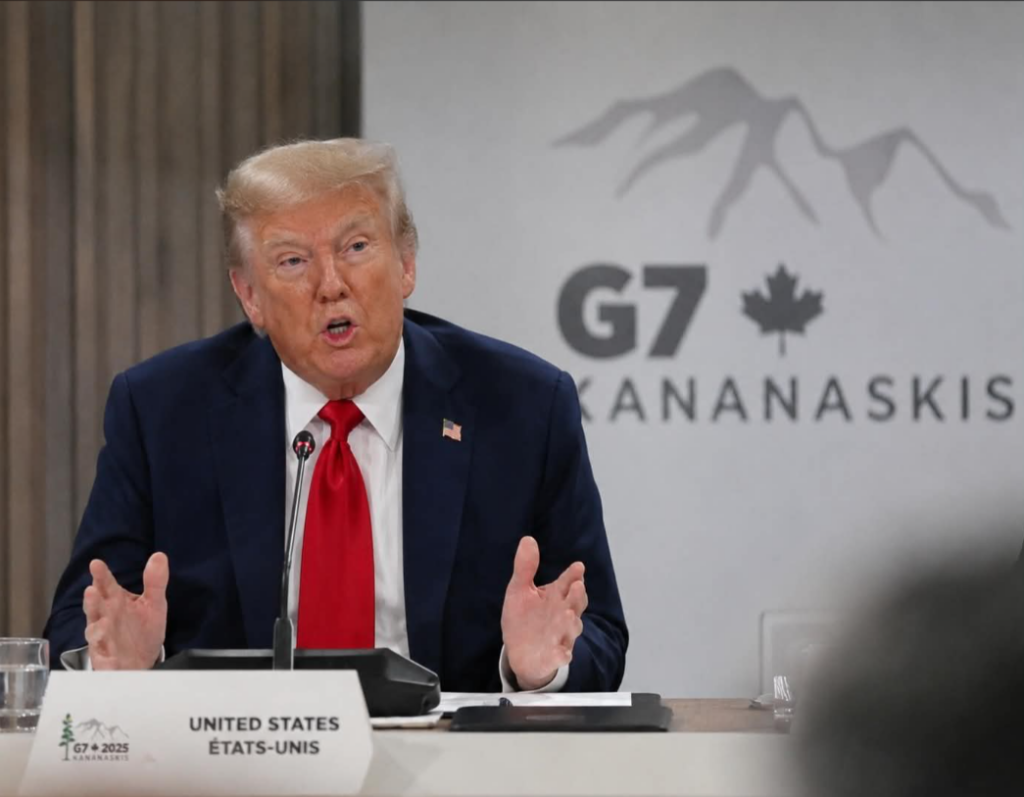
Trump had attended a NATO summit in Ankara.
He publicly boarded the older version of Air Force One in view of cameras and reporters.
Minutes later, he was transferred off that aircraft.
The transfer used an airport catering truck of the type normally employed to load meals and supplies onto planes.
The truck carried the president and a small group of aides a short distance across the tarmac to a waiting Air Force C-32A, a modified Boeing 757 often used for senior officials.
That smaller jet then flew him to Royal Air Force Mildenhall in the United Kingdom.
Meanwhile, the older Air Force One departed with journalists and some White House staff members aboard.
Those travelers believed the president was on the same flight.
They had been instructed to keep window shades closed in the press cabin, a step that helped maintain the appearance of a standard presidential departure.
The larger plane effectively served as a decoy.
After arriving in Britain, Trump was moved back to the older Air Force One.
He then appeared publicly and transferred to the newer aircraft that had been gifted by Qatar for the final leg home to the United States.
The entire sequence remained undisclosed for roughly a month until the recent reporting.
Officials cited an Iranian threat against the president or his aircraft as the reason for the extra precautions.
The operation took place against the backdrop of heightened tensions between the United States and Iran.
Turkey shares a border with Iran, adding to the sensitivity of the location.
Trump had arrived in Ankara aboard the newer Boeing 747-8.
Public statements at the time indicated he would return on the older Air Force One “for old time’s sake,” allowing the newer plane to stop at the British base so U.S. service members could view it.
Reporting later clarified that security considerations drove the more elaborate arrangements.
A similar decoy approach was used in 2000 when then-President Bill Clinton flew into Pakistan on an unmarked jet while Air Force One served as a diversion.
In this case, the plan was developed relatively quickly once the threat assessment was deemed credible.
White House communications later emphasized that the administration uses every available tool to address threats to the president.
The Secret Service declined to comment on the specific operation.
The episode highlights the complex security measures surrounding presidential travel in periods of elevated risk.
Reporters traveling with the president were not informed of the switch in real time.
Some staff members also remained unaware until later.
Flight-tracking data and subsequent reviews of the sequence supported the accounts provided by officials familiar with the arrangements.
The story underscores the constant security challenges faced by the commander in chief.
It also illustrates how standard procedures can be adjusted rapidly when intelligence indicates heightened danger.
As more details emerge from the reporting, the focus remains on the practical steps taken to ensure safe transit after the NATO gathering.
The full extent of the threat assessment has not been publicly detailed beyond the description of it as credible and linked to Iran.
Authorities continue to prioritize the protection of the president during international travel.
This latest account provides a clearer picture of the measures employed during the departure from Turkey last month.
Benjamin Harris is a RapidReports front page contributor and editor,proud father of four.