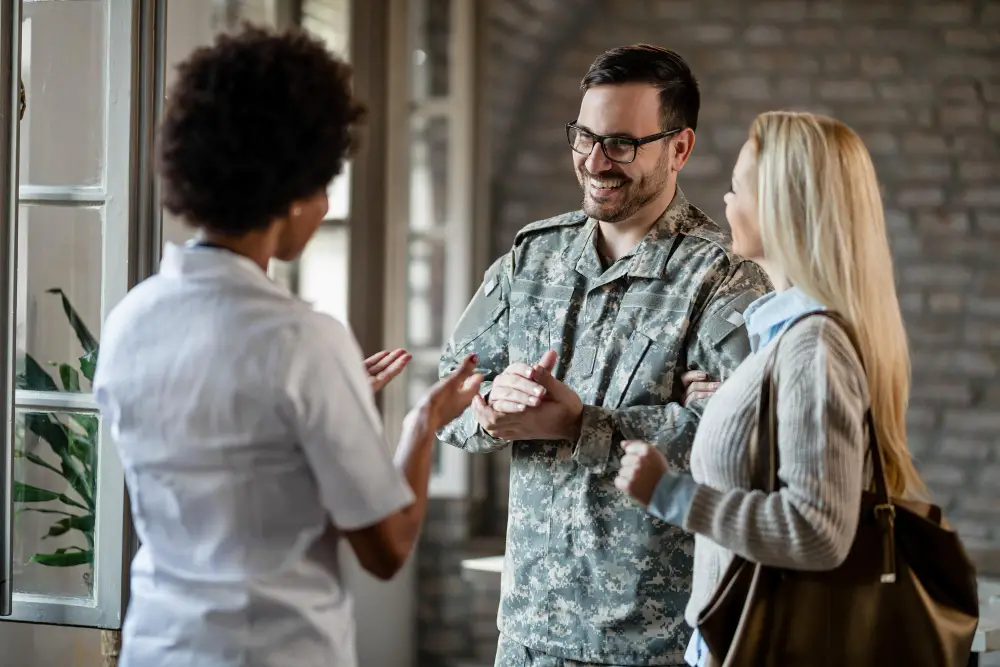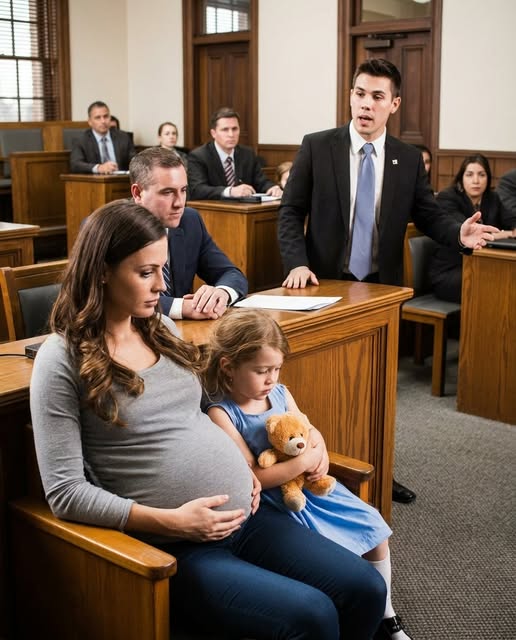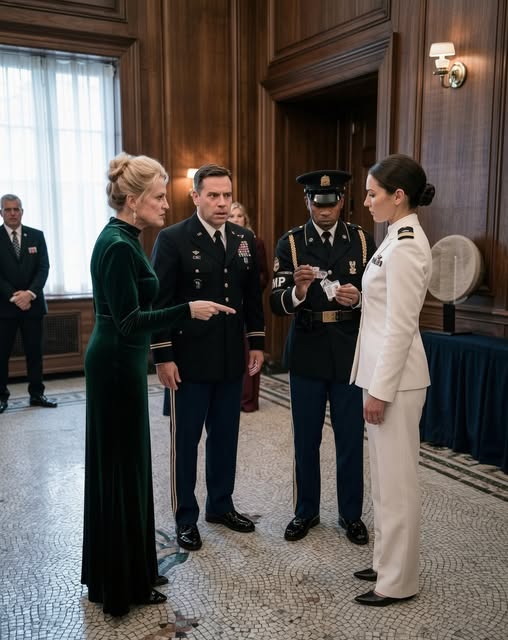

The wall between my father and me finally began to crack three hundred yards from a jackknifed fuel tanker on a Colorado interstate.
Snow came in sideways that night. The wind screamed loud enough to swallow a person’s voice. I stood in the whiteout shouting into a radio, requesting a medical helicopter that could not safely fly through the storm.
Emergency lights pulsed red, then blue, then ghostly white through the blowing snow. A stranger’s life was fading in front of me. I might have been the only person close enough to change the outcome.
I did not know my name was about to appear on television screens across the country. I did not know the man eating Christmas dinner without me was about to see my face on the evening news and drop a wineglass onto his kitchen floor.
To understand that night, you have to understand the phone call that came three days earlier.
My father called at seven in the evening as I locked my office. My winter coat hung halfway off one shoulder. Keys sat in my hand. I almost let the call go to voicemail.
“Don’t come this year,” he said.
No hello. No soft lead-in. Just four words dropped like stones.
I stood in the dark hallway and for several seconds believed I had misunderstood him.
“Jason’s going to be here,” he continued. “I don’t want you making things awkward for him.”
Jason was my stepbrother. My father had remarried years after my mother died. Somewhere along the way he had begun treating Jason as the son he had always wanted. I had become the daughter assumed to be fine.
Jason had recently married. His new in-laws would attend Christmas dinner. My father did not want anyone asking me about the Army, my deployments, or my work. He did not want my presence to pull attention away from the life Jason and Erica were building.
I had stood in briefing rooms with generals. I had presented plans to colonels twice my age without letting my voice shake. Eighteen years in uniform. A rank most people never reach.
Yet my father’s tone made me eighteen years old again.
“I understand,” I said.
I did not argue. I did not remind him I had already bought a plane ticket or rearranged my holiday duty schedule months earlier. Eighteen years in the Army had taught me which battles were worth fighting and which ones required walking away while dignity remained intact.
I canceled the flight with two clicks. A confirmation email arrived. The biggest wounds in families are often handled with the smallest gestures.
Sergeant Alvarez invited me to her sister’s house for Christmas dinner. I declined. Half my unit had children and spouses waiting at home. I did not. Somebody had made sure of that.
I volunteered for the overnight shift on Christmas Eve. It freed two junior soldiers to spend the holiday with their families. Private Chen teared up when I told him he could go home to his newborn daughter.
I told myself my father’s decision did not sting nearly as much as it actually did.
I was lying.
Colorado in December does not ease anyone into winter. By the afternoon of December twenty-fourth the forecast had turned into a statewide emergency. Visibility collapsed. Cars slid onto shoulders faster than tow trucks could reach them.
Our unit activated to assist along the interstate corridor. I pulled on cold-weather gear while the wind hammered the hangar doors. Clarity settled over me. This I understood. Procedures. Responsibilities. A chain of command. A purpose.
Family, apparently, did not come with a manual like that.
We pulled onto the interstate and disappeared into the white.
By the time we reached mile marker 214, visibility had dropped to roughly thirty feet. Then the radio traffic shifted from routine to urgent.
A charter bus carrying nearly forty passengers had slid from the northbound lanes, rolled down the shoulder, and landed on its side. A pickup behind it had jackknifed. There were children aboard the bus. A fuel tanker sat on the icy slope above the scene. Its driver had not been located.
We were the first organized response unit to arrive.
I was out of the vehicle before it fully stopped. Boots sank into eight inches of new snow. Instructions came out of me the way they always had during real operations.
“Alvarez! Coordinate with State Patrol. Lock this highway down both directions.”
“Torres, Whitman — triage teams, bus first. Move!”
I requested a medical helicopter even though every dispatcher said flight conditions were close to impossible.
“Keep watching for a safe opening,” I told them. “We’ll be ready.”
The bus lay on its side like a wounded animal. Passengers were trapped at unnatural angles. Voices called for children in English, Spanish, and another language the wind half swallowed.
I climbed onto the exposed side. Metal glazed with ice. Snow struck my face like thrown sand. I wrenched open the emergency exit and looked down into a tangle of luggage, coats, broken glass, and terrified faces.
“United States Army!” I shouted. “We’re going to get every single one of you out of here. Children first. Pass them up to me.”
We formed a human chain through the storm. Small bodies in puffy coats moved hand to hand. Some cried. Some stayed terrifyingly silent.
One boy, maybe six, would not release my jacket sleeve even after I handed him down. His small fist stayed locked on the fabric. His eyes stayed locked on mine.
I crouched until my eyes were level with his.
“You’re safe now,” I told him. “You did a very good job staying calm. Your mom is going to be so proud of you.”
“You promise?”
“I promise. Soldiers don’t break promises.”
His fingers loosened. The trooper carried him toward the warming vehicles. The boy watched me the whole way.
It took the better part of an hour. Every passenger. Every child. Alive.
Then came the tanker.
Its driver, an older man named Walt, remained trapped inside the cab. One leg pinned beneath a crushed section of dashboard. Thousands of gallons of fuel rode on a bed of ice. The truck had begun leaning toward the shoulder with a slow grinding groan every time the wind gusted.
My team leader advised waiting for the hazardous-materials unit. Protocol supported him.
Walt’s breathing grew shallower. The truck continued to move.
We did not have the luxury of waiting.
“If that thing goes, it takes you with it,” my team leader said quietly.
“Then let’s make sure it doesn’t go.”
I ordered everyone else back a hundred meters and climbed into the cab.
Inside, the world shrank to one man, one pinned leg, and one groaning mountain of steel and fuel. Walt was in shock. Skin gray. Lips losing color.
“Walt. Eyes on me. I’m Major Sullivan. I’m going to get you out of here, but I need you awake. You got grandkids?”
“Four.”
“Who’s the youngest?”
“Rosie. She just started walking.”
I kept him talking about her while I worked the dashboard. What she called him. Whether she liked Christmas lights. What he had bought her — a little red wagon still wrapped in his garage.
“You’re going to watch her open that wagon, Walt. Stay with me.”
The dashboard gave way. Walt cried out. I got my shoulder under his arm.
“On three. You push. I pull.”
His leg came free. I hauled him across my shoulders and half-carried, half-dragged him through thirty yards of thigh-deep snow. We both fell twice. Hands reached for us out of the whiteout.
Behind us the truck groaned and slid another two feet. Then it held.
Only then did I notice my hands were shaking. Not from the cold.
A local television crew had recorded everything from a safe distance. The evacuation of the bus. The children passed hand to hand. The little boy holding my sleeve. The unstable tanker. Walt’s extraction. The two of us staggering through the snow while the truck shifted behind us.
I never noticed the cameras.
Nearly two hours later a medical helicopter found a safe break in the storm. Every passenger from the bus had been stabilized. Walt was treated for a fractured leg and mild hypothermia. He kept asking whether somebody could call his daughter.
I sat in the back of our response truck and peeled off gloves stiff with frozen sweat. For the first time in hours I exhaled.
Forty minutes away, Christmas dinner at my father’s house had reached dessert.
Nobody at that table said my name. Nobody wondered where I was.
I believed the night would end as just another operation. Another Christmas shift. Another quiet act no one outside my unit would ever hear about.
I had no idea the cameras had clearly captured my face.
We returned to base shortly after eleven. Exhausted. Soaked through. I completed after-action notes. Confirmed Walt had reached the hospital. Made sure every soldier under my command had eaten something warm and changed into dry clothes.
Only then did I sit in the break room with lukewarm coffee. A television hung in the corner, volume low.
Alvarez said my name in a strange voice.
“Major.”
I looked up.
There I was on the screen. Climbing across the side of an overturned bus while snow whipped horizontally through the frame. Passing a child into a trooper’s arms. Pulling Walt from the cab moments before the truck shifted farther down the icy shoulder.
The banner read: Breaking — Army Officer Leads Dramatic Highway Rescue During Record Blizzard.
“Ma’am,” Alvarez said. “You’re on the national news.”
Within twenty minutes my phone began buzzing. Cousins. High-school friends. An old drill sergeant. My commanding officer: Handle the press requests however you want, Major. You earned that choice.
I did not yet know what was happening in a dining room with my mother’s tablecloth on the table.
Jason told me later. He gave it to me in pieces.
Dinner had reached coffee and pie. Someone turned on the ten o’clock news. The same footage appeared. Two major networks had already picked it up.
Jason sat up straighter before he understood why. Something about the officer’s walk. Something about the voice cutting through the wind. Then the camera caught my face, snow frozen along my collar.
He said my name without meaning to.
The dining room went silent.
My father laughed first — a short, confused sound of a mind refusing to process what the eyes reported. Then the anchor read the name.
“Major Erica Sullivan, an active-duty United States Army officer, is being credited with helping save dozens of lives during tonight’s highway emergency.”
My father went pale. He stood so quickly his chair nearly went over backward. The good crystal wineglass slipped from his fingers and shattered against the hardwood floor.
No one moved to clean it up.
Every person at that table sat frozen, watching footage of the woman this family had decided not to invite. Red wine spread slowly across the floor under my mother’s Christmas tablecloth.
Jason’s mother-in-law leaned toward him and whispered, “You didn’t tell us you had a sister in the Army.”
Jason realized, in front of everyone, that he had no answer that did not shame the whole table.
My father called eleven minutes later.
“Sweetheart.”
His voice broke on the word. I had not heard him call me that in years.
“Why are you on the national news?”
I could hear the television in the background. Unfamiliar voices discussing me as if I were a headline rather than a person.
I thought of a dozen answers. I said none of them.
“I was doing my job, Dad.”
I used the same controlled voice I used in formal briefings. “I have to go. There’s still work to finish here.”
I ended the call before he could answer.
Outside, the storm finally weakened. I stood by the window and watched snow drift under the security lights. The entire country knew my name before my own father had thought to ask where I would spend Christmas.
The story did not fade. By December twenty-sixth the footage had aired on three national networks. Passengers from the bus gave interviews. People wanted the name and face of the officer who had led them out of the storm.
I declined nearly every request. Our public affairs office issued a statement crediting the entire team, the State Patrol, recovery crews, dispatchers, and the aviation crew that had threaded a helicopter through impossible weather. Nothing that happened on that highway was a solo effort.
A handmade card arrived from an eight-year-old girl who had been on the bus. Crayon on construction paper. A stick figure in uniform beside a large bus under uneven blue snowflakes. Across the top: Thank you, Major Sullivan.
I still have that card. I would trade any ribbon or commendation before I would give it up.
Walt’s family drove to the base. All four grandchildren came, including Rosie, who had only recently learned to walk. She toddled three steps, sat down hard, and laughed at herself. Walt caught my eye across the room.
His daughter cried while shaking my hand. Walt, leg still in a brace, gripped my forearm.
“You didn’t have to climb up there,” he said.
“At the time, it didn’t feel like a choice.”
Through all of it my father kept calling.
I let the first calls go to voicemail. I read the messages without responding.
Can we talk?
I’m so proud of you.
I didn’t know.
I should have known.
Jason messaged too. Short words that stayed with me longer than anything my father wrote.
I didn’t know it was like this for you. I’m sorry. I mean that.
I finished the week the way I finished most difficult weeks. By working. Checking on my soldiers. Writing recommendations. Following Walt’s recovery. Answering the little girl’s card with a note signed by the whole unit.
Work had always steadied me.
My father called again on Friday evening. This time I answered.
“I don’t expect you to fix this in one phone call,” he said. “I just want to see you in person. Whenever you’re ready.”
“I’ll think about it.”
Something had shifted out there in the storm. An old, exhausted patience had finally reached its limit.
The following Tuesday he showed up at the base gate without warning. The private at the visitor checkpoint phoned my office. I walked outside in my duty uniform and found my father standing near the flagpole.
He looked smaller than I remembered. His eyes moved across the vehicles, the buildings, the soldiers — like a man trying to memorize a place he had never once bothered to imagine.
“I wanted to see it,” he said. “Where you actually work. What your life looks like.”
I gave him a brief tour. Soldiers straightened as they passed.
“Good morning, Major.”
“Afternoon, Major.”
“Major Sullivan, ma’am.”
I watched something change in his face with every greeting.
We ended in the same break room where I had first seen myself on television. Colonel Whitfield happened to be there. He set his coffee down and pulled out a chair.
He told my father about a promotion I had declined because it would have meant leaving my unit midway through a deployment cycle. About the times I postponed my own transition plans to finish training replacements. About disaster-relief rotations I had volunteered for on personal time, including a Thanksgiving spent handing out water in a flooded county instead of traveling home.
My father sat completely still.
“I didn’t know any of that,” he said after the colonel left.
“You never asked.”
Then, almost as an afterthought, he mentioned the birthday gifts.
For the previous decade a card and a thoughtful present had arrived at his house every year. He had always assumed they came from Jason.
I went silent.
Every year, without fail, I had sent something personal. A book he once mentioned wanting. A bottle of the Kentucky bourbon he liked. Once a framed photograph from a trip we took before my mother died. I never put a note claiming credit. Credit had never been the point. I simply wanted my father to feel remembered.
It had never occurred to me that the credit had quietly drifted to someone else.
My father had spent ten years feeling grateful to the wrong child.
Jason arrived that same afternoon. He found me alone near the vehicle bay.
“I knew,” he said. “About the gifts. I knew they were from you, and I let him believe they were from me. Every year. I never corrected him.”
For the first time since I had known him as an adult, Jason looked genuinely ashamed.
“I don’t have an excuse. I liked the way it made him look at me. I didn’t think about what it was costing you.”
I said nothing for several seconds. An old part of me wanted to let him sit inside that guilt. Another part no longer had much appetite for punishment.
“Thank you for telling me,” I said. “That’s more than I expected.”
My father found us a few minutes later. For the first time in longer than I could remember, all three of us stood in the same place without anyone performing a role.
He did not apologize in that moment. Maybe he understood a real apology needed more than a hallway and an audience.
But standing there beside the military trucks, my father suddenly broke down. Quiet. Completely unexpected. His shoulders shook in a way I had never witnessed, not even at my mother’s funeral.
I did not walk away.
I did not hug him either. I was not there yet.
I simply stood beside him and let him feel what he had spent years avoiding.
A month later he invited me to dinner. No relatives. No neighbors. Just us.
He cooked. That alone stunned me. The kitchen smelled like the roast chicken my mother used to make.
We ate at the small kitchen table instead of the formal dining room. Neither of us mentioned the choice. I noticed anyway.
“I owe you an apology,” he said. He set his fork down. “Not the kind where I explain myself until it stops sounding like an apology. Just this. I’m sorry. I was wrong.”
In the silence that followed he talked about the years after my mother died. About remarrying. About Jason. He had thrown himself into building a relationship with his stepson partly because he liked the kid and partly because it felt like something he might still get right. Somewhere in that effort he stopped paying attention to the daughter who had never required convincing to love him.
“I told myself you were fine,” he said. “You were strong. Self-sufficient. I decided you didn’t need the same things Jason needed. I think it was easier to believe that than to admit I was choosing not to look.”
I chose my words carefully.
“The thing that hurt most wasn’t that you wanted Jason there and not me. Families make room for different people in different seasons. I could have understood that. It was that you thought I would make things awkward just by being there. Just by being your daughter. You didn’t say Jason needed space. You said I would cause a problem. There’s a difference.”
My father did not argue.
“You’re right,” he said. “I don’t have a way to make that untrue. I can only tell you I understand it now, and I didn’t understand it then.”
He began asking about the Army. About my deployments. My soldiers. The weight I carried. Subjects he had managed to avoid for eighteen years. He wasn’t performing interest. He genuinely wanted to know.
Before I left he walked me to the car.
“I don’t expect this to fix anything overnight. I know that’s not how it works. But I’d like the chance to keep trying. If you’ll let me.”
I studied him for a long moment.
“Okay,” I said. “We can try.”
It wasn’t complete forgiveness. Not yet. But it was the first honest conversation we had shared in longer than either of us wanted to admit.
A year passes faster than you expect when people spend most of it rebuilding something they believed was already lost.
We did not repair eighteen years of distance in one dinner. There were uncomfortable phone calls. Moments when old habits crept back. One bad argument in March that ended with both of us hanging up angry — and him calling back twenty minutes later. That alone was new.
There were also Sunday calls that slowly turned from obligation into habit, and then into something I found myself looking forward to. He attended my promotion ceremony and sat in the front row. For the entire event he never once compared me to Jason.
Little by little the outline of a real relationship began forming where there had once been only distance.
So when December came around again I was not entirely surprised when my father appeared at the base gate a second time.
What surprised me was that he came on Christmas Eve without calling ahead and waited outside the visitor checkpoint for nearly forty minutes until my shift ended. He wore a coat that was not warm enough for a Colorado December.
When I finally walked through the gate he stepped toward me.
“I didn’t want you spending tonight wondering whether I remembered.”
He handed me a small box wrapped in plain paper. Inside was an old photograph. The two of us standing outside the Army recruiting office on the day I signed my enlistment papers.
On the back, in his handwriting: You have always been my pride. It took me too many years to find the courage to say it.
I stood in the cold for a long time holding that photograph and did not trust myself to speak.
Jason pulled up a few minutes later. He did not ask me to forgive him. Over the past year he seemed to have learned that forgiveness is not something you can request on a schedule that suits you. He simply came and stood beside me in the cold.
“You never tried to make me feel guilty,” he said quietly. “Even when you had every right to. I don’t think I ever thanked you for that.”
The three of us ended up at the Veterans Support Center downtown that Christmas Eve. We carried trays of food into a community hall full of people who, for one reason or another, had nowhere else to spend the evening. My father had simply shown up in old work clothes, ready to carry boxes.
We spent the night serving dinner, refilling coffee, and sitting with veterans who told stories no one had asked them to tell in a very long time. My father listened to every one of them like each detail mattered. At one point he sat for forty-five minutes with an old Marine who kept repeating the same story about a bridge in 1969, and never once looked at his watch.
Watching him, something inside me finally settled. Not because the past had disappeared. It settled because the present had become something I could begin to trust.
Late that night we walked toward the parking lot under a light snow. The flakes drifted gently beneath the streetlights. The evening felt nothing like the violent storm of the year before.
A year earlier my father had told me not to come home because he was afraid my presence might make someone else feel small.
Now he had stood outside a military base in the Colorado cold to make certain I would never feel forgotten again.
I used to believe the hardest missions were the ones marked by sirens and emergency lights and lives hanging in the balance on an icy highway. I don’t believe that anymore.
The hardest mission most of us will ever face is finding our way back to the people we love — especially after they have made the path more difficult than it ever needed to be.
That night in the blizzard I thought I was only doing my job. I did not know I was also beginning the long journey back to my own family.
National television did not repair what was broken between my father and me. The rescue did not erase eighteen years of being overlooked. An apology did not undo every Christmas, every birthday, every conversation in which I was treated as the daughter who needed nothing.
What changed us was what came afterward.
My father chose to look. Jason chose to admit what he had done. And I chose not to confuse forgiveness with forgetting, or reconciliation with pretending the damage never happened.
We did not become a perfect family. We became an honest one. And sometimes that is the deeper miracle — not returning to what existed before, but building something better from the truth that remains after everything false has fallen away.
If this story has found someone who feels invisible inside their own family, I hope they carry this with them.
Being strong does not make you less deserving of care. Being capable does not mean you should always be left to carry life alone. And being overlooked by the people closest to you does not reduce the value of the life you have built beyond their sight.
Sometimes the world recognizes a person before their own family does. It happened to me under emergency lights on a frozen interstate, in front of cameras I never knew were there.
But real healing does not come from cameras, headlines, medals, or public praise.
It begins when someone finally looks across an ordinary kitchen table, with cold chicken between you and no audience watching, and says, without a single excuse attached:
I should have seen you.
I see you now.
And I am willing to spend the rest of the time I have proving it.
Benjamin Harris is a RapidReports front page contributor and editor,proud father of four.