Iran Mocks Trump Over Strait of Hormuz Claim as Tensions Escalate
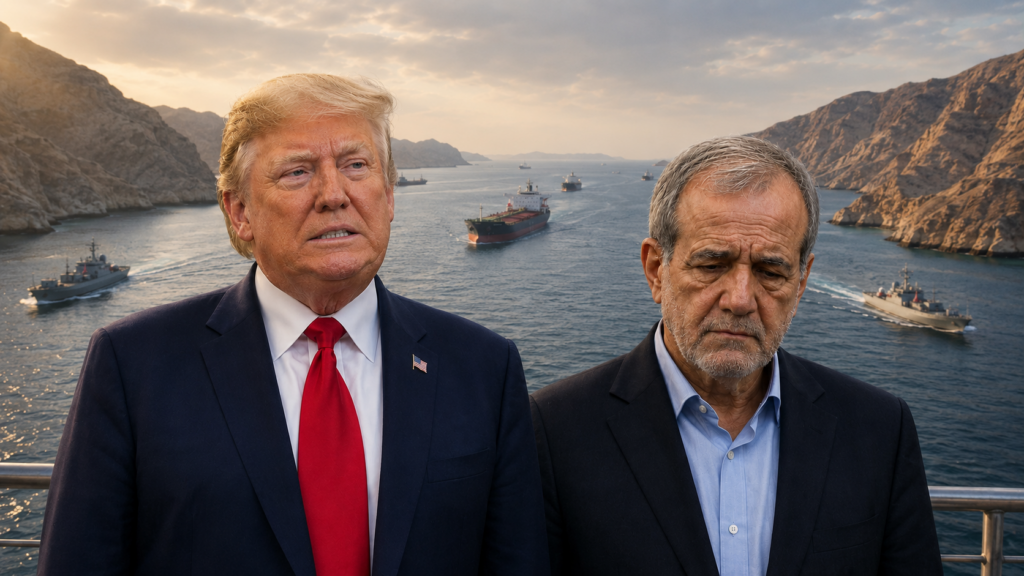
Iran has mocked President Donald Trump after he claimed that the strategically important Strait of Hormuz is open, adding another provocative exchange to the growing confrontation between Washington and Tehran.
The Iranian Embassy in Ghana took aim at Trump in a social-media post, responding to the president’s assertion with a pointed challenge.
“Feel free to send your carriers to confirm,” the embassy wrote, appearing to reference U.S. aircraft carriers and the American military presence in the region.
Iran Challenges Trump’s Claim
The exchange comes as the United States and Iran continue to disagree sharply over the status of the Strait of Hormuz.
Trump has maintained that the waterway is open and secure, while Iranian officials have insisted that Tehran retains control over whether and under what conditions shipping can pass through the strategic chokepoint.
The competing claims have created uncertainty for commercial shipping and global energy markets.
Strait of Hormuz Remains a Major Flashpoint
The Strait of Hormuz is one of the world’s most important maritime routes for energy shipments.
The waterway connects the Persian Gulf with the Gulf of Oman and the Arabian Sea, making it a critical passage for international oil and gas transportation.
Any prolonged disruption can have consequences far beyond the Middle East, potentially affecting fuel prices, shipping costs and global markets.
Recent reporting indicates that commercial traffic through the strait has fallen dramatically amid the ongoing confrontation.
Iran’s Message Carries a Military Warning
The reference to U.S. aircraft carriers was notable because American naval forces have been heavily involved in the broader confrontation with Iran.
Iran’s response effectively challenged Washington to demonstrate that the waterway is genuinely open by sending military assets through it.
The statement was clearly framed as a taunt, but it also underscores the seriousness of the dispute.
Trump Says the Waterway Is Open
Trump has repeatedly insisted that the Strait of Hormuz remains open and has said the United States can maintain security in the area.
Iran’s government disputes that characterization.
The disagreement is occurring against the backdrop of a U.S. naval blockade, attacks on commercial shipping and negotiations over the future of the waterway.
Shipping Traffic Has Plummeted
Despite Trump’s assertion that the strait is open, commercial shipping activity remains far below normal levels.
Reuters reported that only a small number of vessels were moving through the waterway, compared with the much higher traffic levels seen before the conflict.
That difference between legal or theoretical access and actual commercial traffic is at the heart of the current dispute.
A waterway can technically remain open while shipping companies avoid it because of security risks, insurance costs or uncertainty about military activity.
U.S. Aircraft Carriers Add to the Tension
Iran’s reference to American carriers comes as the U.S. Navy maintains a significant presence in the broader region.
A new U.S. aircraft carrier, the USS George Washington, has been heading toward the Middle East as concerns grow over the extended deployment of the USS Abraham Lincoln.
The movement of American naval forces adds another layer of tension to an already volatile situation.
The Dispute Could Affect Global Energy Markets
The Strait of Hormuz is particularly important because of the volume of energy that normally passes through it.
A sustained disruption could affect oil supplies and increase transportation and insurance costs.
Those effects can eventually reach consumers through higher gasoline, diesel and other energy prices.
The current crisis has already contributed to elevated energy-market concerns, according to recent reporting.
Iran and the United States Remain Far Apart
The latest exchange also highlights the distance between Washington and Tehran diplomatically.
Trump has said there are currently no talks planned with Iran, while Iranian officials have maintained their own conditions for reopening the waterway and resolving the broader confrontation.
Efforts involving Oman have focused on finding a mechanism that could eventually restore more normal shipping through Hormuz.
But negotiations remain fragile.
A High-Stakes Standoff
The Strait of Hormuz dispute has become one of the most consequential flashpoints in the broader U.S.-Iran confrontation.
For Washington, ensuring freedom of navigation is a major strategic objective.
For Tehran, control over the waterway provides significant leverage against the United States and its allies.
That makes every statement about whether the strait is “open” or “closed” more than a matter of semantics.
What Happens Next?
Iran’s challenge to Trump is likely to draw further attention as military and diplomatic pressure continues.
The central question is whether commercial vessels can safely and consistently transit the strait without facing attack, interception or unacceptable security risks.
Until that uncertainty is resolved, shipping companies and energy markets are likely to remain on edge.
For now, Trump’s declaration that the Strait of Hormuz is open is being met by an unmistakably defiant response from Tehran: Iran says the United States should send its carriers and see for itself.

Benjamin Harris is a RapidReports front page contributor and editor,proud father of four.